There’s a reason baked ziti shows up again and again in family kitchens. It’s steady, filling, and forgiving in the best way. You don’t need perfect timing or fancy ingredients to make it work—you just need a good sauce, enough cheese, and a little patience while it bubbles in the oven.
I come back to this version when I want something reliable that feeds a group without stress. It’s hearty without being heavy, and the steps are straightforward once you understand why each one matters.
Why this baked ziti works
The balance here comes from layering rather than overcomplicating. The pasta is slightly undercooked before baking, so it finishes in the oven without going soft. The sauce is simmered just long enough to bring everything together without drying out later.
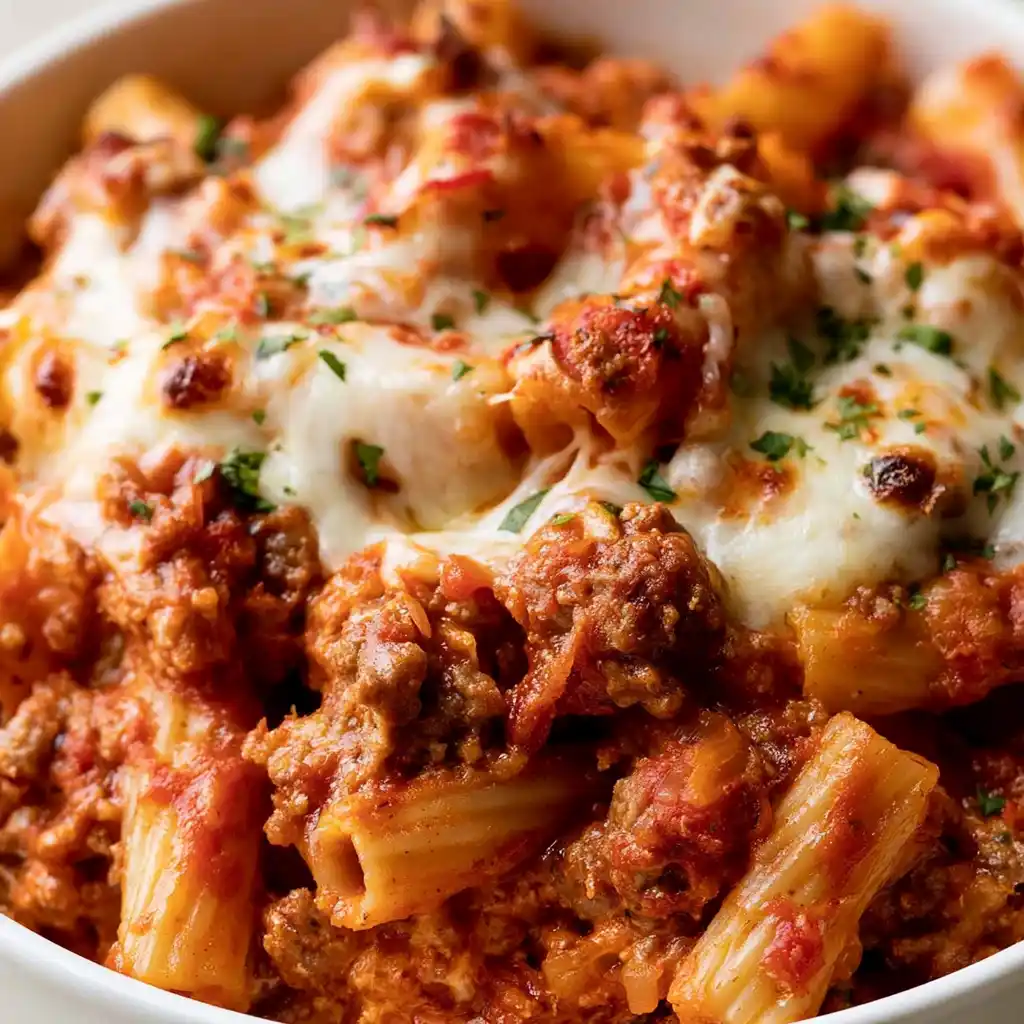
Using both mozzarella and parmesan gives you two different results: mozzarella melts into that stretchy layer, while parmesan adds a sharper, slightly salty finish. The ricotta is optional, but it brings a creamy break between the pasta and sauce that many people expect in a classic baked ziti.
Ingredients
- 300g / 10oz ziti or penne pasta
- 1 tbsp olive oil
- 3 garlic cloves, minced
- 1 small onion (brown, white or yellow), finely chopped
- 500g / 1 lb ground beef or pork OR 50/50 combo
- 700g / 24 oz tomato passata (pureed tomato)
- 1/2 cup water
- 1 tsp EACH dried basil, oregano, sugar
- 1 cup ricotta, optional
- 1 cup grated mozzarella cheese (or other melting cheese)
- 1 cup parmesan, freshly grated (optional)
- Finely chopped parsley or basil (optional garnish)
Seasonings:
- 2 tsp fennel seeds (optional)
- 1 tbsp paprika (plain or sweet)
- 1/4 tsp cayenne pepper OR 3/4 tsp chilli flakes (adjust to taste)
- 2 tsp onion powder
- 1 tsp EACH salt and black pepper
Getting the pasta right
Cook the ziti for the recommended cooking time on the packet minus 2 minutes. This step matters more than it seems. If you cook it fully now, it will soften too much in the oven and lose its bite.
Drain it, then return it to the pot. Don’t rinse it. The starch left on the pasta helps the sauce cling later.
Building a steady sauce
Heat the olive oil in a large skillet over high heat. Add the onion and garlic and cook for about 2 minutes, just until the onion turns translucent. You’re not looking for browning here—just softening and bringing out the aroma.
Add the meat and cook, breaking it up as you go. Once it’s just cooked through, stir in all the seasonings. Let them cook for another 2 minutes. This step wakes up the spices and keeps them from tasting flat later.
Pour in the tomato passata, water, basil, oregano, and sugar. Bring it to a simmer, then lower the heat and let it cook for 10 minutes. The sauce should thicken slightly and smell balanced, not sharp. Taste it and adjust salt and pepper, keeping in mind it will be spread across a lot of pasta.
Tossing and layering
Scoop about 2 cups of the sauce into the pot with the cooked pasta and toss it together. This first coating is important—it keeps the pasta from drying out and makes sure every bite has flavor, not just the top layer.
Spread the pasta into a baking dish (23x33cm / 9×13″). Dollop the ricotta across the surface if you’re using it. Don’t overmix it; those pockets of creaminess are part of the texture.
Pour the remaining sauce over the top, then finish with mozzarella and parmesan.
Baking and knowing when it’s ready
Cover the dish loosely with foil and bake at 180C/350F for 20 minutes. This allows everything to heat through without drying out the top.
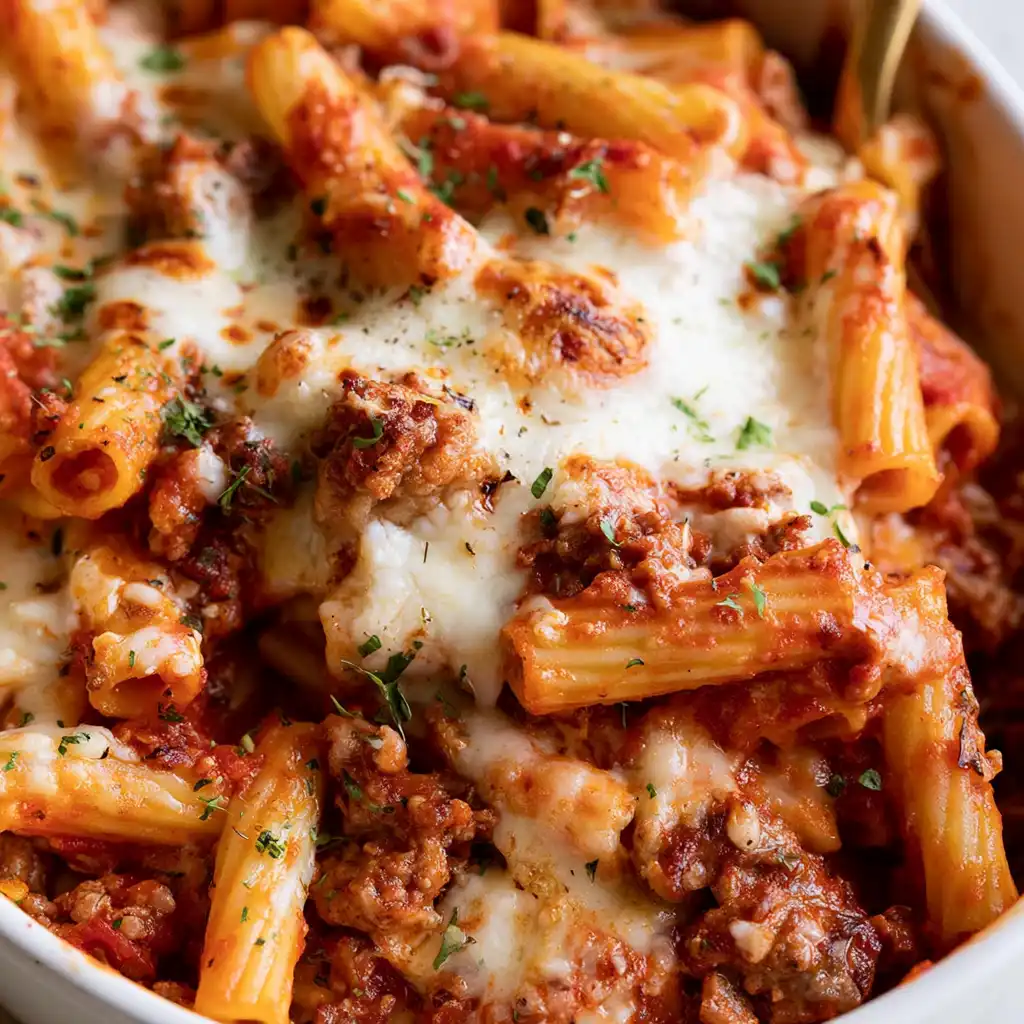
Remove the foil and bake for another 10 to 15 minutes, until the cheese is melted and lightly golden. You’ll see the edges bubbling—that’s your sign it’s ready.
Let it sit for a few minutes before serving. It firms up slightly, which makes it easier to scoop.
Common mistakes to avoid
- Overcooking the pasta early: This leads to a soft, heavy texture after baking. Always undercook slightly.
- Skipping the sauce toss step: Dry pockets of pasta are the result.
- Using too little salt in the sauce: Remember, it’s flavoring the entire dish.
- Baking uncovered the whole time: The top will dry out before the inside heats through.
Ingredient notes that matter
Ziti and penne are nearly identical in shape, so either works well. If neither is available, rigatoni or even spirals will hold the sauce just fine.
For the meat, a 50/50 mix of beef and pork gives a richer flavor, but using just one is completely fine. Pork adds a bit more tenderness, while beef keeps it classic.
Tomato passata is key for a smooth, cohesive sauce. If you substitute with crushed tomatoes, the texture will be slightly chunkier, which can still work but changes the feel of the dish.
Make-ahead and storage
If you want to prepare this ahead, cook the pasta and toss it with a little oil so it doesn’t stick, then let it cool. Make the sauce and let that cool as well.
Assemble everything up to the point before adding cheese, then refrigerate or freeze. When ready to bake, add the cheese and bake covered first, then uncovered. If starting from cold, it will take a bit longer in the oven.
Leftovers hold up well in the fridge. Reheat in the oven or microwave with a splash of water to loosen the sauce.
Serving ideas
This dish stands on its own, but a few simple sides round it out well:
- A crisp green salad with a light vinaigrette
- Garlic bread or a simple toasted loaf
- Steamed or roasted vegetables like broccoli or green beans
FAQ
Can I skip the ricotta?
Yes. The dish will still be rich and satisfying without it. Ricotta just adds a creamy layer that some people prefer.
What if my sauce tastes too acidic?
Add a pinch more sugar and let it simmer another minute or two. That usually balances it out.
Can I use store-bought pasta sauce instead of passata?
Yes, especially if you’re short on time. Just keep in mind it may already be seasoned, so adjust salt and spices carefully.
How do I know when the baked ziti is done?
Look for bubbling edges and lightly golden cheese on top. The center should be hot all the way through.
This is one of those dishes that doesn’t need perfection to turn out well. Once you’ve made it a couple of times, you’ll start adjusting it without thinking—more sauce, less cheese, different pasta. It holds up, which is exactly why it’s worth keeping in your regular rotation.

Baked Ziti
Ingredients
Method
- Cook ziti for the recommended cooking time on the packet MINUS 2 minutes. (Note 5) Drain, then return to pot.
- Preheat oven to 180C/350F.
- Make Sauce: Heat oil in a large skillet over high heat. Add onion and garlic and cook for 2 minutes or until onion is translucent.
- Add meat and cook, breaking it up as you go. When it is just cooked, add Seasonings and cook for 2 minutes.
- Add passata, water, basil, oregano and sugar. Bring to simmer, reduce heat to low and cook for 10 minutes. Adjust salt and pepper to taste (remember it gets spread across lots of pasta).
- Toss Ziti with Sauce: Pour about 2 cups of sauce into the pot with the ziti. Toss.
- Assemble: Spread ziti into baking dish (23x33cm / 9×13″). Dollop with ricotta. Pour over remaining sauce. Top with cheese and parmesan.
- Bake: Cover loosely with foil. Bake 20 minutes. Remove foil, bake further 10 to 15 minutes until cheese is golden.
- Serve: Sprinkle with parsley or basil if desired, then serve!
Notes
Serving: 364g | Calories: 557cal | Carbohydrates: 51g | Protein: 39g | Fat: 21g | Saturated Fat: 10g | Cholesterol: 93mg | Sodium: 1016mg | Potassium: 865mg | Fiber: 4g | Sugar: 7g | Vitamin A: 1250IU | Vitamin C: 12.9mg | Calcium: 454mg | Iron: 4.8mg