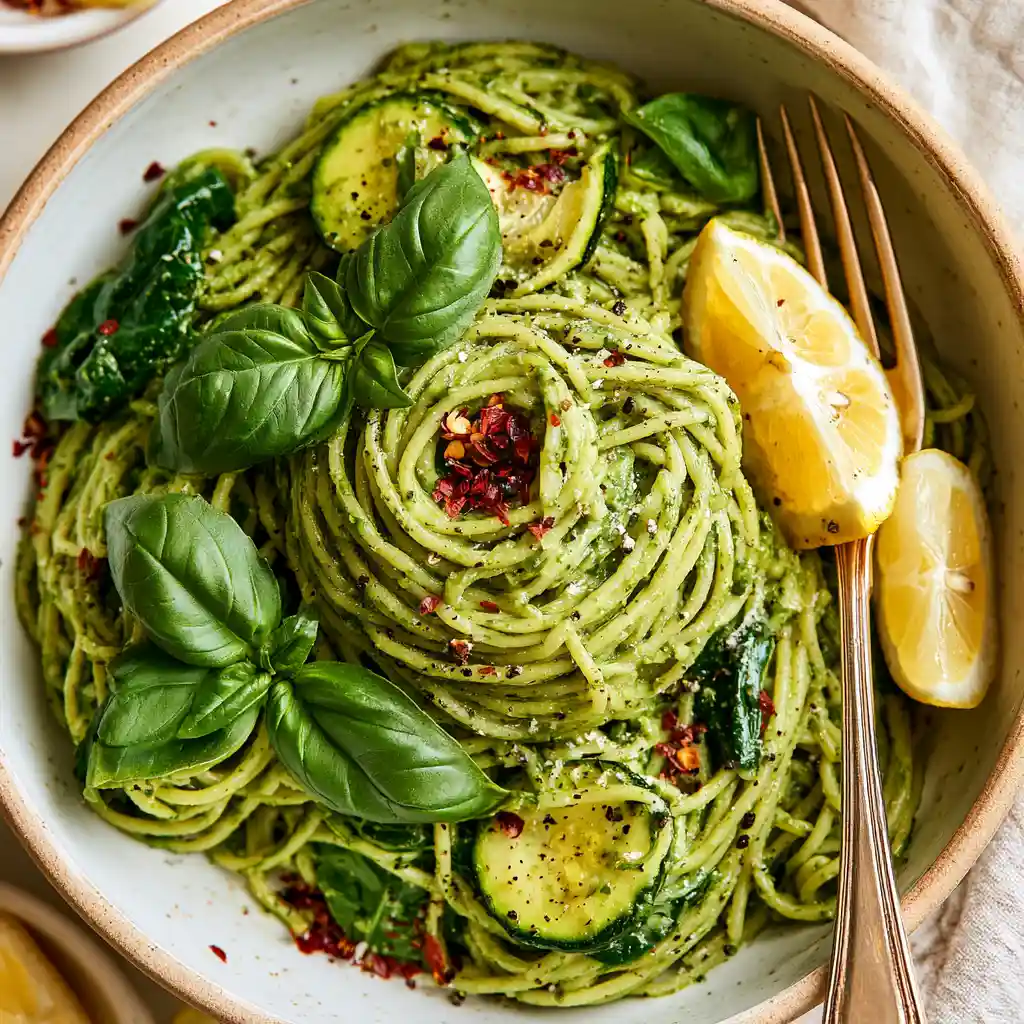
I make this Super Green Pasta whenever I want something bright and nourishing without spending much time in the kitchen. It comes together in about 15 minutes and uses zucchini, basil, and a handful of leafy greens to create a vibrant, herbaceous sauce that clings beautifully to the pasta.
Why this recipe works
The magic here is in the blending. Cooking the zucchini until lightly browned gives the sauce a subtle sweetness and depth, while the raw basil and greens keep everything fresh and lively. Lemon zest and juice cut through the richness of the olive oil, and a splash of pasta water helps the sauce emulsify and coat every noodle evenly.
I like that this recipe is flexible. You can use spinach, arugula, chard, or any tender greens you have on hand. The hot pepper flakes are optional, but I usually add them because I enjoy the gentle warmth they bring.
Ingredients
This recipe keeps things simple and focused on whole ingredients:
- 1 medium zucchini, cut into small pieces (about 2 cm or ¾ inch)
- 30 grams (2 cups) fresh basil
- 30 grams (2 cups) greens such as spinach, arugula, or chard
- Zest of 1 lemon
- Juice of 1 lemon (about 3 tablespoons)
- ½ teaspoon sea salt
- ½ teaspoon black pepper
- ½ teaspoon hot pepper flakes (optional)
- 2 tablespoons + 1 teaspoon olive oil, divided
- 200 grams (8 oz) pasta (any shape you like)
- 60 ml (¼ cup) reserved pasta cooking water
The zucchini provides body and a mild sweetness, while the basil and greens deliver that vivid green color and fresh, grassy flavor. Lemon adds brightness, and the olive oil brings richness and helps the sauce come together smoothly.
How to make Super Green Pasta
Start by setting a large pot of water on to boil for the pasta. While the water is heating up, cook the zucchini. Heat a frying pan over medium-high heat and cut the zucchini into small pieces, about 2 cm (¾ inch). Add a teaspoon of olive oil to the hot pan, then add the zucchini. Cook for about five minutes, stirring frequently, until lightly browned.
While the zucchini is cooking, add the basil, greens, lemon zest and juice, salt, pepper, and hot pepper flakes to a container to blend. You can use a small food processor or the cup attachment for an immersion blender.
If the water for the pasta boils in the meantime, salt it well and add the pasta to begin cooking it.
As soon as the zucchini is cooked, add it to the container with the basil and greens. Blend until fairly smooth. Add the remaining two tablespoons of olive oil while blending, until a homogenous sauce forms. Set this aside.
Once the pasta is cooked, make sure to reserve the cooking water before draining it. Add the drained pasta back to the pot with the reserved cooking water and the basil zucchini sauce. Stir to coat the pasta, and serve immediately.
Tips for success
If the idea of cooking and mixing things simultaneously stresses you out, make the sauce before starting on cooking the pasta. It can sit for a few minutes while the pasta cooks, and you can gently reheat it in the pan if needed.
I recommend salting the pasta water generously. It’s your main chance to season the pasta itself, and it makes a noticeable difference in the final dish.
When blending the sauce, aim for fairly smooth but not completely pureed. A little texture from the zucchini is nice, and it helps the sauce feel more substantial on the pasta.
If the sauce seems too thick when you toss it with the pasta, add a bit more of the reserved pasta water, a tablespoon at a time, until it reaches a consistency that coats the noodles easily.
Common mistakes and how to avoid them
One mistake I see often is undercooking the zucchini. If it’s still hard or raw-tasting, the sauce won’t blend smoothly and will have a gritty texture. Cook it until it’s tender and lightly browned for the best results.
Another issue is not reserving enough pasta water. The starchy water is essential for helping the sauce cling to the pasta. Always save at least ¼ cup before draining, even if you think you won’t need it.
Over-blending can make the sauce too thin and frothy. Blend just until smooth and homogenous, then stop. You want a creamy texture, not a watery one.
Substitutions and adjustments
If you don’t have basil, you can use parsley or cilantro instead, though the flavor will be different. I still recommend using some fresh herbs for brightness.
For the greens, spinach is the most neutral, while arugula adds a peppery bite and chard brings a slightly earthy note. You can mix and match based on what you have.
If you want to make this vegan, it already is. For extra protein, you can stir in some white beans or chickpeas at the end, or top with toasted pine nuts or hemp seeds.
To make it gluten-free, simply use your favorite gluten-free pasta. Cook it according to package directions and be gentle when stirring, as gluten-free pasta can be more fragile.
Serving suggestions
This pasta is satisfying on its own, but I sometimes add a handful of cherry tomatoes or roasted red peppers for extra color and sweetness. A sprinkle of grated Parmesan or Pecorino works well if you eat dairy, though it’s not necessary.
For a more substantial meal, serve it alongside a simple green salad with a lemony dressing, or add some grilled chicken or shrimp on top.
Storage and reheating notes
This pasta is best enjoyed fresh, but you can store leftovers in an airtight container in the refrigerator for up to two days. The sauce may thicken as it sits, so when reheating, add a splash of water or olive oil to loosen it up.
Reheat gently in a skillet over low heat, adding a bit of water as needed to restore the creamy consistency. Avoid microwaving for too long, as it can make the pasta mushy.
FAQ
Can I make the sauce ahead of time?
Yes, you can make the sauce up to a day in advance and store it in the refrigerator. Bring it to room temperature or gently reheat it before tossing with freshly cooked pasta.
What type of pasta works best?
Any shape works, but short pastas like fusilli, penne, or farfalle hold the sauce well. Long pastas like spaghetti or linguine also work if you toss them thoroughly.
Can I freeze this pasta?
I don’t recommend freezing the assembled dish, as the sauce can separate and the pasta may become mushy when thawed. You can freeze the sauce alone for up to a month, then thaw and reheat gently before tossing with fresh pasta.
How can I make this more filling?
Add some toasted nuts, seeds, or beans for extra protein and fiber. You can also increase the portion size or serve it with a side of crusty bread and a salad.
This Super Green Pasta has become one of my go-to weeknight dinners because it’s fast, fresh, and genuinely satisfying. The zucchini and greens blend into a sauce that feels indulgent even though it’s mostly vegetables, and the lemon keeps everything tasting bright and alive. I hope you make it part of your regular rotation too.
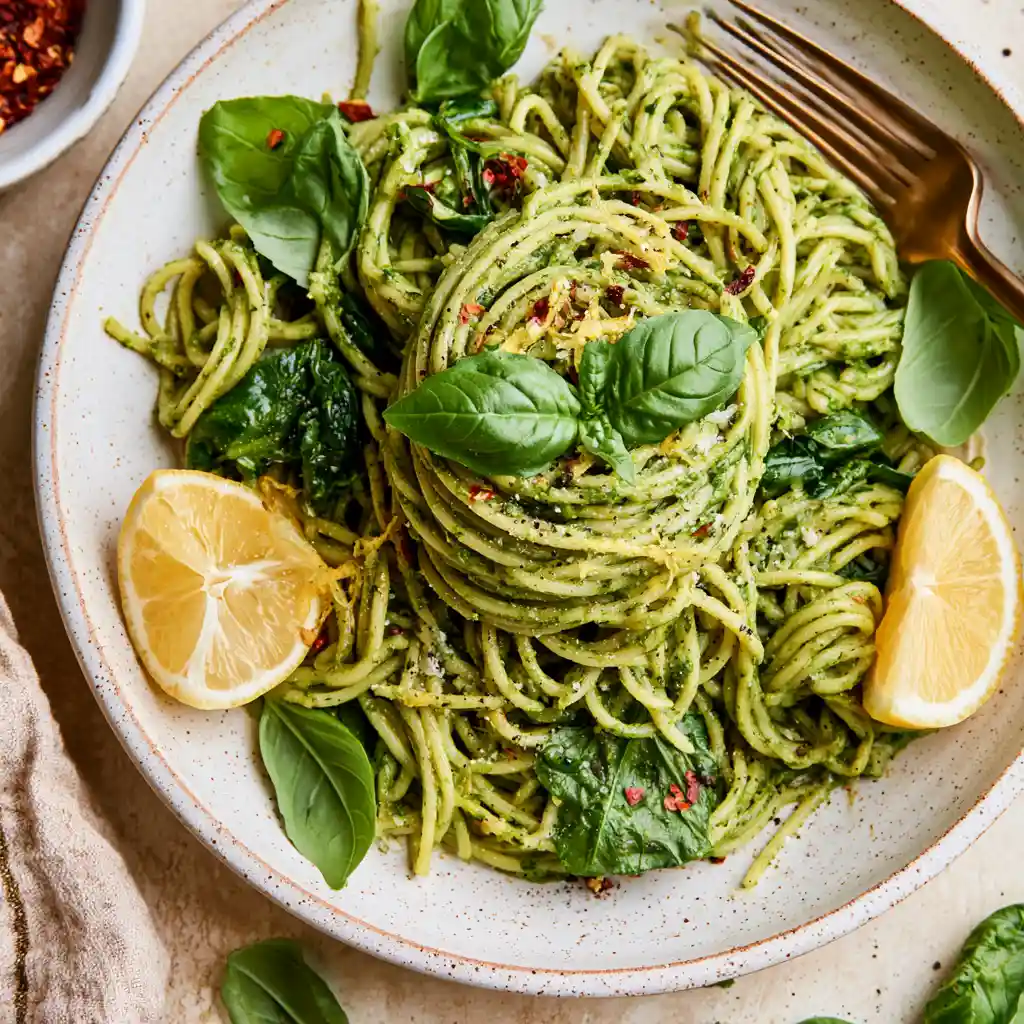

Super Green Pasta
Ingredients
Method
- Start by setting a large pot of water on to boil for the pasta (see note).
- While the water is heating up, cook the zucchini. Heat a frying pan over medium-high heat. Cut the zucchini into small pieces, about 2 cm (¾ inch).
- 1 medium zucchini
- Add a teaspoon of olive oil to the hot pan, then add the zucchini. Cook for about five minutes, stirring frequently, until lightly browned.
- 2 tablespoons + 1 teaspoon olive oil
- While the zucchini is cooking, add the basil, greens, lemon zest and juice, salt, pepper, and hot pepper to a container to blend (either a small food processor or one for an immersion blender).
- 30 grams (2 cups) fresh basil,30 grams (2 cups) greens (spinach, rucola, chard, etc.),Zest of a lemon,Juice of a lemon,½ teaspoon sea salt,½ teaspoon black pepper,½ teaspoon hot pepper flakes
- If the water for the pasta boils in the meantime, salt it well and add the pasta to begin cooking it.
- 200 grams (8 oz) pasta
- As soon as the zucchini is cooked, add it to the container with the basil and blend until fairly smooth. Add the remaining two tablespoons of olive oil, while blending, until a homogenous sauce forms. Set this aside.
- Once the pasta is cooked, make sure to reserve the cooking water before draining it.
- Add the drained pasta back to the pot with the reserved cooking water and the basil zucchini sauce. Stir to coat the pasta, and serve immediately.
- 60 ml (¼ cup) pasta water
Notes
Serving: 1 | Calories: 202kcal | Carbohydrates: 10g | Protein: 3g | Fat: 18g | Saturated Fat: 3g | Polyunsaturated Fat: 2g | Monounsaturated Fat: 13g | Sodium: 1094mg | Potassium: 693mg | Fiber: 3g | Sugar: 6g | Vitamin A: 2982IU | Vitamin C: 32mg | Calcium: 74mg | Iron: 2mg
Nutrition is provided as a courtesy and is an estimate. If this information is important to you, please have it verified independently.