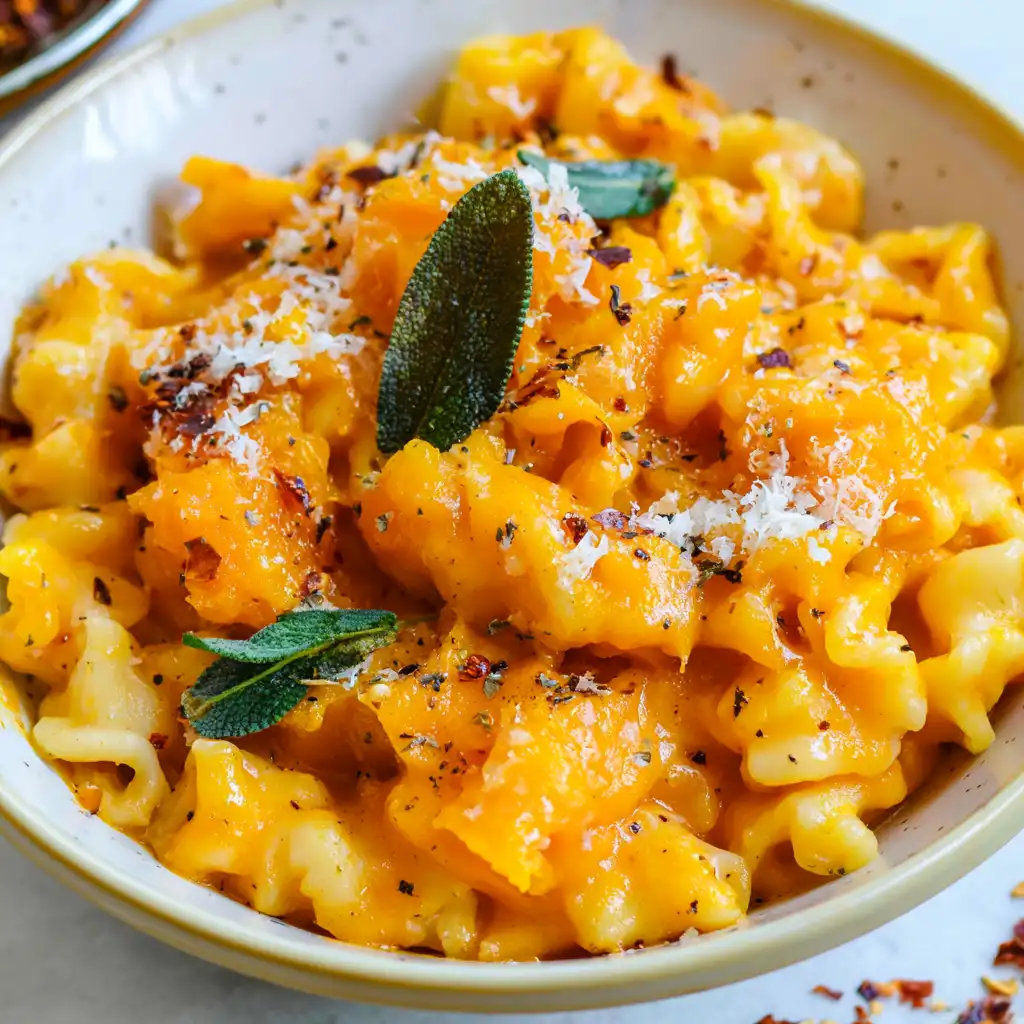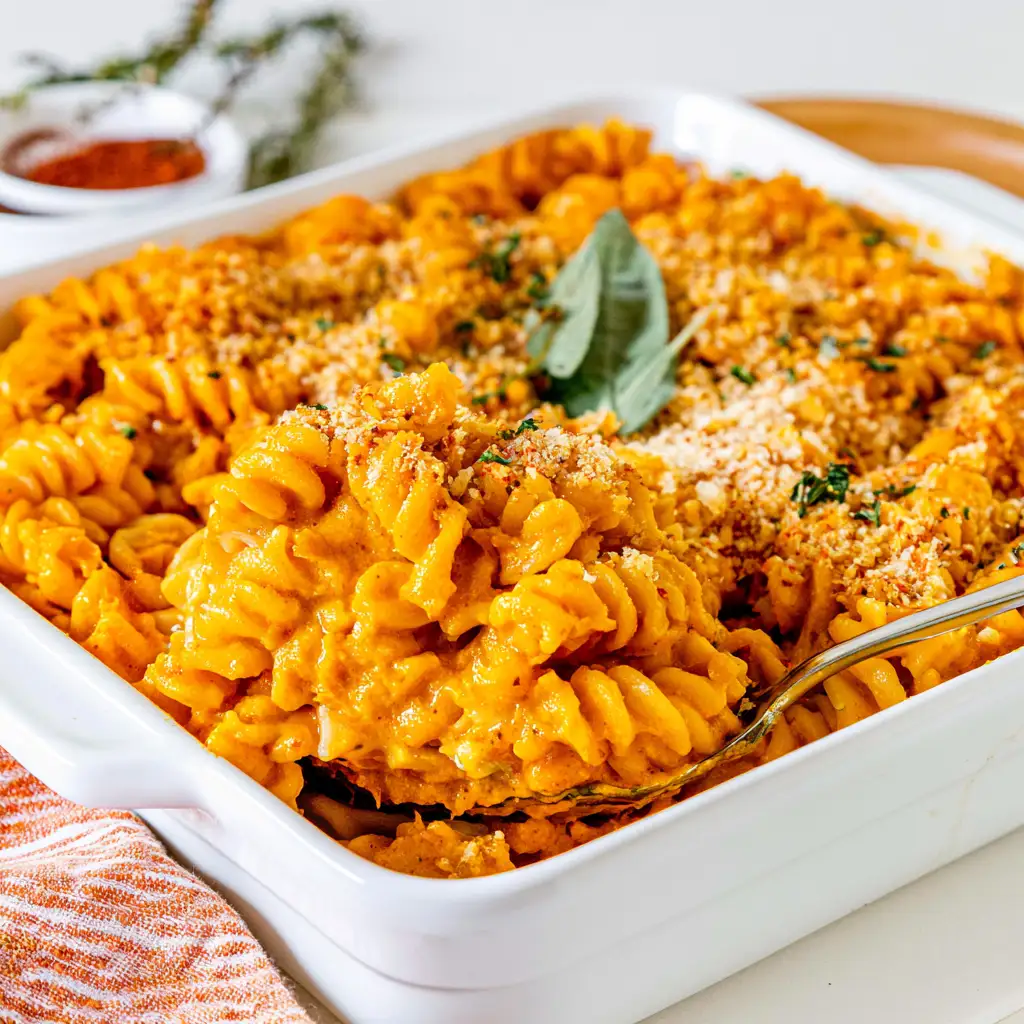
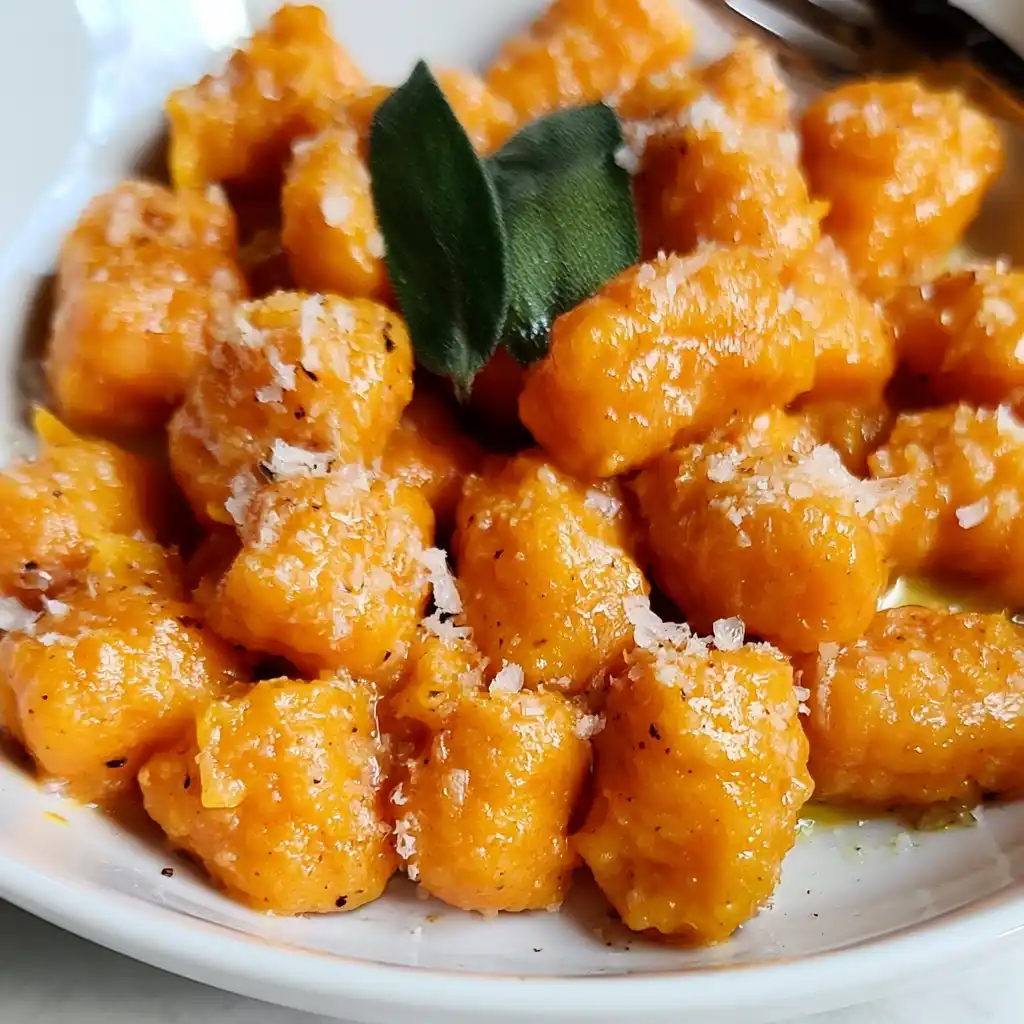
Italian pumpkin gnocchi bring a soft, comforting kind of dinner to the table, with sweet squash folded into tender little dumplings and finished in warm sage butter. I like making them when I have a good butternut or kabocha squash on hand and want something that feels homemade without asking for a long list of ingredients.
The trick is keeping the pumpkin dry and handling the dough lightly. Pumpkin carries more moisture than potato, so the dough can turn sticky fast if you work it too long or add too much flour. Bake the slices until the surface starts to dry, then rice the pulp while it is still warm enough to pass through the potato ricer easily.
Why This Recipe Works
Pumpkin gives these gnocchi a gentle sweetness and a soft texture, while the egg and flour hold everything together. A little nutmeg works especially well with squash, but it stays in the background rather than taking over the flavor.
I keep the sauce very direct: unsalted butter, fresh sage, and Parmigiano Reggiano. The butter coats the gnocchi, sage adds a woodsy note, and the cheese helps create a creamy finish once a little cooking water joins the bowl.
The most important choice comes before you even make the dough. Use a sweet, firm-fleshed pumpkin such as butternut squash or kabocha squash. Watery pumpkin can make the dough difficult to shape, while a naturally drier squash gives you softer gnocchi with less flour.
Ingredients
For Pumpkin Gnocchi
- 600 g cooked pumpkin pulp (1 pumpkin of about 1.3 kg /2.8 pounds). Use a sweet pumpkin, such a butternut squash or a kabocha squash – 1.3 pounds
- 300 g all purpose flour – 2 cups
- 1 medium egg
- ¼ teaspoon salt
- freshly ground black pepper
- 1 pinch nutmeg
For the Seasoning
- 100 g unsalted butter – ~1 stick
- 5 fresh sage leaves
- 1 cup grated Parmigiano Reggiano
Bake the Pumpkin
Cut the pumpkin into thin slices and arrange them on a baking sheet lined with baking paper. Bake in a static oven preheated to 200°C (390F) for 15 to 20 minutes. If you use a ventilated oven, bake at 180°C (350F) for 10 to 15 minutes instead.
You are not trying to brown the pumpkin deeply here. I look for slices that have started to dry slightly around the edges. That small amount of moisture loss matters because it keeps the finished dough from becoming overly soft.
Let the pumpkin cool just enough to handle safely. You can remove the skin before ricing if needed. Measure out 600 g of cooked pumpkin pulp for the dough.
Mix the Dough
Place the flour directly on a clean work surface and shape it into a mound. Use your hands or a spoon to make a wide well in the center, like a small flour fountain.
Press the cooked pumpkin through a potato ricer directly onto the flour. The ricer breaks it into fine, light strands, which helps you avoid heavy lumps in the dough. Add the salt, freshly ground black pepper, and a pinch of nutmeg.
Beat the egg in a small bowl. Pull the pumpkin and flour mixture back into a fountain shape, make a hollow in the middle, and pour in the beaten egg. Start drawing the flour into the center with a fork until the egg blends into the pumpkin mixture.
Once the dough starts coming together, use your hands briefly to form a smooth, even mass. Work quickly and as little as possible. The more you knead pumpkin gnocchi dough, the more flour it can take on, and that can make the dumplings dense rather than tender.
Shape the Gnocchi
Form the dough into a loaf. Use a dough scraper or a sharp knife to cut off one manageable piece at a time, leaving the rest of the dough covered loosely while you work.
Roll the piece under your hands into a long rope about as thick as your finger. Keep your pressure light. If the dough starts sticking badly, dust the work surface with only a small amount of flour rather than kneading in more flour.
Cut the rope into short cylinders, each about 1.5 to 2 cm long, or roughly half an inch. Continue with the remaining dough until you have a tray of small gnocchi.
If the pieces feel firm enough, slide each one across a gnocchi board to create the familiar ridges. The grooves help the butter and cheese cling to the surface later. If the dough is too soft to hold the pattern, skip this step. Smooth pumpkin gnocchi still cook beautifully and taste just as good.
Freeze Them for Later
I prefer freezing homemade pumpkin gnocchi, especially if I am not cooking them right away. Arrange them in a single layer on a tray lined with a floured cloth or baking paper. Leave space between each piece so they do not touch.
Put the tray in the freezer for 2 to 3 hours, until the gnocchi feel firm. Then transfer them to food-safe plastic bags and return them to the freezer.
Do not place freshly made, soft gnocchi directly into plastic bags. They will stick together and lose their shape before they freeze. Once they have frozen separately on the tray, they can share a bag without becoming one solid block.
Cook the Pumpkin Gnocchi
Bring a large pasta pot of water to a boil and season it with the needed amount of coarse salt. Add the gnocchi in small batches rather than filling the pot all at once. This gives them room to move and keeps the water from dropping too far in temperature.
The gnocchi will sink to the bottom at first, particularly when you cook them from frozen. Keep the heat high and wait for them to rise. They usually float after 1 or 2 minutes, which tells you they are cooked.
Lift the floating gnocchi out with a skimmer or slotted spoon. Drain them well, but do not shake or press them hard. They are delicate at this stage, and rough handling can break them apart.
Make the Sage Butter
While the water comes to a boil, melt the unsalted butter in a saucepan over low heat. Add the 5 fresh sage leaves and let them flavor the butter for about 2 minutes.
Keep the heat gentle. I want the sage to perfume the butter without burning, and I do not want the milk solids in the butter to turn dark before the gnocchi are ready.
Spoon 2 to 3 tablespoons of the sage butter into a large bowl. Add the cooked gnocchi a few at a time as you lift them from the pot. This first coating keeps them from sticking while you finish cooking the rest.
Pour in the remaining sage butter, then add a couple of tablespoons of grated Parmigiano Reggiano. Stir gently from the bottom upward. This motion coats the gnocchi without crushing their soft centers.
The sauce should look creamy and lightly cling to the dumplings. If it seems dry, add one tablespoon of the hot cooking water and stir again. Finish with a little more grated Parmigiano Reggiano.
Common Problems
Pumpkin gnocchi that feel sticky usually need a lighter touch more than extra flour. First, try dusting the work surface and your hands lightly. If the dough remains impossible to roll, the pumpkin may have held too much moisture, so add flour in very small amounts only until it becomes workable.
If the gnocchi fall apart in the pot, the dough may have been too wet or the water may not have been at a steady boil. Cook a few pieces first as a test batch before dropping in the rest. That gives you a chance to adjust the remaining dough if needed.
If the gnocchi taste heavy, too much flour or too much kneading is usually the cause. Mix only until the dough holds together, then move straight into shaping.
Serving Ideas
Serve these Italian pumpkin gnocchi as they are for a satisfying supper with a crisp green salad alongside. The sage butter already brings enough richness, so I keep any side dishes fresh and lightly dressed.
They also work well with roasted vegetables, especially broccoli, Brussels sprouts, or green beans. For a heartier meal, serve a smaller portion beside roast chicken or pork.
FAQ
Can I use canned pumpkin?
This recipe uses cooked pumpkin pulp from fresh pumpkin, but you can use a thick, well-drained pumpkin purée if it is not watery. You may need to adjust the flour slightly because canned purée can vary in moisture.
Can I make the gnocchi without a gnocchi board?
Yes. Cut the dough into small pieces and leave them smooth. The ridges look traditional and hold more sauce, but they are not required.
Should I thaw frozen pumpkin gnocchi before cooking?
No. Cook them directly from frozen in boiling salted water. They may take slightly longer to rise to the surface, but they do not need thawing first.
How do I know when pumpkin gnocchi are cooked?
They are ready when they float to the surface of the boiling water. Lift them out soon after they rise so they stay tender and do not absorb too much water.
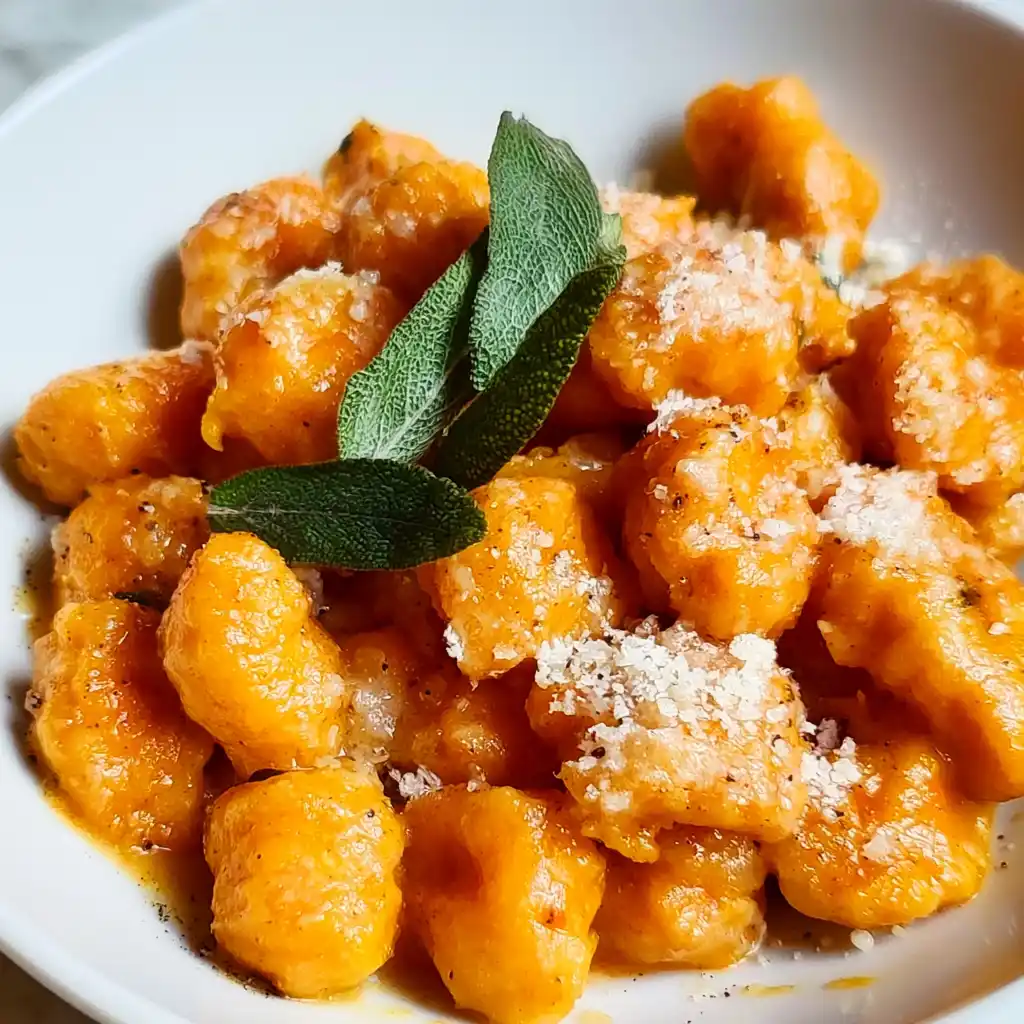

Italian Pumpkin Gnocchi
Ingredients
Method
- Cut the pumpkin into thin slices then place them on a baking sheet pan covered with baking paper. Cook in a static oven preheated to 200°C (390F) for 15-20 minutes or in a ventilated oven at 180°C (350F) for 10-15 minutes, until they start to slightly dry.
- Place the flour on a work surface and, using your hands or a spoon, create the classic fountain shape. Crush the pumpkin with a potato ricer directly on the flour. Add salt and black pepper and flavor with a pinch of nutmeg.
- In a little bowl, beat the egg up. Give the mixture again a fountain shape and make a hole in the center then pour the egg. Incorporate it with a fork and work it until it’s homogeneous.
- Make Gnocchi
- Work the dough with your hands as little as possible and quickly. Give it the shape of a loaf. Now cut a piece of pumpkin dough with a dough scraper or a sharp knive.
- Then with your hands make a long roll of dough as thick as a finger.
- Slice the roll every 1,5/2 cm (about half inch), so as to have small cylinders.
- Slide the gnocchi one by one on a gnocchi board to give them the classic striped pattern on the surface (only if they are firm enough, otherwise forget it. They will be delicious all the same!). Homemade pumpkin gnocchi are ready!
Notes
It’s better if you freeze them. Place them, well spaced, on a tray covered with a floured cloth or baking paper. Place the tray into the freezer. Wait for ⅔ hours then transfer them in food plastic bags and put them back into the freezer. Do NOT put freshly-made-still-soft gnocchi in plastic bags, otherwise they will stick to each other!
How to Cook Pumpkin Gnocchi
In a rather large pasta pot, bring the water to a boil and add the necessary coarse salt. When the water boils, add the gnocchi a few at a time. You see that the gnocchi, due to their weight, go to the bottom, especially if they are frozen. Cook over high heat.
After 1 or 2 minutes, the dumplings come to the surface. They are cooked! As soon as they rise to the surface, take them with a skimmer slotted spoon and drain them well. Pumpkin gnocchi are cooked and ready to be seasoned. Let’s see how to do it.
How to Serve Pumpkin Gnocchi
In a saucepan, melt the butter and flavor it with the sage leaves on low heat for about 2 minutes.
In a bowl, put ⅔ tablespoons of sage butter sauce. When the gnocchi are cooked, place them in the bowl with the sauce, a few at a time. Finish seasoning them by adding all the sauce. Then add a couple of tablespoons of grated Parmigiano cheese.
Stir gently, from bottom to top so as not to break them. You will see that the gnocchi are creamy, but, if they are not creamy enough, add a tablespoon of cooking water. Add a little Parmigiano on top before serving.
Nutrition
Calories: 605kcal
Carbohydrates: 68g
Protein: 20g
Fat: 29g
Saturated Fat: 17g
Polyunsaturated Fat: 1g
Monounsaturated Fat: 8g
Trans Fat: 1g
Cholesterol: 112mg
Sodium: 725mg
Potassium: 635mg
Fiber: 3g
Sugar: 5g
Vitamin A: 13649IU
Vitamin C: 14mg
Calcium: 351mg
Iron: 5mg