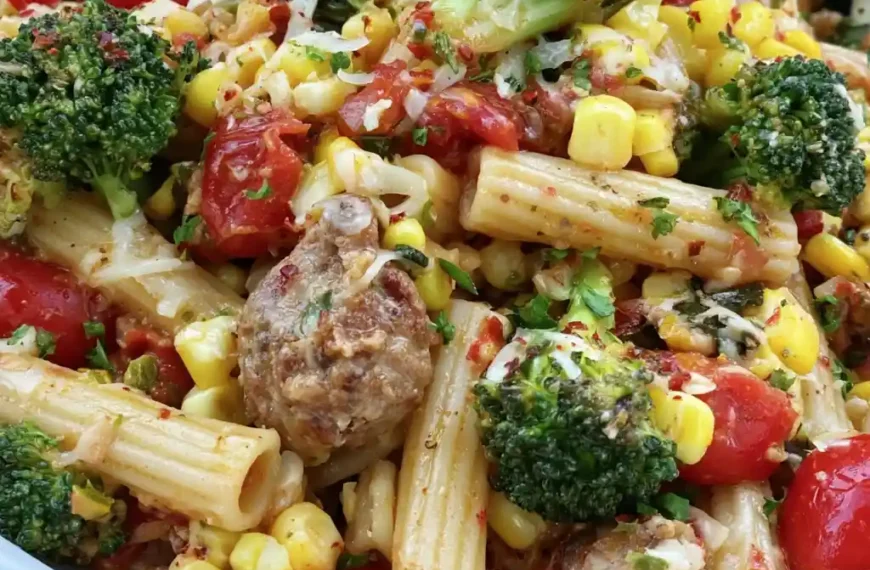
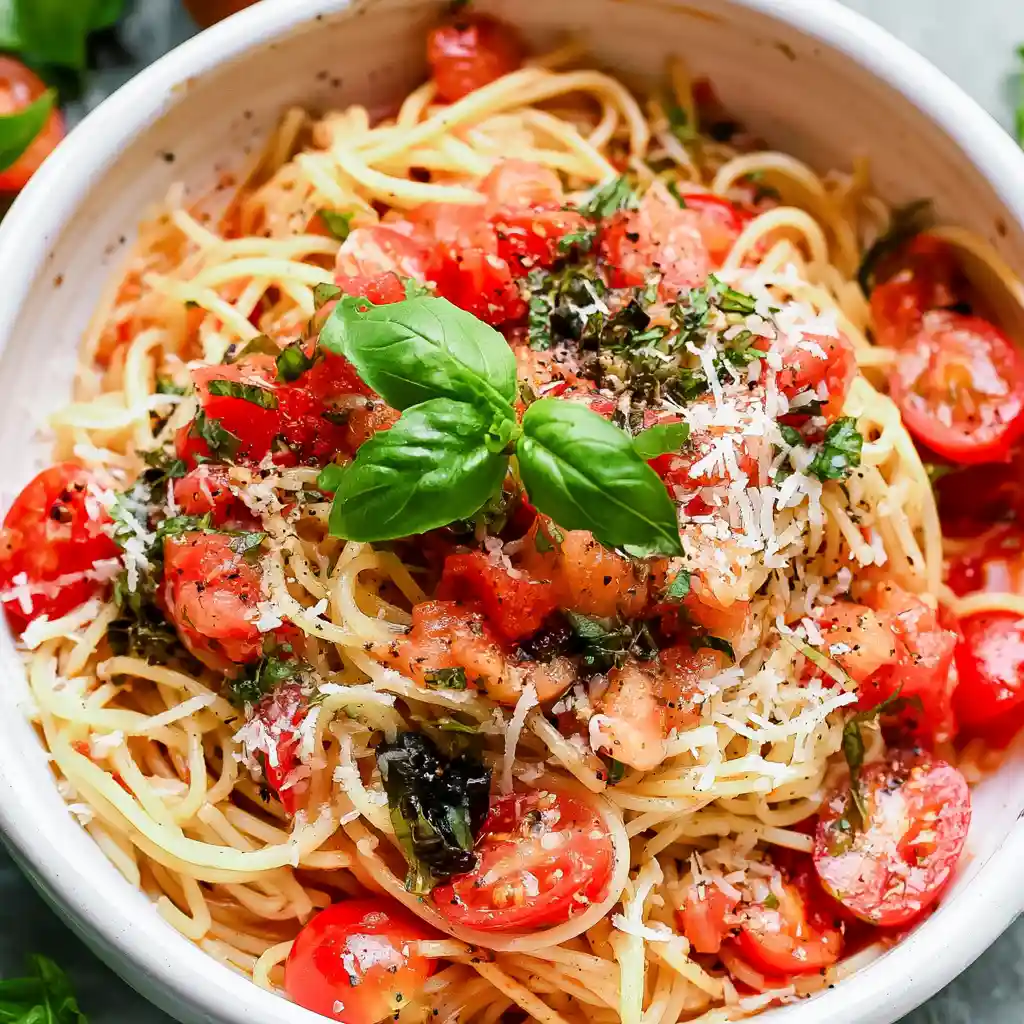
This Tomato Basil Pasta comes together in about 30 minutes with just a handful of fresh ingredients. It’s a weeknight-friendly dish that relies on ripe tomatoes, garlic, and basil for flavor, and it’s forgiving enough that you don’t need perfect technique to get good results.
Why This Recipe Works
I’ve made this pasta many times, and what keeps me coming back is how straightforward it is. There’s no heavy sauce to simmer for hours. Instead, the tomatoes soften just enough in the skillet to release their juices, which coat the spaghetti along with olive oil, garlic, and basil. The result is light but satisfying.
This version held up better across repeats because it doesn’t overcook the tomatoes. They stay bright and fresh-tasting, which balances the richness of the parmesan. It’s also easy to adjust: add chicken if you want more protein, or toss in extra vegetables if you have them on hand.
Ingredients and What They Do
This makes about 4 servings, depending on appetite and whether you add chicken.
- 12 ounces spaghetti noodles — Any pasta works here. I’ve used whole wheat spaghetti and regular both, and the method stays the same.
- 2 Tablespoons olive oil — This carries the garlic flavor and helps the tomatoes soften without sticking.
- 3–4 cloves garlic, minced — Fresh garlic matters. Jarred garlic can work in a pinch, but the flavor isn’t as clean.
- 2 pounds Roma tomatoes, diced, or cherry tomatoes, halved — Roma tomatoes hold their shape better. Cherry tomatoes are sweeter and work well when Romas aren’t in season.
- Freshly ground black pepper, to taste — Add this while the tomatoes cook so the pepper blooms in the oil.
- 1 cup fresh basil leaves, chopped — Stir most of it in at the end so it stays bright. Reserve a little for garnish if you like.
- 1/2 cup freshly grated parmesan cheese, divided — Some goes into the skillet to help thicken the juices; the rest is for serving.
- 1–2 chicken breasts, optional — If adding chicken, sauté it first in oil with salt and pepper, then remove and slice. Add it back when you toss the pasta.
Cooking Method
Start by cooking the pasta according to package instructions. Drain it and set it aside. You want it hot when you toss it with the tomato mixture, so time this so the pasta finishes just as the skillet is ready.
While the pasta cooks, heat a large skillet over medium heat. Add the olive oil. Once it’s warm, add the minced garlic and sauté for about 30 seconds. Watch it closely — garlic can go from fragrant to burnt quickly, and burnt garlic tastes bitter.
Add the diced tomatoes to the skillet. Cook, stirring, for 2 to 3 minutes. You’re not trying to break them down into sauce. Just let them soften slightly and release some juice. Season with freshly ground black pepper to taste.
Sprinkle in 2 Tablespoons of the parmesan cheese. This melts into the tomato juices and helps them cling to the pasta. Stir in the chopped basil now, reserving a bit if you want to garnish at the end.
Toss the hot cooked spaghetti with the tomato mixture in the skillet. If you added chicken, fold it in now. Serve immediately, topped with the remaining parmesan cheese.
Testing Notes and Adjustments
After testing this a few ways, I found the timing on the tomatoes mattered more than I expected. The earlier version worked once, but not consistently — when I cooked the tomatoes too long, the dish turned mushy and lost its fresh character. Keeping that 2–3 minute window keeps the texture right.
I also tested with different pasta shapes. Spaghetti works best because the thin strands pick up the light tomato juices well. If you use a thicker shape like rigatoni, you may want to reserve a splash of pasta water to help the sauce coat it.
Adding chicken makes this heartier, but it does change the timing. Sauté the chicken first until cooked through, then remove it from the skillet before adding the garlic. That way, the garlic doesn’t overcook while the chicken finishes. Slice the chicken and add it back when you toss the pasta.
Serving Suggestions
This pasta is light enough to serve with a simple side. A green salad with a sharp vinaigrette balances the sweetness of the tomatoes. Crusty bread is useful for soaking up any extra juices on the plate.
If you want to stretch it further, add vegetables. Chopped spinach, onion, zucchini, or asparagus all work. Sauté firmer veggies like zucchini or asparagus with the garlic before adding the tomatoes. Spinach can go in at the end, just long enough to wilt.
Storage and Reheating
This dish is best eaten right away. The tomatoes continue to release liquid as it sits, which can make the pasta soggy. If you do have leftovers, store them in an airtight container in the refrigerator for up to 2 days.
Reheat gently in a skillet over low heat. Add a splash of water or olive oil to loosen the pasta if it’s stuck together. Avoid microwaving for too long, which can make the texture rubbery.
Freezer Instructions
I don’t recommend freezing this pasta. The tomatoes and basil don’t hold up well to freezing and thawing — the texture becomes watery and the basil turns dark. This is a recipe better made fresh when you need it.
FAQ
Can I use canned tomatoes instead of fresh?
You can, but the result will be different. Canned tomatoes are softer and more acidic. If you use them, drain some of the liquid and reduce the cooking time to 1–2 minutes so they don’t break down too much.
What if I don’t have fresh basil?
Fresh basil gives the best flavor, but you can substitute 1–2 teaspoons of dried basil. Add it with the garlic so it has time to rehydrate. The flavor won’t be as bright, but it still works.
Can I make this vegetarian?
Yes. This recipe is vegetarian as written if you skip the optional chicken. To make it vegan, omit the parmesan or use a plant-based alternative.
How do I keep the garlic from burning?
Keep the heat at medium, not high. Add the garlic to warm oil, not smoking-hot oil. Stir it constantly and move on to the tomatoes as soon as it smells fragrant — about 30 seconds.
A Few Mistakes I’ve Made
I once added the basil at the same time as the garlic. The basil wilted too much and lost its color and flavor. Now I add it at the end, just before tossing the pasta.
Another time, I used pre-grated parmesan from a shaker. It didn’t melt the same way and left a powdery texture. Freshly grated parmesan makes a noticeable difference here.
This recipe is forgiving, but those small details — timing the garlic, adding basil late, using fresh parmesan — add up to a better result.
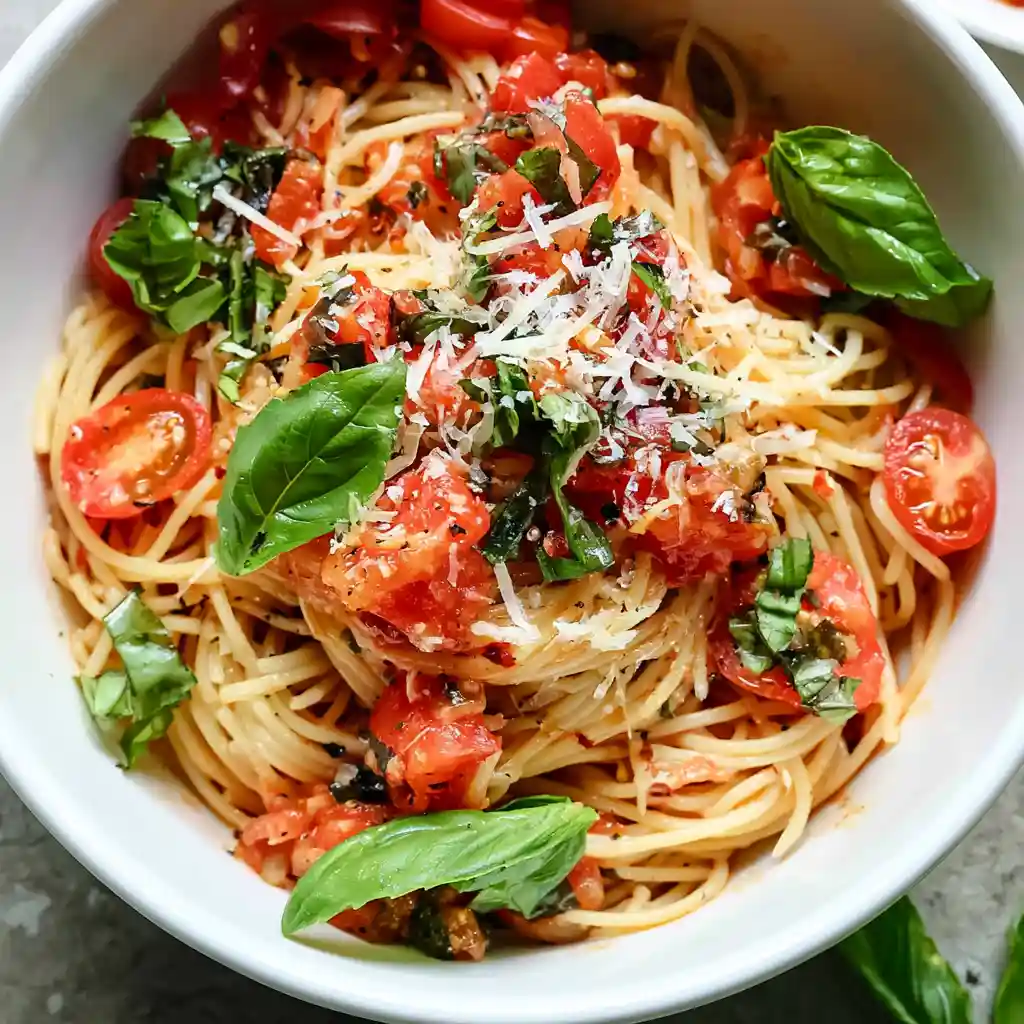

Tomato Basil Pasta
Ingredients
Method
- Cook pasta according to package instructions. Drain and set aside.
- While pasta cooks, heat a large skillet over medium heat. Add oil. Once hot, add garlic and sauté for 30 seconds, careful not to burn it.
- Add freshly diced tomatoes and cook, stirring, about 2 to 3 minutes. Add fresh ground black pepper, to taste. Sprinkle with 2 Tablespoons parmesan cheese. Add fresh chopped basil.
- Serve mixture over hot cooked spaghetti noodles.
- Garnish with remaining parmesan cheese. Serve immediately.
Notes
Calories: 432kcal | Carbohydrates: 60g | Protein: 23g | Fat: 11g | Saturated Fat: 3g | Polyunsaturated Fat: 1g | Monounsaturated Fat: 5g | Trans Fat: 1g | Cholesterol: 38mg | Sodium: 241mg | Potassium: 789mg | Fiber: 4g | Sugar: 7g | Vitamin A: 1865IU | Vitamin C: 27mg | Calcium: 135mg | Iron: 2mg