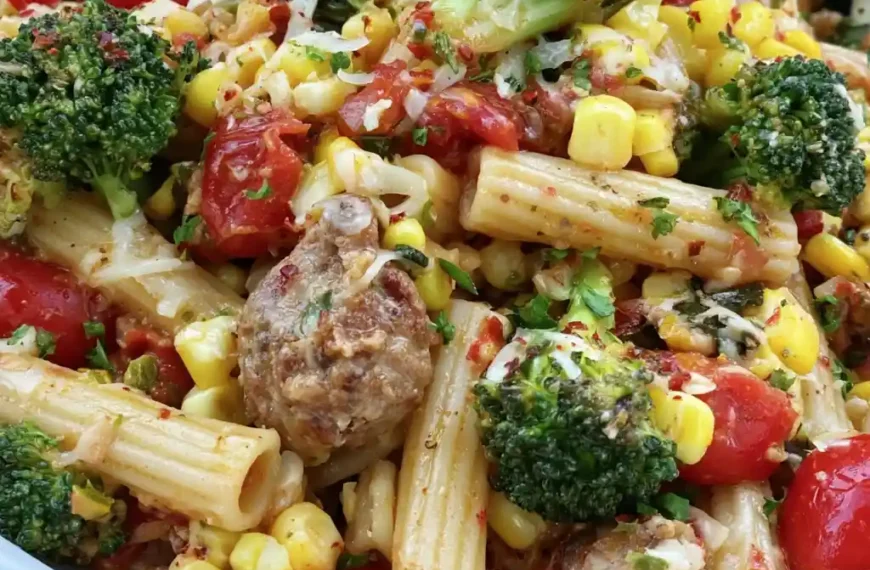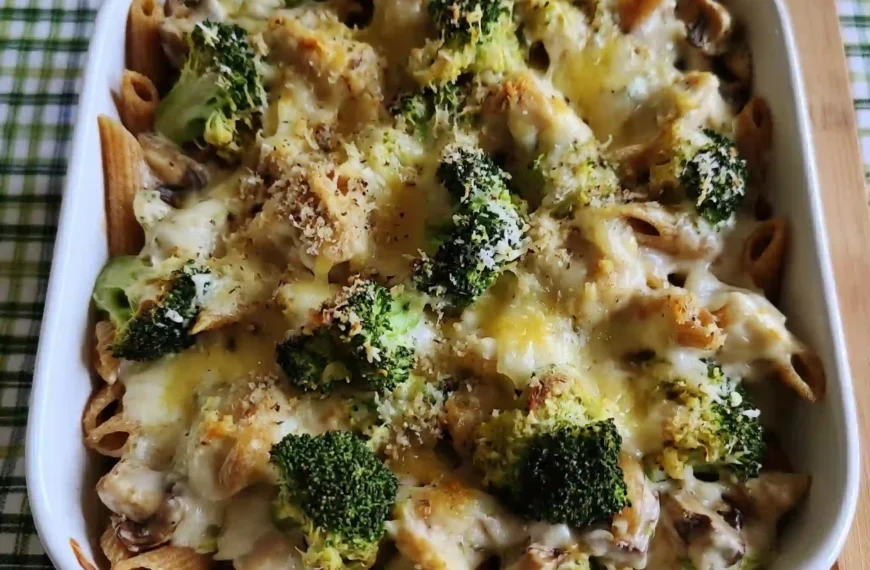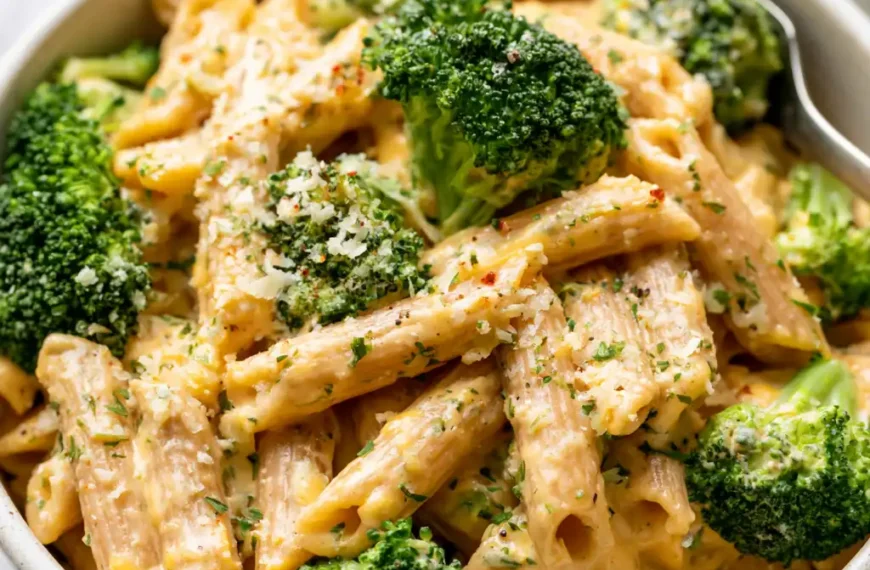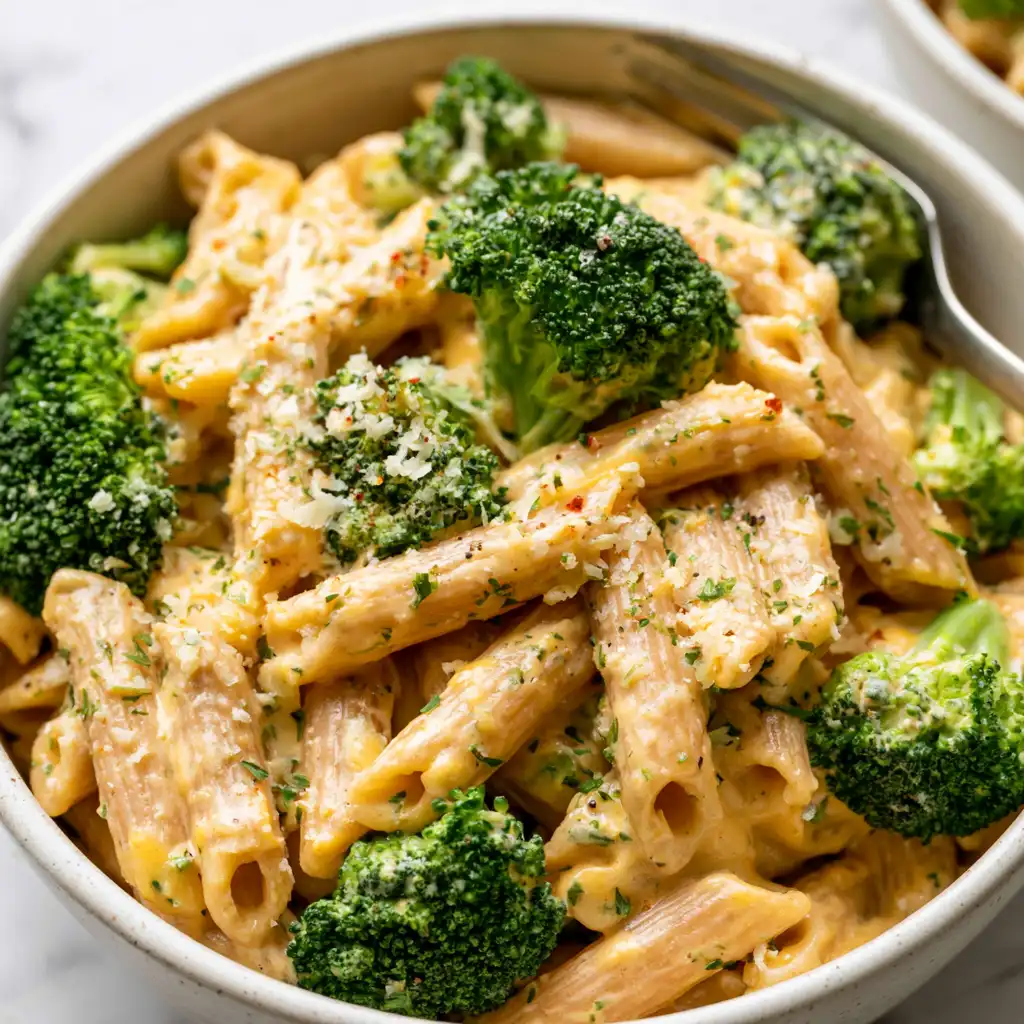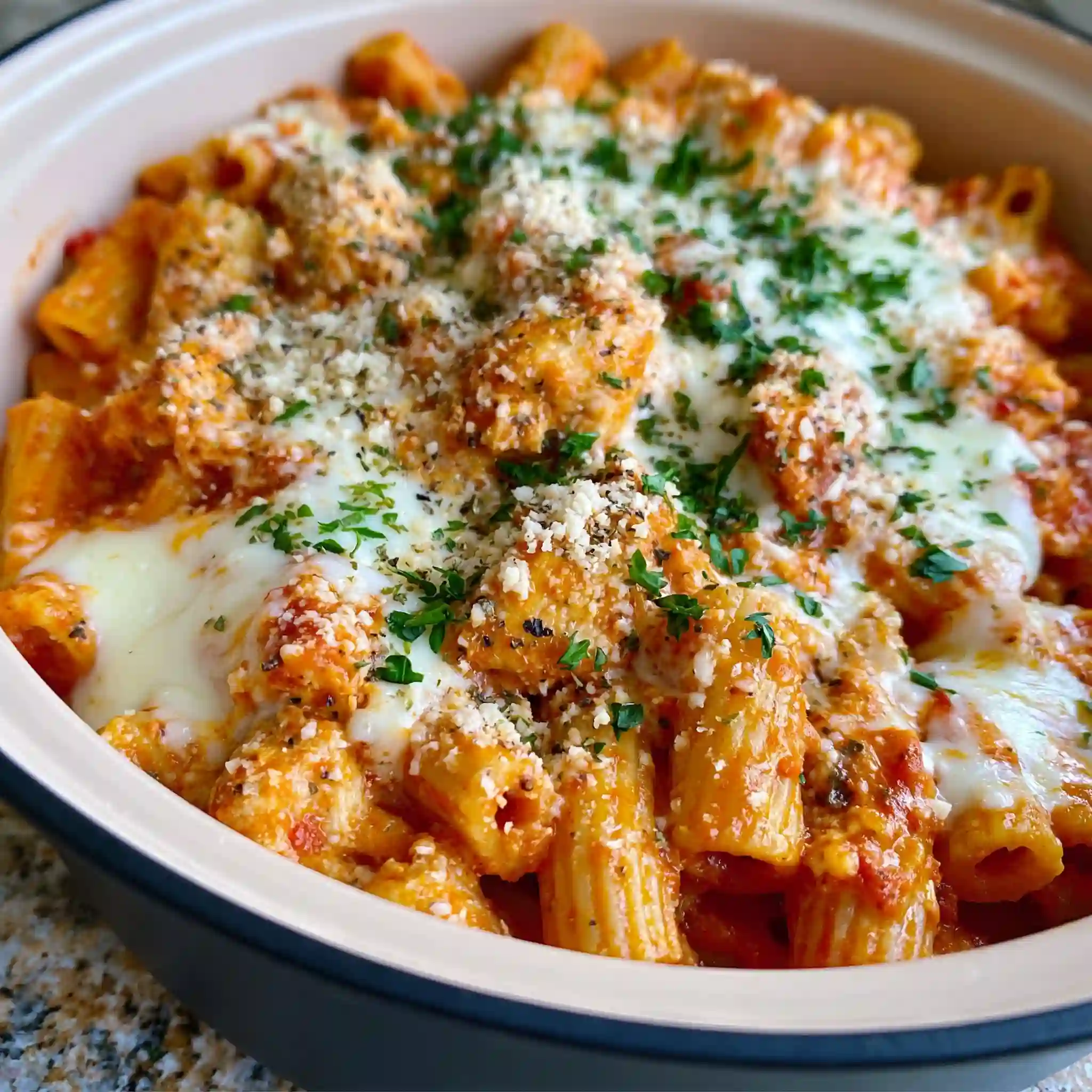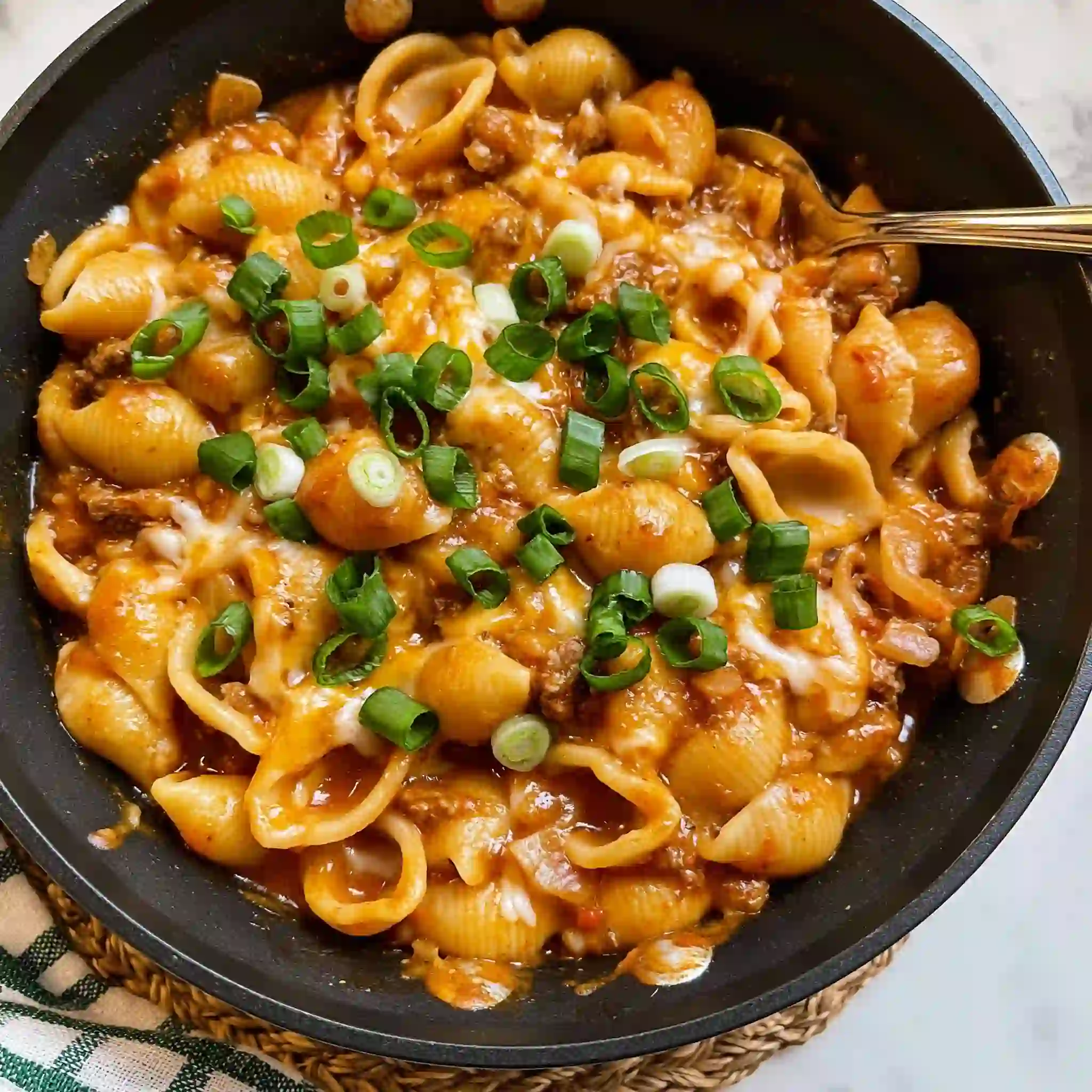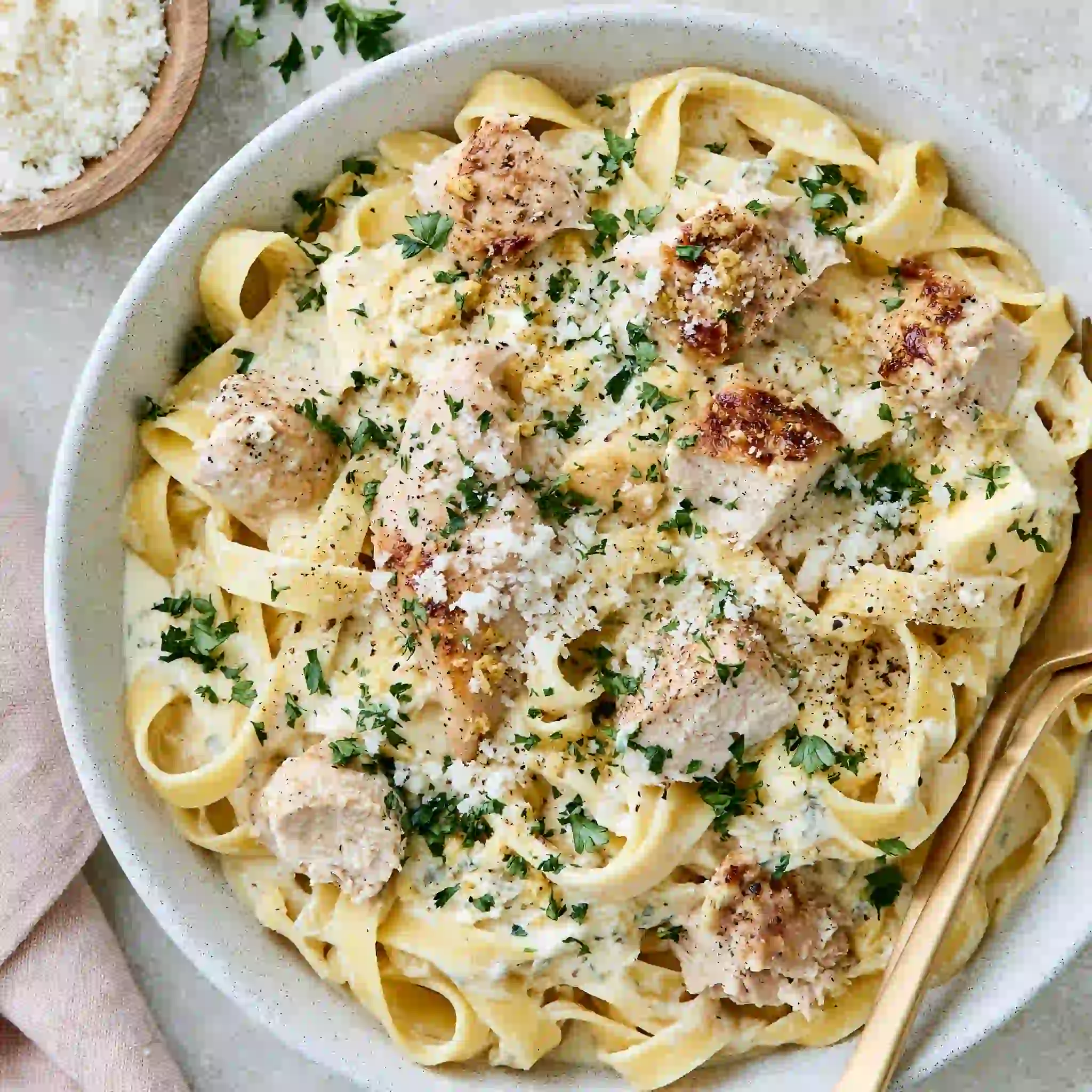
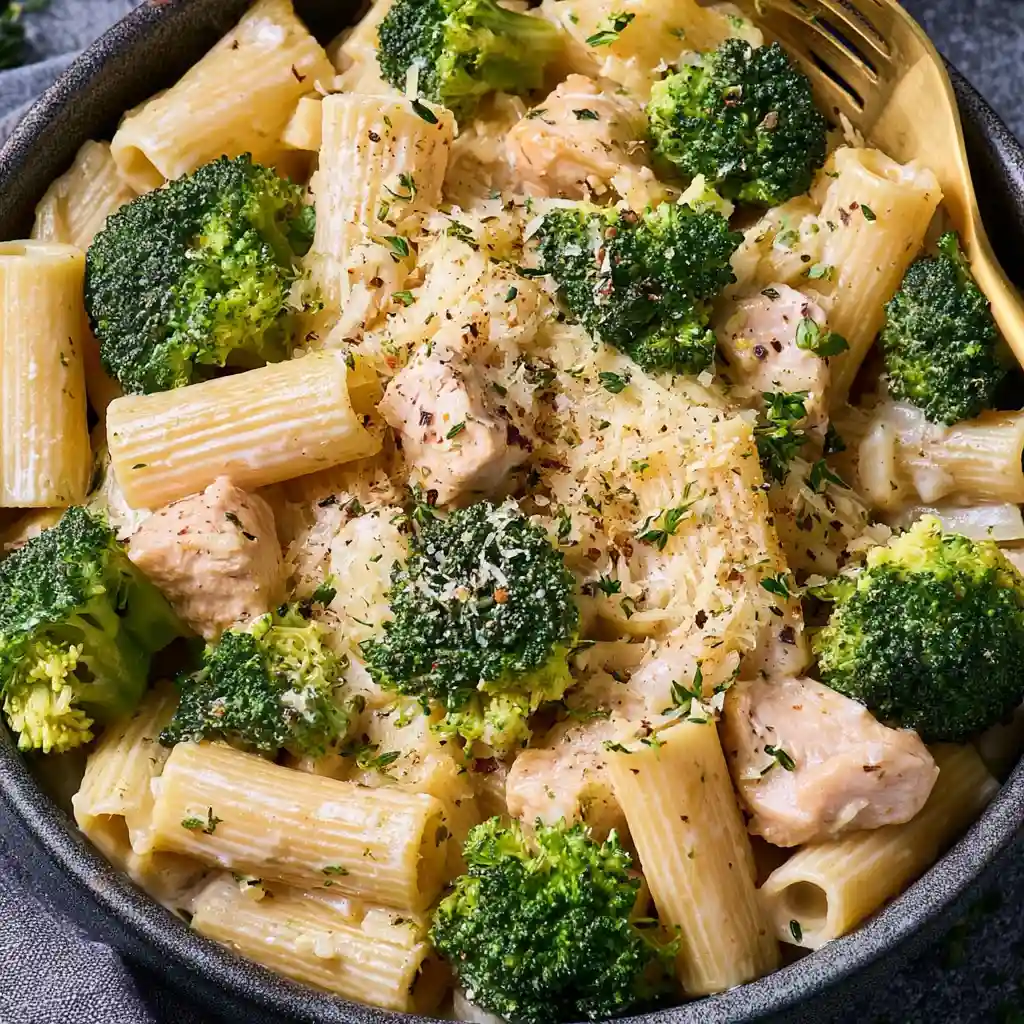
Some dinners earn a regular place in my kitchen because they bring several good things together without making the cooking feel complicated. This chicken broccoli pasta is one of them. It combines tender chicken, crisp-tender broccoli, short pasta, and a creamy Parmesan sauce with a small splash of white wine for depth.
I cook the broccoli in the same pot as the pasta, which keeps cleanup manageable and gives the florets just enough time to soften without turning mushy. The sauce comes together in the pan while the pasta cooks, so the whole meal moves along at a comfortable pace. A little reserved pasta water helps the cream sauce cling to every piece.
Why This Recipe Works
The recipe builds flavor in a few quiet steps. First, the chicken cooks in olive oil and butter, which gives it a lightly browned surface and leaves savory bits in the pan. The onion and garlic then soften in those flavorful juices.
Dry white wine loosens the browned bits and adds brightness to the sauce. Fresh thyme brings an earthy note, while red chili flakes provide gentle heat. Half and half keeps the sauce creamy without making it overly heavy, and Parmesan adds saltiness and body.
Broccoli works especially well here because it cooks quickly and balances the rich sauce. Adding it to the pasta water during the final 2–3 minutes gives it a tender texture while keeping its shape.
Ingredients That Matter
You’ll need 8 oz (250 g) rigatoni or another type of short pasta. Rigatoni holds the creamy sauce inside its ridges and tubes, but penne, fusilli, or another short shape also works well.
Use 1 lb (450 g) broccoli florets. Cut any very large florets into smaller pieces so they cook at the same rate. Uniform pieces also make the pasta easier to eat.
The chicken breast should weigh 1 lb (450 g) after trimming and should be cut into bite-sized pieces. Smaller pieces cook quickly and mix evenly through the pasta.
For the sauce, gather 1 medium onion, 2 large garlic cloves, 1/3 cup (75 ml) dry white wine, 1 tablespoon fresh thyme, 1/4 teaspoon red chili flakes, 1 cup (250 ml) half and half (single cream), and 1/3 cup (40 g) grated Parmesan.
You’ll also need 1 tablespoon olive oil, 1 tablespoon unsalted butter, salt, and freshly ground black pepper. The reserved pasta water plays an important role, so don’t drain the pasta before setting aside 1–2 cups.
Cook the Pasta and Broccoli
Bring a large pot of salted water to a boil. Add the pasta and cook according to the package instructions until al dente. The pasta should feel cooked through but still have a slight firmness in the center.
Add the broccoli florets to the same pot during the last 2–3 minutes of cooking. This short time softens the broccoli while keeping it from falling apart in the sauce.
Before draining, reserve 1–2 cups of pasta water. I usually scoop it out with a heatproof measuring cup and set it near the stove. The starchy water can loosen the sauce while also helping it coat the pasta.
Drain the pasta and broccoli together. Give the colander a gentle shake, but don’t let the vegetables sit for too long if you want them to stay warm.
Brown the Chicken
While the pasta cooks, heat the olive oil and butter in a large, deep pan over medium heat. Wait until the butter melts and begins to foam. That’s the point when the pan is ready for the chicken.
Add the bite-sized chicken pieces and season them with salt and black pepper. Cook for 5–7 minutes, turning and stirring occasionally, until the chicken is cooked through.
Try not to crowd the chicken in the pan. If the pieces sit in a thick layer, they may release moisture and steam instead of browning. The chicken doesn’t need a dark crust, but a little color gives the finished sauce more flavor.
Once the chicken is cooked, keep it in the pan while you continue with the aromatics. If the pan looks very dry, the remaining butter and oil should still be enough to soften the onion.
Build the Cream Sauce
Add the finely chopped onion to the same pan. Cook for 3–4 minutes, stirring occasionally, until it softens and turns translucent.
Add the chopped garlic and cook for another 1–2 minutes. Stir frequently during this step because garlic can burn quickly. You want it fragrant and softened, not browned.
Pour in the dry white wine and scrape the bottom of the pan with a wooden spoon or spatula. Those browned bits dissolve into the wine and become part of the sauce. Let the wine simmer until it has mostly reduced.
Stir in the chopped fresh thyme and red chili flakes. Then add the half and half (single cream). Bring the mixture to a gentle simmer, but avoid a rapid boil. Reduce the heat and cook for 5 minutes, giving the sauce time to thicken slightly.
The sauce will still look fairly loose at this stage. That’s helpful because the pasta and Parmesan will thicken it further. If the cream reduces too much before you add the pasta, stir in a small splash of reserved pasta water.
Combine Everything
Add the drained pasta and broccoli to the skillet. Toss gently so the sauce coats the pasta and the broccoli stays in recognizable pieces.
If the sauce looks too thick, add a little of the reserved pasta water. Start with a few tablespoons and toss again. Continue adding small amounts until the sauce moves easily through the pasta without becoming watery.
Stir in the grated Parmesan cheese. The heat from the pasta and sauce will melt it into the mixture. Taste and add more salt and freshly ground black pepper as needed.
I like to let the pasta rest in the pan for a minute before serving. This gives the sauce a chance to settle around the pasta, but don’t leave it too long or the sauce may become thicker than you want.
Doneness and Texture
The chicken should be fully cooked in the center, with no raw or translucent areas. Bite-sized pieces usually cook evenly, but their exact size can affect the timing.
The broccoli should pierce easily with a fork while still holding its shape. If it feels firm after the pasta drains, don’t worry too much. It will continue cooking briefly when you toss it with the hot sauce.
The pasta should remain al dente. Overcooked pasta can become soft when mixed with the cream sauce, so check it near the lower end of the package’s suggested cooking range.
The finished sauce should cling to the pasta rather than pool heavily in the pan. If it becomes too thick, loosen it with pasta water. If it seems thin, toss everything over low heat for another minute or two.
Common Mistakes to Avoid
Adding the broccoli too early can make it soft and watery. Keep it in the pasta pot for only the final 2–3 minutes.
Cooking the garlic over high heat can make it bitter. Medium heat and frequent stirring give it time to soften without scorching.
A rapid boil can cause the half and half (single cream) to separate. Keep the sauce at a gentle simmer instead.
Don’t skip the wine reduction. If you add the cream immediately after the wine, the sauce may taste sharper and less balanced. Let most of the wine cook away first.
Avoid adding all the pasta water at once. The amount you need depends on how much sauce reduced and how absorbent your pasta is. Add it gradually.
Substitutions and Adjustments
You can use another type of short pasta in place of rigatoni. Choose a shape with ridges, curves, or spaces that can hold the sauce.
If you don’t have fresh thyme, dried thyme can work in a smaller amount, though the flavor will be less fresh. Add it with the chili flakes so it has time to flavor the sauce.
For a milder dish, leave out the red chili flakes. If you prefer more heat, increase them carefully rather than adding a large amount at once.
You can replace the dry white wine with extra pasta water or a small amount of low-sodium chicken broth. The wine adds flavor, but the dish will still work without it.
Use freshly grated Parmesan when possible. It melts more smoothly into the sauce than many pre-grated varieties.
Serving and Storage
Serve the pasta immediately, with extra Parmesan cheese and a sprinkle of fresh thyme if you like. A simple green salad or warm piece of bread works well alongside it.
Store leftovers in a covered container in the refrigerator. When reheating, add a small splash of water or milk and warm the pasta gently in a skillet or microwave. The sauce thickens as it cools, so the added liquid helps bring back a softer texture.
Questions You May Have
Can I use frozen broccoli?
Yes. Add the frozen broccoli during the final 2–3 minutes of the pasta cooking time, just as you would with fresh florets. The water may take a little longer to return to a boil.
Can I make this without white wine?
Yes. Replace it with extra pasta water or a little low-sodium chicken broth. Let the liquid reduce slightly before adding the half and half (single cream).
Why did my sauce become too thick?
Pasta continues to absorb sauce after you combine it with the other ingredients. Stir in reserved pasta water a few tablespoons at a time until the sauce loosens.
Can I prepare this ahead of time?
This pasta tastes best right after cooking, but you can prepare the chicken and sauce earlier in the day. Cook the pasta and broccoli closer to serving so they keep a better texture.
Chicken, broccoli, and creamy Parmesan sauce make this a comforting meal with enough freshness to keep it from feeling too rich. Once you’ve made it once, the method becomes familiar: cook the pasta, soften the broccoli, build the sauce, and bring everything together while it’s hot.
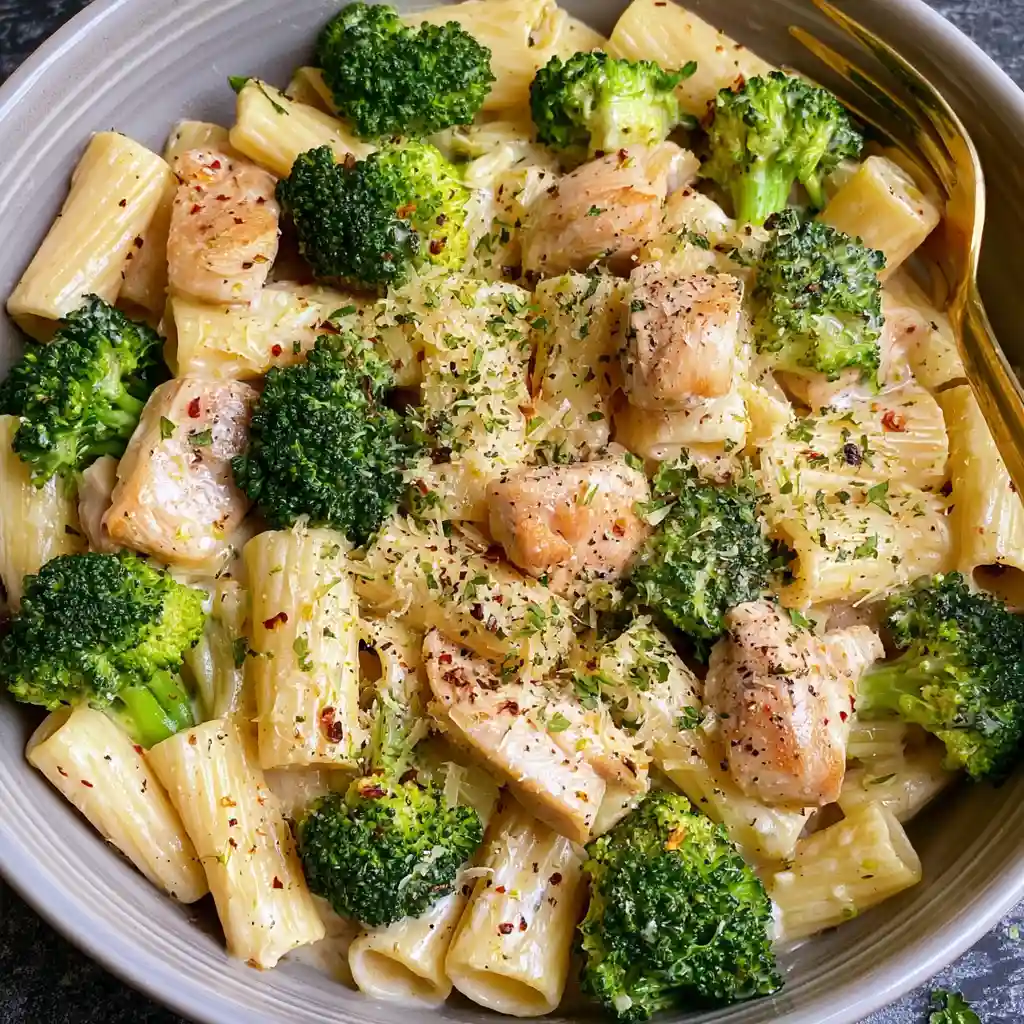

Chicken Broccoli Pasta
Ingredients
Method
- Bring a large pot of salted water to a boil. Add the pasta and cook according to the package instructions until al dente. Add the broccoli florets to the same pot for the last 2-3 minutes to steam them. Reserve 1-2 cups of pasta water before draining.
- Meanwhile, heat the olive oil and butter in a large, deep pan over medium heat. Once the butter has melted and starts to foam, add the chicken. Season with salt and black pepper, and cook for 5-7 minutes or until the chicken is cooked through.
- In the same pan, add the chopped onion and cook for 3-4 minutes until softened and translucent. Add the chopped garlic and cook for an additional 1-2 minutes, stirring frequently to prevent burning.
- Pour the dry white wine into the skillet, scraping up any browned bits from the bottom of the pan. Simmer until the wine has mostly reduced.
- Stir in the fresh thyme and red chili flakes, then add the half and half (single cream). Bring the mixture to a gentle simmer, then reduce the heat and cook for 5 minutes, allowing the sauce to thicken slightly.
- Add the cooked pasta and broccoli to the skillet, tossing gently to mix everything together. Use a bit of the reserved pasta water to loosen the sauce if it looks too thick.
- Stir in the grated Parmesan cheese and season with additional salt and black pepper to taste.
- Serve immediately, garnished with extra Parmesan cheese and a sprinkle of fresh thyme if you like.
Notes
Amount Per Serving: Calories: 340Total Fat: 13gSaturated Fat: 6gTrans Fat: 0gUnsaturated Fat: 6gCholesterol: 88mgSodium: 262mgCarbohydrates: 22gFiber: 4gSugar: 4gProtein: 31g