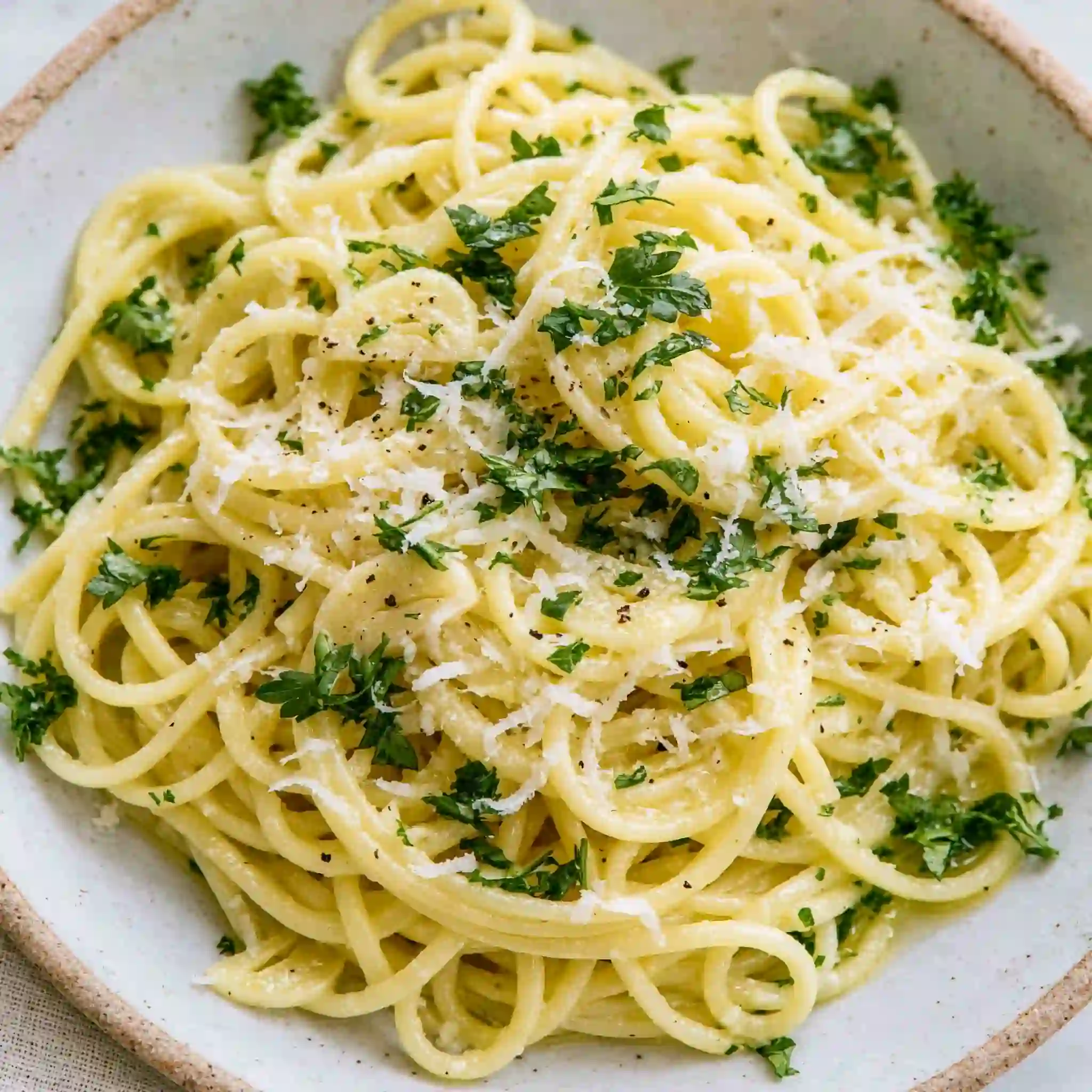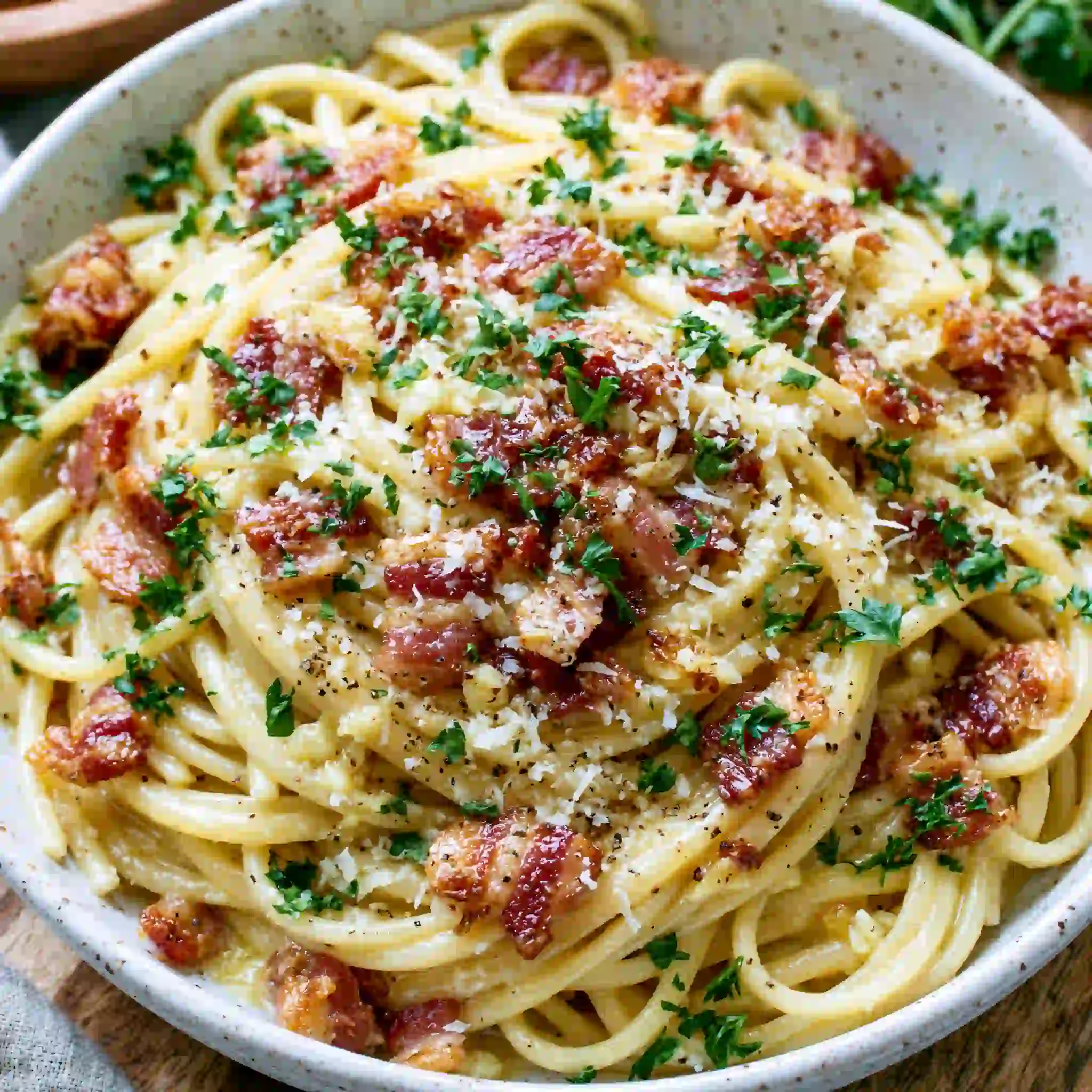
Cacio e Pepe is one of those pasta dishes that proves a short ingredient list can still make a deeply satisfying dinner. I make it when I want pasta that feels comforting without needing a long sauce, a crowded skillet, or a grocery run. Butter, Pecorino Romano, black pepper, and starchy pasta water come together into a creamy coating that clings to every strand.
The key is not rushing the final toss. Warm pasta water gives the cheese a smooth place to melt, while the starch helps turn everything into a sauce instead of leaving clumps of cheese at the bottom of the pan. Once you get that rhythm down, this becomes a dependable 15-minute pasta dinner.
Why This Pasta Works
I like bucatini here because its hollow center holds onto some of the sauce, but regular spaghetti works just as well. Either pasta gives you long strands that coat nicely with melted butter, sharp Pecorino Romano, and toasted black pepper.
The sauce does not need cream. The pasta water does the work instead. It carries starch from the cooked noodles, and that starch helps the butter and cheese turn creamy when you toss everything over low heat.
Freshly grated Pecorino Romano matters. It melts more evenly than pre-shredded cheese, which often contains ingredients that keep the shreds from sticking together in the package. Grating it right before cooking also gives the finished pasta a cleaner, saltier flavor.
Ingredients
- 8 oz dried bucatini or spaghetti
- 2 tbsp unsalted butter
- ½ cup freshly grated Pecorino Romano, plus more for garnish
- ½ tsp toasted cracked black pepper
You will also need a small handful of salt for the pasta water and 2/3 cup reserved pasta water.
How I Make Cacio e Pepe
Fill a large pot with water and bring it to a boil over high heat. Add a small handful of salt, then add the bucatini or spaghetti. Stir the pasta occasionally as it cooks so the strands do not stick together.
Cook the pasta until al dente, usually 6 to 8 minutes. I want it tender enough to bend easily but still firm in the center because it will finish in the skillet with the sauce.
Before draining, reserve 2/3 cup of the pasta water. Do not skip this step. That warm, starchy water is what helps the butter and Pecorino Romano form a creamy sauce rather than a greasy or clumpy one.
Drain the pasta, then return it to the pot or move it into a large skillet over low heat. Add the reserved pasta water and the butter. Toss steadily until the butter has just melted and the pasta looks glossy.
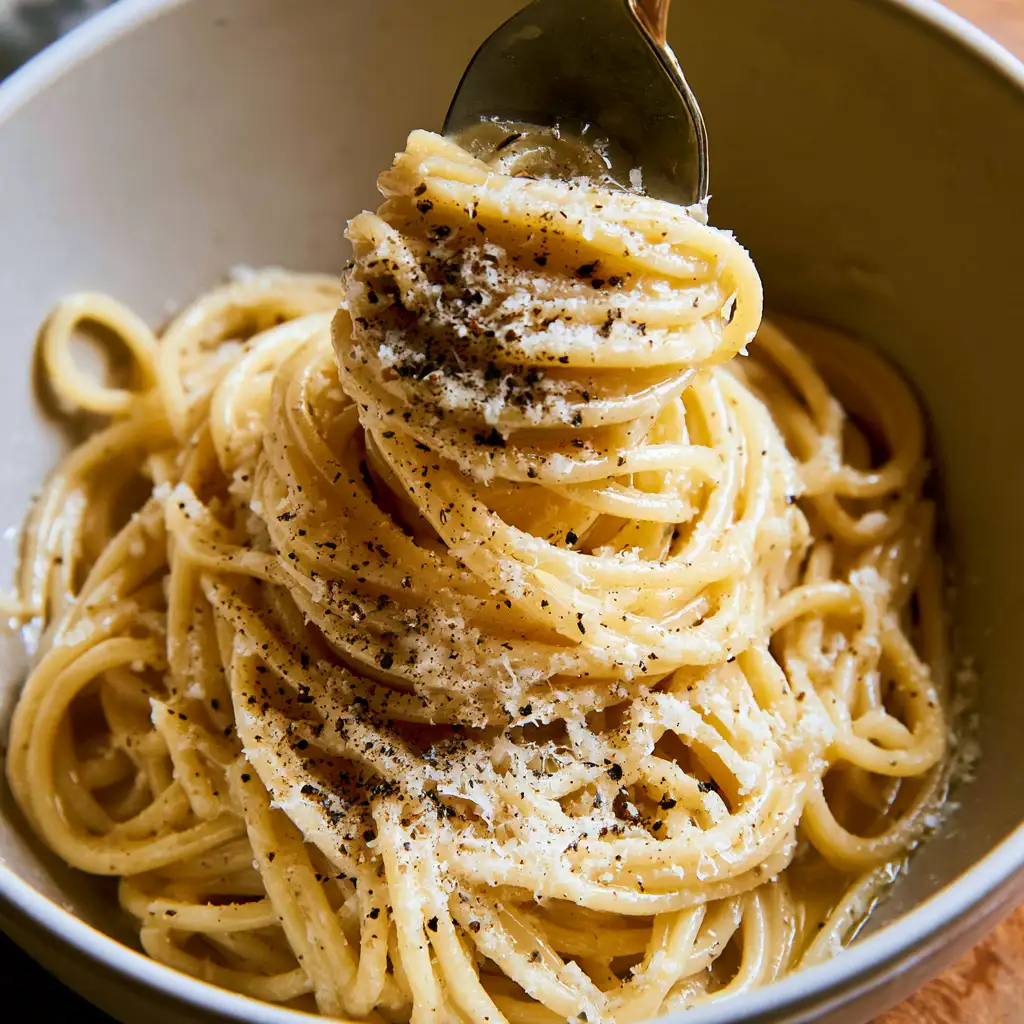
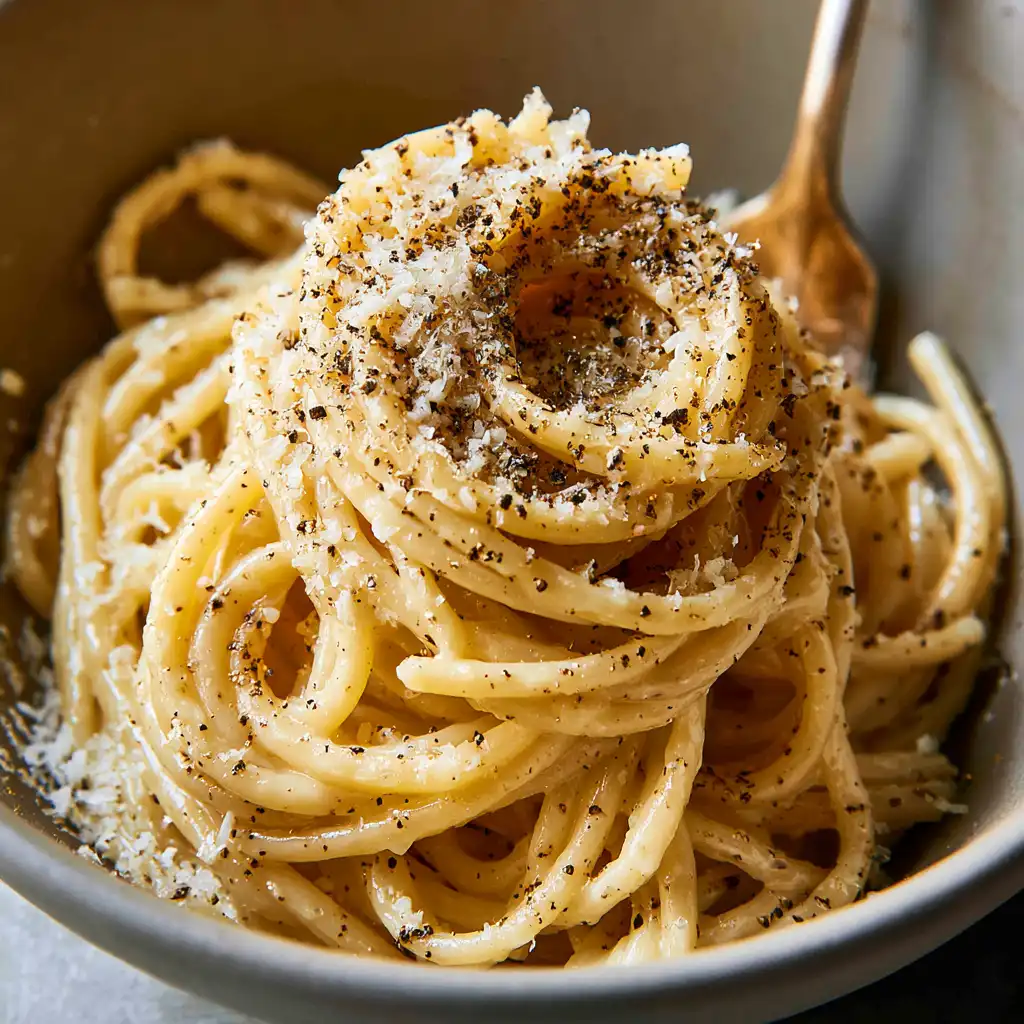
Add the freshly grated Pecorino Romano and toasted cracked black pepper. Keep tossing the pasta until the cheese melts into the water and butter. The sauce should look creamy and lightly coat the noodles rather than pool heavily at the bottom of the pan.
Serve the pasta right away with more grated Pecorino Romano over the top.
The Important Pasta Water Step
The most common problem with Cacio e Pepe is clumped cheese. It can happen when the cheese hits pasta that is too hot or too dry, especially if there is not enough pasta water in the pan to help it melt gradually.
Reserved pasta water fixes that problem because it is warm and starchy. The heat softens the cheese, while the starch gives the sauce body. Keep the heat low once you add the cheese. If the pan gets too hot, the Pecorino can tighten up and turn grainy instead of creamy.
If the sauce looks dry, add a small splash of pasta water and toss again. If it looks thinner than you want, keep tossing over low heat for a few moments. The noodles will absorb some of the liquid, and the sauce will settle into a silky coating.
Toasting the Black Pepper
Toasted cracked black pepper gives this pasta its familiar warmth and bite. I prefer cracked pepper over very finely ground pepper because the larger pieces stay noticeable in the finished dish without taking over every bite.
You can toast the pepper in a dry skillet for a brief moment before starting the pasta if it is not already toasted. Watch it closely. It should smell fragrant, but it should not darken too much or burn. Burnt pepper tastes harsh, and there are not many other ingredients here to cover it up.
Common Mistakes
Adding the cheese over high heat can make the sauce clump. Keep the pasta over low heat when you add the Pecorino Romano, and toss it continuously.
Forgetting to reserve pasta water leaves you without the ingredient that brings the sauce together. I always scoop out the 2/3 cup before I drain the pasta, even if I think I may not need all of it.
Using cold pasta can also make the cheese harder to melt smoothly. Move directly from draining to tossing, while the noodles and pasta water are still hot.
Adding too much salt is another easy mistake. Pecorino Romano is naturally salty, so use only a small handful of salt in the pasta water rather than heavily salting it.
Serving Ideas
Cacio e Pepe stands well on its own, especially when dinner needs to stay quick and low-effort. I like to serve it with a crisp green salad dressed with lemon and olive oil because the fresh acidity balances the rich cheese.
It also works well beside roasted vegetables, such as broccoli, zucchini, or asparagus. If you want something more substantial, serve it with roasted chicken or a simple piece of fish. Keep the sides lightly seasoned so the pepper and Pecorino remain the focus.
Storage and Reheating
This pasta tastes best immediately, while the sauce is loose and creamy. Still, you can refrigerate leftovers in a covered container for up to 3 days.
To reheat, place the pasta in a skillet over low heat with a small splash of water. Toss gently until warmed through. The sauce may not return to the exact texture it had when freshly made, but the added water helps loosen the cheese and butter coating.
I do not recommend freezing Cacio e Pepe. The cheese sauce can separate after thawing, and the pasta can become soft.
Questions About Cacio e Pepe
Can I use Parmesan instead of Pecorino Romano?
You can, but the flavor will change. Pecorino Romano has a sharper, saltier taste that gives Cacio e Pepe its distinctive character. Parmesan makes a milder sauce.
Why did my cheese turn into clumps?
The pan was likely too hot, or there was not enough warm pasta water to help the cheese melt smoothly. Keep the heat low and toss with the reserved pasta water until the sauce forms.
Can I use spaghetti instead of bucatini?
Yes. Dried spaghetti works very well and is often easier to find. Bucatini adds a slightly heartier bite, but both pastas carry the sauce nicely.
How do I know when the sauce is ready?
The pasta should look evenly coated with a creamy sauce that clings to the strands. It should not look dry, but it should not sit in a large pool of liquid either.

Cacio e Pepe
Ingredients
Method
- Fill a large pot with water and bring to a boil over high heat.
- Add a small handful of salt and pasta to boiling water.
- Cook pasta, stirring occasionally until al dente, 6 to 8 minutes.
- Drain pasta, reserving 2/3 cup pasta water.
- Pour pasta back into pot or into a large skillet and place over low heat.
- Add pasta water and butter and toss together until butter just melts.
- Add grated cheese and black pepper and continue to toss together until cheese melts and a creamy sauce forms.
- Top with more grated cheese and serve.
Notes
Serving: 1g | Calories: 621kcal | Carbohydrates: 86g | Protein: 23g | Fat: 20g | Saturated Fat: 12g | Cholesterol: 57mg | Sodium: 308mg | Potassium: 274mg | Fiber: 4g | Sugar: 3g | Vitamin A: 459IU | Calcium: 290mg | Iron: 2mg