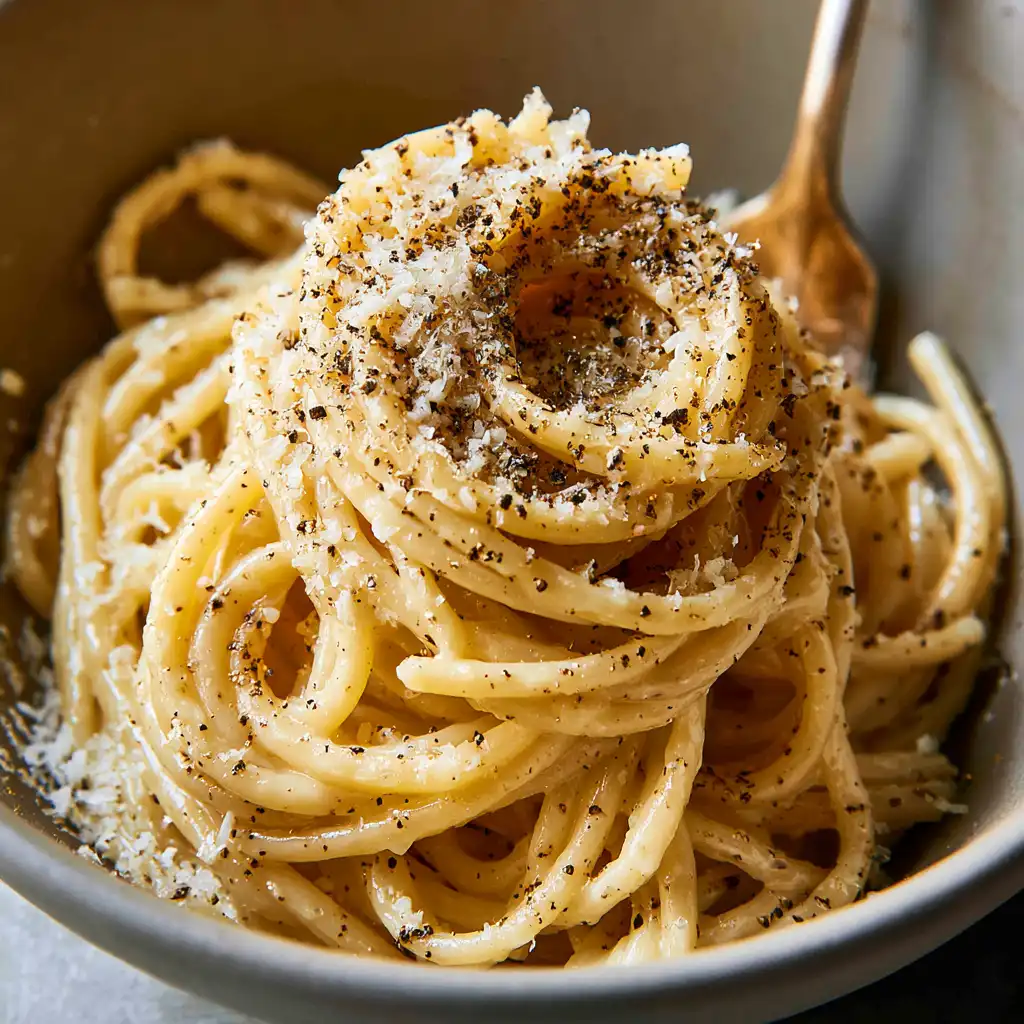
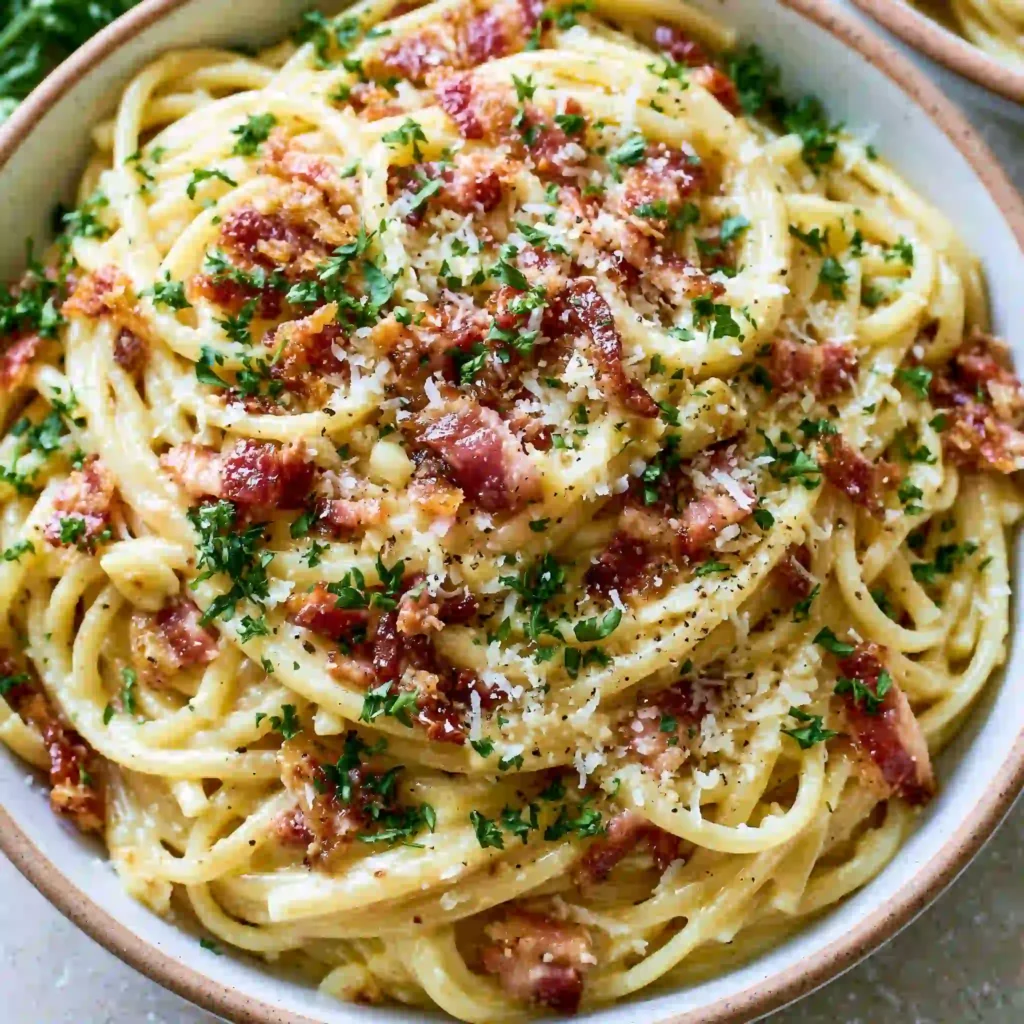
Some pasta dinners demand a long list of ingredients. Pasta Carbonara works differently. Bacon, eggs, Parmesan, garlic, and hot pasta water come together into a glossy sauce that clings to every strand. The key is moving with purpose once the spaghetti drains, because the heat from the pasta and water gently thickens the egg mixture without turning it into scrambled eggs.
I make this version when I want a filling dinner that feels familiar but still needs a little attention at the stove. The bacon cooks slowly after its initial simmer, which gives you crisp pieces and flavorful drippings for the sauce. This makes about 6 servings.
Why This Pasta Carbonara Works
Starting the bacon with a small amount of water may sound unusual, but it gives the fat time to render before the bacon browns. Once the water cooks away, the bacon can crisp in its own drippings instead of scorching too soon.
The pasta water matters just as much as the eggs and cheese. Cooking the spaghetti in only 8 cups of water creates starchier water, and that starch helps the sauce turn smooth and lightly thick. I reserve a full cup before assembling the pasta so I can loosen the sauce if it tightens while it rests.
Freshly grated Parmesan makes a real difference here. It melts into the warm egg mixture more evenly than pre-shredded cheese, which often contains additives that can leave the sauce grainy. Use real Parmigiano Reggiano if you can, and grate it finely so it blends quickly.
Ingredients You’ll Need
- 10 slices bacon, cut into 1/2-inch pieces
- 821 cups water, divided
- 4 cloves garlic, minced
- 1 lb spaghetti or linguine
- 141 cups finely grated Parmesan cheese, plus more for serving (2 oz)
- 3 large eggs
- 1 large egg yolk
- 1 tsp each salt and pepper, or to taste
- Chopped fresh parsley, for garnish
Spaghetti gives you the classic carbonara texture, but linguine also works well. Both noodles hold the sauce without becoming heavy. Since bacon and Parmesan already bring salt, wait until the end before adding more salt to the finished pasta.
Cook the Bacon and Garlic
Add the bacon and 1/2 cup water to a large nonstick skillet. Bring it to a simmer over medium-high heat. Let the mixture simmer until the water evaporates, which takes about 6 to 7 minutes.
Lower the heat to medium-low and continue cooking until the bacon turns brown and crisp, about 6 to 8 minutes longer. Stir it occasionally so the pieces brown evenly. The bacon should look crisp around the edges but not dark or bitter.
Set a fine-mesh strainer over a bowl, then pour the bacon into the strainer. Let the drippings collect in the bowl below. Keep about 1 teaspoon of rendered fat in the skillet, then return the skillet to the heat.
Add the minced garlic and sauté it for about 30 seconds, just until it smells fragrant and turns lightly golden. Garlic can go from golden to bitter quickly, so don’t walk away here. Pour the garlic into a medium mixing bowl, then add 1 tablespoon of the rendered bacon fat from the bowl beneath the strainer.
Make the Egg and Cheese Mixture
Add the eggs, egg yolk, finely grated Parmesan, and pepper to the bowl with the garlic and bacon fat. Whisk until the mixture looks evenly combined. It will seem thick at this point, and that’s exactly right.
Set the bowl close to where you will drain the pasta. Carbonara comes together quickly, and having the egg mixture ready prevents the pasta from cooling down while you search for ingredients or measuring cups.
Boil and Drain the Pasta
Bring the remaining 8 cups water to a boil in a large Dutch oven. Don’t add extra water. A smaller amount gives you concentrated, starchy pasta water, and that starch helps hold the sauce together.
Add the spaghetti and salt to the boiling water. Cook the pasta until al dente. It should feel tender but still have a little firmness in the center, because it continues to soften slightly as it sits in the sauce.
While the pasta cooks, place a colander inside a large bowl. Drain the al dente pasta into the colander, allowing the hot pasta water to collect in the bowl. Measure out 1 cup of the hot water and discard the rest. Immediately transfer the drained pasta to the now-empty large bowl.
Toss the Carbonara
Slowly pour 1/2 cup of the hot pasta water into the egg mixture while whisking constantly. This step warms the eggs gradually and starts melting the cheese. The water needs to be very hot for the mixture to come together properly. If it cools too much before you use it, warm it briefly in the microwave.
Pour the warmed egg mixture over the hot pasta. Toss right away until every strand looks coated. Add the crisp bacon and toss again. Taste the pasta, then add salt only if it needs it.
Let the pasta rest for 2 to 4 minutes, tossing it frequently. During this brief rest, the sauce thickens slightly and settles around the noodles. If it becomes thicker than you like, add some of the remaining 1/2 cup hot pasta water, a little at a time, while tossing.
Serve the Pasta Carbonara immediately with extra Parmesan and chopped fresh parsley. The sauce is at its best while it is warm and loose enough to coat the pasta.
Common Carbonara Problems
If the sauce looks dry or sticky, the pasta likely needed more hot pasta water. Add it gradually and toss continuously. The sauce should look creamy from the eggs, cheese, bacon fat, and starchy water, not heavy or clumped.
If the eggs form visible curds, the pasta or water was probably too hot when everything came together, or the pasta sat without tossing. Work quickly, and keep the bowl away from direct heat. The hot pasta provides enough warmth to thicken the sauce gently.
If the cheese seems grainy, check the type and size of your grated Parmesan. Finely grate fresh Parmigiano Reggiano, slightly pack it when measuring, or weigh it if you use a kitchen scale. Large shreds take longer to melt and can leave the sauce uneven.
For a thicker sauce, I sometimes place a large heatproof bowl of sauced pasta over a pot of gently simmering water. Toss it for about 1 minute, only until the sauce thickens nicely. Watch it closely, because too much heat can make the eggs tighten and turn the sauce gluey.
Serving Ideas
Pasta Carbonara is rich enough to stand on its own, but a crisp green salad with a sharp, tangy dressing cuts through the bacon and cheese nicely. I also like it with roasted broccoli, green beans, or sautéed zucchini.
Keep the side dishes plain and lightly seasoned. The pasta already brings plenty of savory flavor, so it doesn’t need much competition.
Storage Notes
Carbonara tastes best right after you make it. The sauce thickens as it cools, and reheating can change its texture because of the eggs and cheese.
If you have leftovers, refrigerate them in a covered container and eat them within 2 days. Reheat gently in a skillet over low heat with a small splash of water, tossing often. Avoid high heat, which can make the sauce oily or cause the eggs to set.
Questions About Pasta Carbonara
Can I use linguine instead of spaghetti?
Yes. Linguine works well and gives the sauce a little more surface to cling to. Use the same amount and cook it until al dente.
Why do I need to reserve pasta water?
The starchy water loosens the sauce while helping it stay creamy and cling to the noodles. Plain water won’t give you quite the same texture.
Can I make Pasta Carbonara ahead?
I don’t recommend making the full dish ahead. Prepare the bacon and grate the cheese in advance if needed, then cook and toss the pasta just before serving.
How do I keep the eggs from scrambling?
Whisk hot pasta water slowly into the egg mixture first, then toss it immediately with the hot pasta. Don’t place the bowl over direct heat unless you need a slightly thicker sauce, and then use only gentle simmering heat for about 1 minute.
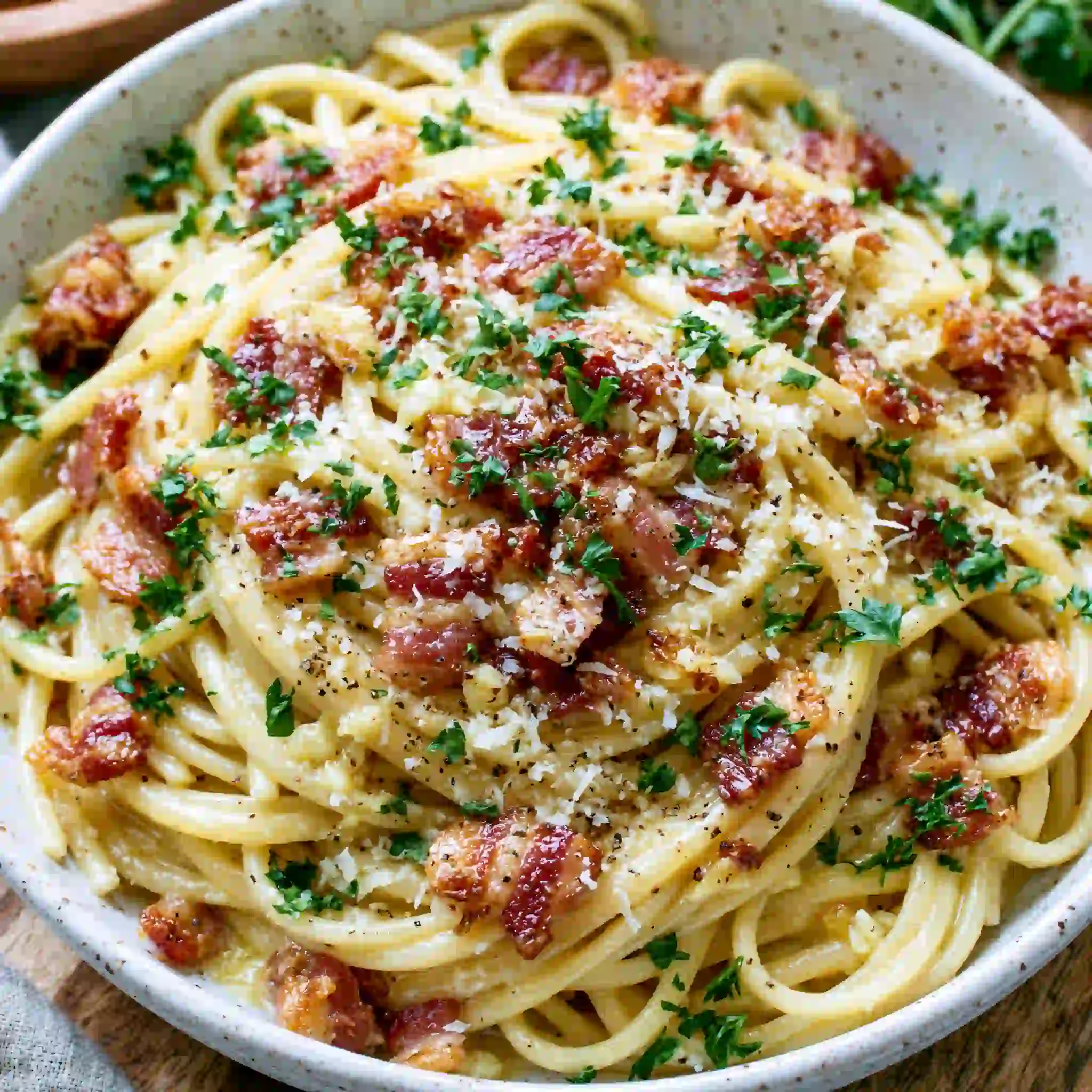

Pasta Carbonara
Ingredients
Method
- Add bacon and 1/2 cup of the water to a large non-stick skillet and bring to a simmer over medium-high heat.
- Allow to simmer until water evaporates about 6 – 7 minutes, then reduce heat to medium-low and continue to cook until bacon is brown and crisp, about 6 – 8 minutes longer.
- Place a fine mesh strainer over a bowl then pour bacon into strainer while reserving about 1 tsp of the rendered fat in pan. Return pan to heat and saute garlic about 30 seconds, until fragrant and lightly golden.
- Pour into a medium mixing bowl then add 1 Tbsp rendered bacon fat (drippings in bowl set under strainer) to mixing bowl with garlic. Add eggs, egg yolk, parmesan and pepper to garlic mixture and whisk until well combined.
- Meanwhile, bring 8 cups of water to a boil in a large dutch oven (no more than 8 cups because you want a very starchy water for the sauce). Add spaghetti and salt to boiling water and cook until al dente. While pasta is boiling, set a colander in a large bowl.
- Carefully drain al dente pasta into colander in bowl, while reserving pasta water in bowl. Measure out 1 cup hot pasta water and discard remaining water. Immediately place pasta in now empty large bowl.
- Slowly pour and whisk 1/2 cup pasta water into egg mixture, then slowly pour mixture over pasta while tossing to coat. Add bacon and toss to combine. Season with salt if desired.
- Let pasta rest, tossing frequently, 2 – 4 minutes until sauce has thickened slightly and coats pasta. Thin with remaining 1/2 cup hot pasta water as needed. Serve immediately topped with additional parmesan and parsley.
Notes
- Use real Parmigiano Reggiano cheese for fresh flavor and only freshly grated. It will melt better and gives this dish a richer flavor. I like to use a zest to grate it. Slightly pack when measuring or use a kitchen scale.
- Be sure you immediately add the hot pasta water into the egg mixture to help cook it (if needed, you could even re-warm the water it in the microwave, but it needs to be very hot).
- If you want a thicker sauce another option I have tried is to toss the pasta with the sauce mixture in a large heat proof bowl set over a pot of simmering water, cooking for only about 1 minute or just until thickened nicely. Careful not to overdue it or it can be gluey.
- Recipe adapted from Cook’s Illustrated