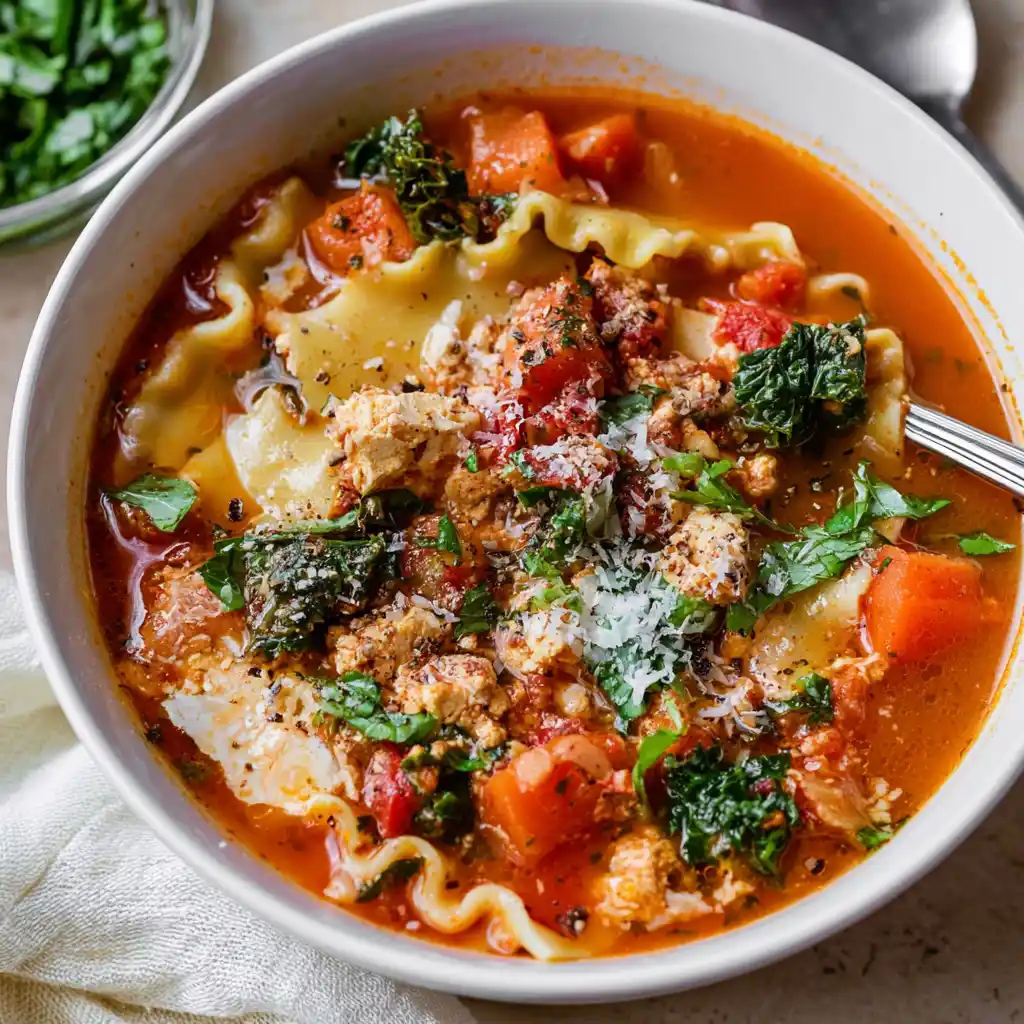
When I want the comfort of lasagna without assembling layers, I make this healthy vegetarian lasagna soup. It has tender vegetables, crumbled tofu, tomatoes, kale, herbs, and broken-up lasagna noodles in a rich vegetable broth. Ricotta and freshly grated parmesan finish each bowl with the creamy, salty flavor that makes this soup feel familiar.
I cook the noodles separately rather than dropping them straight into the soup. This small step keeps them from becoming too soft or breaking apart while the broth simmers. I also keep extra broth nearby because pasta continues to absorb liquid, both during cooking and afterward.
Why This Soup Works
This recipe builds flavor in a large saucepan or Dutch oven with olive oil, garlic, carrots, parsnips, oregano, thyme, and basil. Cooking these ingredients together first gives the vegetables time to soften and lets the dried herbs release their flavor into the oil.
Extra-firm tofu takes the place of ground meat here. After I press out the excess liquid and crumble it with my hands, it takes on a texture that works well in a hearty soup. The tofu also adds protein, while kale, carrots, parsnips, and tomatoes bring substance without making the soup feel heavy.
The final spoonful of ricotta melts gently into the hot broth. Parmesan adds a sharper, savory note. I like to finish with fresh basil or parsley and plenty of freshly cracked black pepper.
Ingredients
This recipe makes about 4–6 servings, depending on how hungry everyone is.
- 1/4 cup olive oil
- 4 large cloves garlic, minced
- 2 cups carrots, diced
- 1 cup parsnips, diced
- 2 tsp dried oregano
- 2 tsp dried thyme
- 2 tsp dried basil
- 1 pack tofu, extra firm
- 2 cups kale, stems removed and leaves roughly torn
- 2 cups canned diced tomatoes, with juices
- 1/4 cup tomato paste
- 5 cups vegetable broth, or more as desired
- 8 lasagna noodles
- 1/2 cup ricotta cheese
- 1/2 cup parmesan, freshly grated
- Fresh basil or parsley, chopped, for garnish
- Salt and pepper, to taste
I prefer extra-firm tofu because it crumbles well and holds its texture in the broth. Pressing it first matters because excess moisture can leave the tofu loose and prevent it from browning lightly with the vegetables.
Build the Soup Base
Drain the tofu and press out as much excess liquid as possible with a paper towel. I usually wrap the tofu in paper towels and press firmly for a few moments. Break it into a bowl with your hands until it resembles the texture of ground meat, then set it aside.
Heat the olive oil in a large saucepan or Dutch oven over medium heat. Add the minced garlic, diced carrots, diced parsnips, dried oregano, dried thyme, and dried basil. Stir often as everything cooks together. The vegetables should begin to soften, and the garlic should smell fragrant without turning dark.
Add the crumbled tofu. Stir it into the seasoned vegetables and continue cooking until the tofu warms through and picks up some of the herb-scented oil.
Next, add the torn kale, canned diced tomatoes with their juices, tomato paste, and vegetable broth. Stir well so the tomato paste dissolves into the liquid. Bring the soup to a boil, then reduce the heat and let it simmer uncovered.
The broth should gradually take on a deeper tomato flavor as the vegetables soften. Stir occasionally, especially if the soup begins to thicken around the bottom of the pot. Taste the broth and add salt and pepper as needed. If you want a looser soup, add more broth or a little boiled water.
Cook the Noodles Separately
While the soup simmers, bring a separate large pot of water to a boil. Cook the lasagna noodles to al dente according to the package directions. They should remain firm enough to hold together when you add them to the bowls.
Drain the noodles and return them to the pot. Toss them with a small splash of olive oil so they do not stick together. I avoid cooking them directly in the soup because they can absorb too much broth, turn mushy, and break into small pieces.
You can leave the noodles whole or break them into smaller pieces after cooking. Smaller pieces make each spoonful easier to eat, while larger pieces give the soup more of a lasagna-like feel.
Finish Each Bowl
Add cooked noodles to serving bowls, then ladle the hot soup over them. This order helps protect the noodles from extended cooking in the broth and lets you control how much pasta goes into each serving.
Add a scoop of ricotta and a sprinkle of freshly grated parmesan. Finish with freshly cracked black pepper and chopped fresh basil or parsley. Serve the soup hot, while the ricotta can soften into the broth.
If the soup thickens more than you prefer, add extra broth directly to the pot or to individual bowls. The pasta may continue absorbing liquid as it sits, so this adjustment can bring the soup back to the texture you want.
Helpful Changes
You can adapt the soup to match what you have in the kitchen.
- Use mafalda corta if you can find it. This short pasta resembles small lasagna noodles. Farfalle or fusilli also work well.
- For a gluten-free version, use gluten-free lasagna noodles or another gluten-free pasta shape.
- Leave out the tofu if you prefer, but reduce the broth to about 2–3 cups. Without tofu, the soup loses its main protein source, so I would treat it more like a vegetable side dish.
- Replace the tofu with lentils, or use ground beef, turkey, or sausage if you eat meat. Cooking times can change with these options, so cook the protein fully before serving.
- Use beef or chicken broth instead of vegetable broth if those ingredients fit your diet.
- For a dairy-free or vegan version, replace the ricotta and parmesan with vegan alternatives. I would not skip the cheese completely because it adds an important part of the lasagna flavor.
- Add chopped zucchini, spinach, green beans, bell peppers, or diced onion along with the other vegetables.
Storing and Reheating
This soup tastes even better the next day and works well for batch cooking. Store leftovers in an airtight container in the refrigerator for 3–5 days.
Reheat the soup on the stovetop or in the microwave. I prefer to add the ricotta, parmesan, and herbs after reheating, although the soup still works if you already mixed everything together.
You can store the noodles with the soup or keep them in a separate container. If you store them separately, toss them with olive oil first to prevent sticking. When you store noodles in the broth, they absorb more liquid over time. Add a splash of broth before reheating if the soup becomes too thick. The texture may become more like a lasagna stew, which I also enjoy.
For longer storage, freeze the soup without the lasagna noodles for 3–4 months. Thaw it in the refrigerator, reheat it thoroughly, and add freshly cooked noodles just before serving.
Questions You May Have
Can I use another type of pasta?
Yes. Mafalda corta gives the closest shape to lasagna noodles, but farfalle, fusilli, or another short pasta also works. Cook the pasta separately so it keeps its texture.
Can I make the soup without tofu?
You can leave out the tofu and reduce the broth to about 2–3 cups. Keep in mind that tofu provides the main protein in this version, so the finished soup will have a lighter, more vegetable-focused character.
Why did my noodles absorb so much broth?
Pasta naturally continues to absorb liquid after cooking. Store the noodles separately when possible, or add extra broth before reheating if the soup thickens in the refrigerator.
Can I freeze the finished soup?
Yes, but freeze the soup without the noodles. Add freshly cooked pasta after thawing and reheating, since frozen and thawed noodles can become soft and fall apart.
This soup gives me the cozy flavor of lasagna in a pot that feels practical for an ordinary meal. The vegetables and tofu make it filling, while the ricotta and parmesan bring everything together at the end.
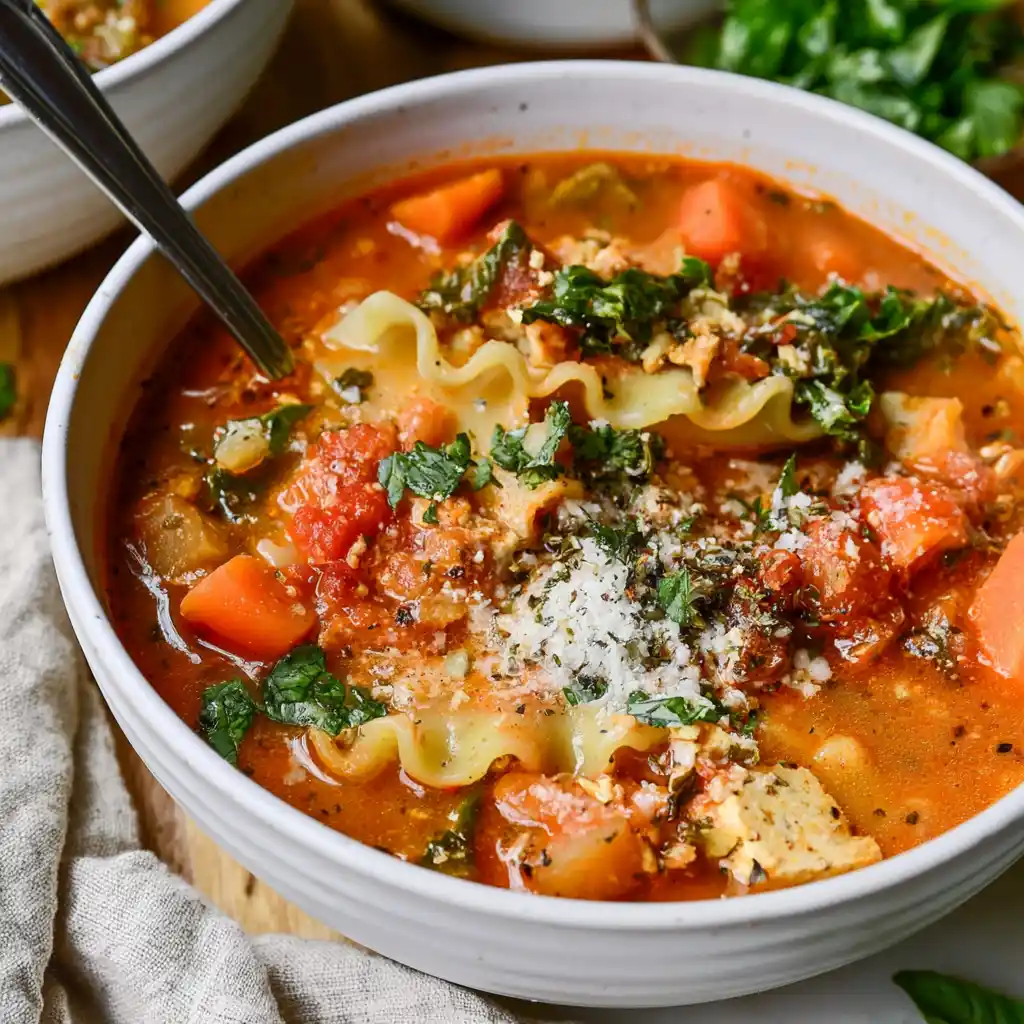

Healthy Vegetarian Lasagna Soup
Ingredients
Method
- Drain tofu from liquid and press excess liquid out with a paper towel. Using your hands, crumble the tofu into a bowl until it resembles the texture of ground meat. Set aside.
- *If not using tofu, please see notes for other options!
- Heat a large saucepan or dutch oven with olive oil over medium. Add garlic, carrots, parsnips, oregano, thyme, and dried basil. Cook for 5 minutes, stirring frequently.
- Add crumbled tofu and continue to cook for an additional 5 minutes.
- Then, add kale, diced tomatoes, tomato paste, and vegetable broth. Stir and bring liquid to a boil, then allow to simmer for 20 minutes, uncovered. Adjust seasonings to taste. If you’d also like to add more liquid, feel free to include some extra broth as needed.
- Meanwhile, boil a separate large pot of water and cook lasagna noodles to al dente (according to package directions – should be roughly under 10 minutes). Drain, then return to pot. You can stir them in a splash of olive oil to prevent noodles from sticking together.
- Once everything is cooked, add noodles to serving bowls. With a ladle, spoon soup overtop.
- Top soup with a scoop of ricotta, parmesan, freshly cracked black pepper, as well as herbs for garnish. Enjoy hot!
Notes
- Leftovers of this soup will keep for 3-5 days in an airtight container in the fridge.
- You can reheat it on either the stovetop or in the microwave. I recommend adding the cheese and herb garnishes after reheating, but it’s ok if you’ve already mixed it all together.
- You can store the cooked noodles together with the soup, or separately (just be sure to toss them in olive oil to prevent sticking together).
- If stored together, you may find that the noodles have absorbed more of the broth overtime. If this is the case, you can always add a splash more broth prior to reheating. Otherwise, it becomes more like a lasagna “stew,” which is also delicious in my opinion 😉
- If you’d like, you can also freeze this soup for 3-4 months. I’d recommend freezing the soup without lasagna or pasta noodles. You can add them in (freshly cooked) when reheating.
- If you can’t find lasagna noodles, you can use a short shape of regular pasta. There is a type of pasta called mafalda corta that resembles small lasagna noodles, otherwise ones like farfalle or fusilli will work, too!
- For a gluten-free recipe, simply use gluten-free lasagna noodles OR another shape of gluten-free pasta.
- If you don’t want to use tofu, you can leave it out and simply decrease the amount of broth to about 2-3 cups. Note that this removes the protein source of this recipe, so you may want to serve this soup as more of a side dish in that case.
- For other protein options, you could also swap the tofu for lentils, or non-vegetarian options, like ground beef, turkey, or sausage. Note that the cooking times may differ slightly for these options – please make sure that your protein source is adequately cooked!
- In place of veggie broth, you can use beef or chicken broth (if you eat animal products, of course).
- For a dairy-free or vegan option, simply swap the ricotta and parmesan for vegan alternatives. Do note that the cheese is a key component here, so I wouldn’t leave it out entirely!
- You can also use different veggies, as desired. Ones like chopped zucchini, spinach, chopped green beans, bell peppers, and diced onion would work well in this dish.
- I recommend cooking the lasagna noodles (or other pasta shape) in a separate pot, to al dente. Otherwise, you risk the noodles becoming too mushy and breaking up in the soup.
- For serving, I recommend adding the cooked noodles to your serving bowls, and then spooning the rest of the soup overtop. This will help keep the noodles in tact, as well.
- I recommend having some extra broth on hand, or at least some boiled water, to add to the soup as needed. You may find you want a bit more liquid, but it is ultimately down to personal preference!
Calories: 605kcal | Carbohydrates: 73g | Protein: 26g | Fat: 25g | Saturated Fat: 7g | Polyunsaturated Fat: 3g | Monounsaturated Fat: 12g | Cholesterol: 27mg | Sodium: 666mg | Potassium: 1133mg | Fiber: 10g | Sugar: 13g | Vitamin A: 12417IU | Vitamin C: 35mg | Calcium: 362mg | Iron: 6mg