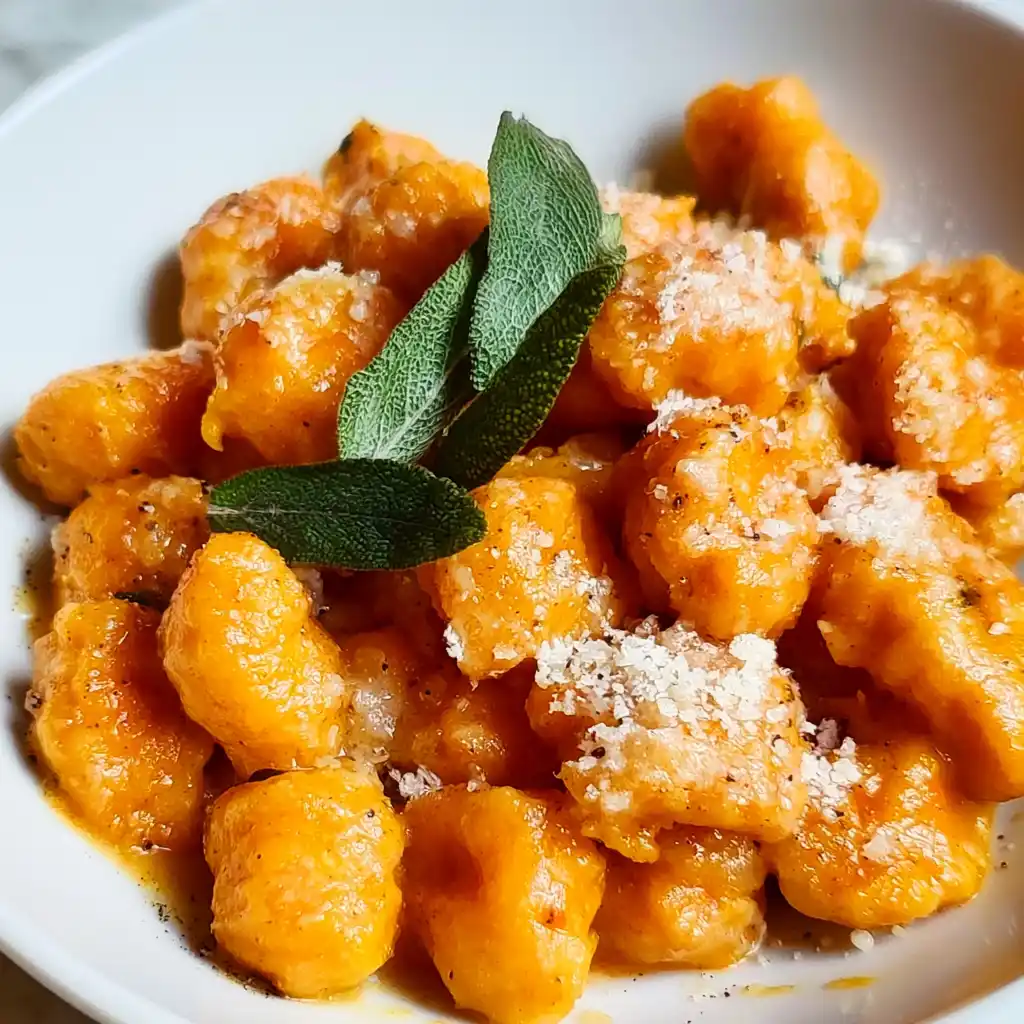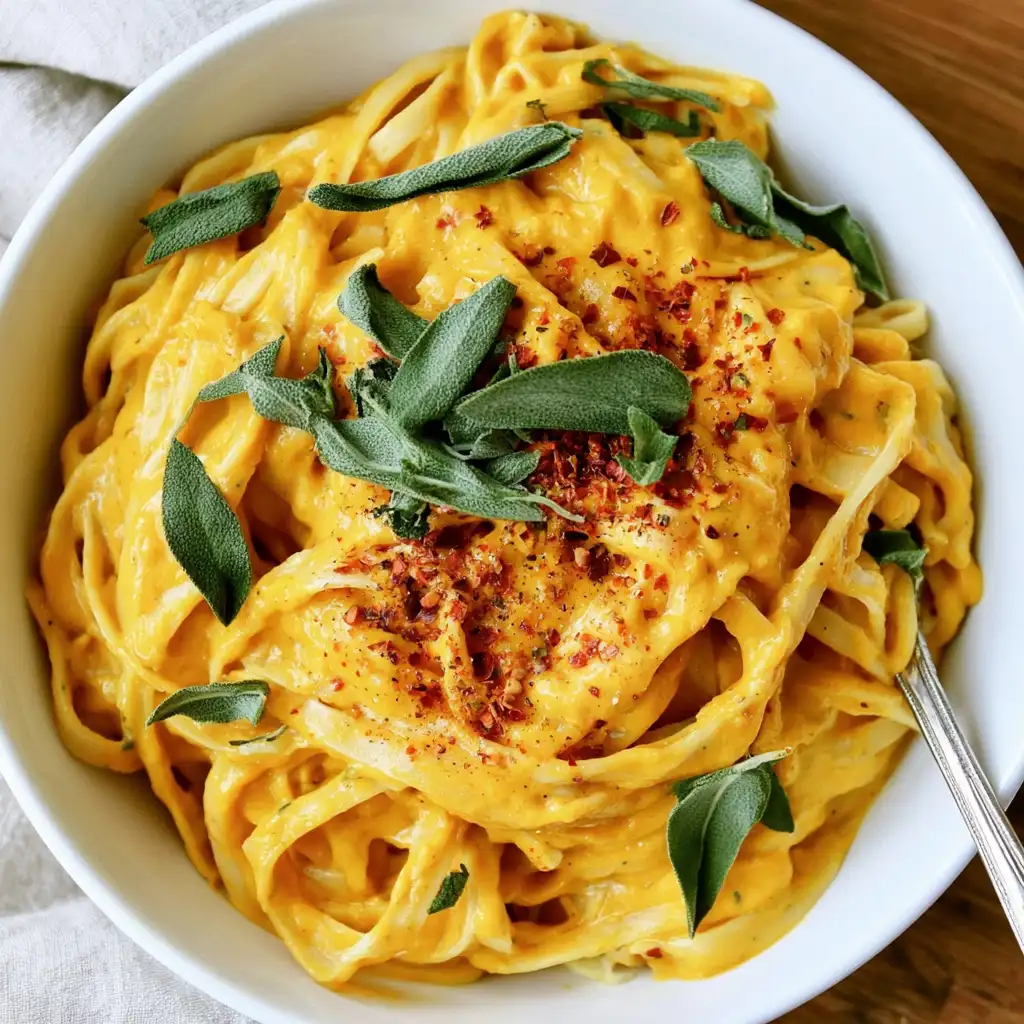
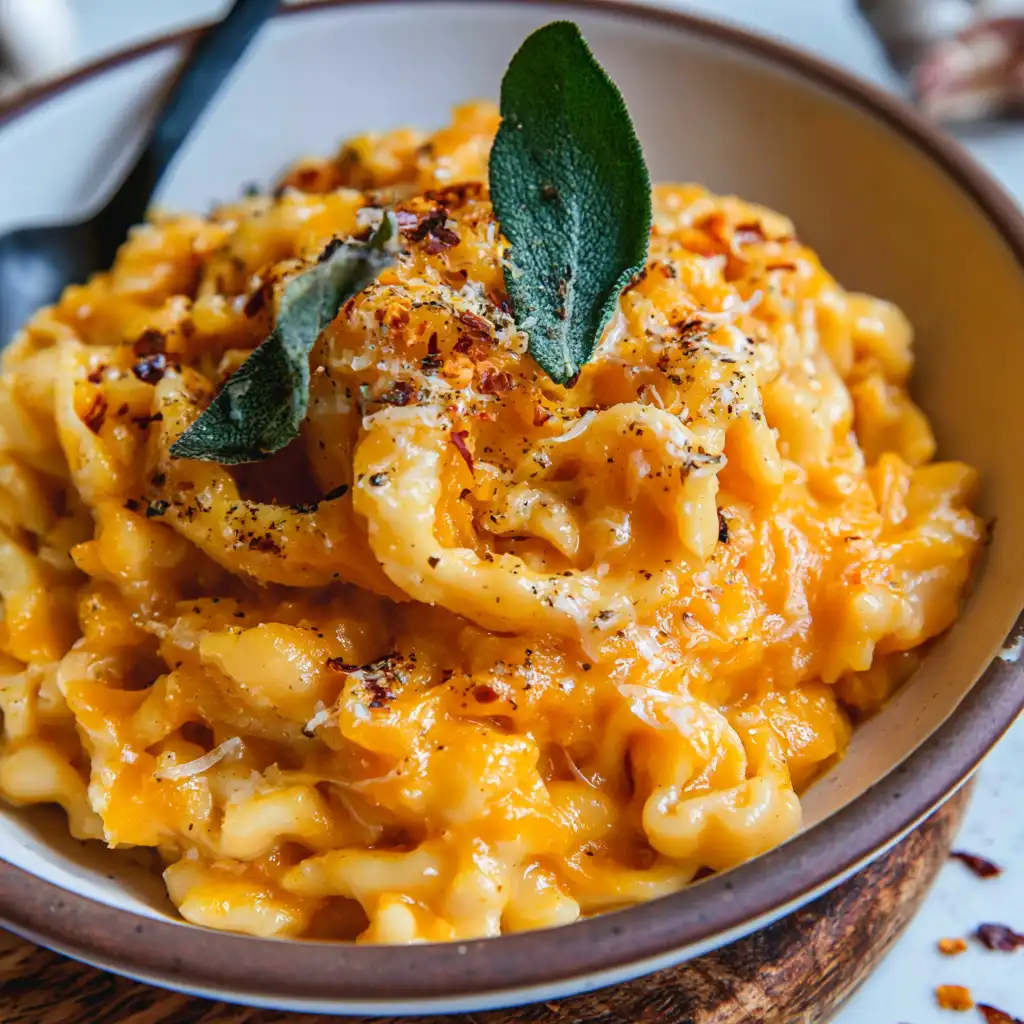
A tray of roasted pumpkin and garlic turns into the kind of pasta sauce I want when the weather starts to cool. It’s creamy without cream, rich without feeling heavy, and built from a short list of ingredients that each have a clear job.
The pumpkin brings natural sweetness and a soft, velvety texture. Garlic mellows in the oven until it loses its sharp edge, while sage, parmesan, and red pepper flakes keep the sauce savory and balanced. I like this recipe for a weeknight dinner that still feels like real cooking, especially when I have a pumpkin that needs to be used.
Why this sauce works
Roasting is what gives this pumpkin pasta sauce its depth. Raw pumpkin can taste mild and watery once blended, but oven-roasted pumpkin becomes softer, sweeter, and more concentrated. The garlic cooks beside it, so the cloves become tender enough to squeeze straight from their skins.
I don’t add cream because the blended pumpkin already gives the sauce a full texture. Pasta water does the rest of the work. Its starch helps the pumpkin puree cling to every piece of pasta instead of sitting heavily at the bottom of the pan.
Sage adds a warm, woodsy flavor that works naturally with pumpkin. Frying the leaves briefly in olive oil makes them crisp, and that same scented oil becomes the base for the sauce. Red pepper flakes cut through the sweetness with a small amount of heat.
Ingredients
- 13oz / 360g pasta
- 2.2lb / 1kg pumpkin
- 2 whole heads of garlic
- 2-3 tablespoon olive oil
- Handful sage leaves
- 1 teaspoon red pepper flakes, more or less depending how spicy you like it
- 3oz / 80g parmesan cheese
- Salt and black pepper
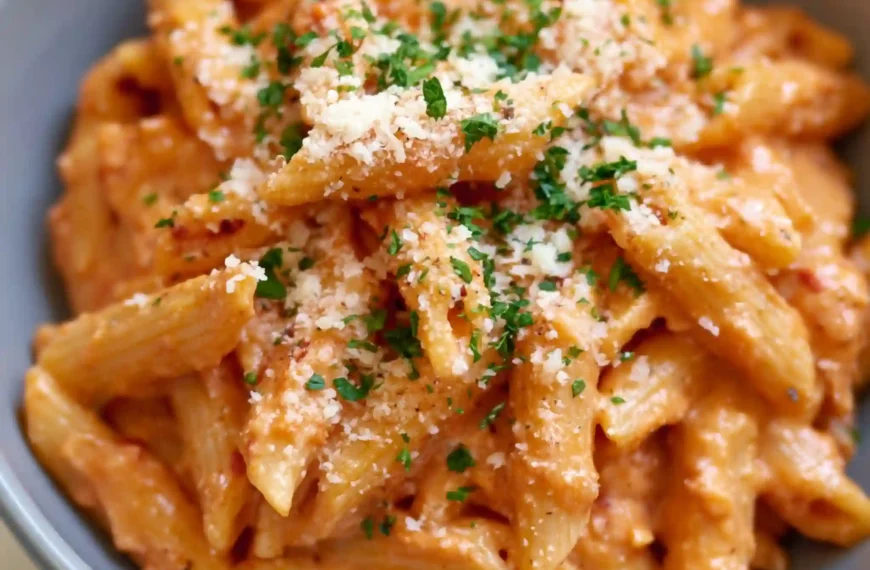
I use any pasta shape that can hold onto a thick sauce. Rigatoni, penne, fusilli, shells, and spaghetti all work well here. Short shapes catch little pockets of pumpkin sauce, while long pasta gets coated in a smooth, glossy layer.
Freshly grated parmesan matters most in this recipe. It melts into the warm sauce much better than pre-shredded cheese, which can sometimes make the sauce grainy. Grate a little extra at the beginning so you have some ready for the finished bowls.
Roast the pumpkin and garlic
Preheat the oven to 400°F / 200°C.
Chop the pumpkin into pieces, remove the skin, and place the pieces in a baking dish. Cut the top off both heads of garlic and add them to the same dish. Keep the garlic heads intact so the cloves roast gently inside their skins instead of drying out.
Drizzle 2 tablespoons of olive oil over the pumpkin and garlic, then season with salt. Use your hands to rub the oil over the vegetables until everything has a light coating. I take a minute for this because exposed pumpkin pieces can dry out in the oven if they miss the oil.
Bake for 45 minutes. The pumpkin should feel fully tender when you press it with a fork or toothpick. If it still feels firm in the center, return it to the oven for a few more minutes. The pumpkin needs to be soft before blending, or the finished sauce will not be completely smooth.
Let the dish cool slightly. Then squeeze the roasted garlic heads from the bottom, pushing the soft garlic flesh into the baking dish with the pumpkin. The cloves should slip out easily. If they do not, the garlic likely needs a little more roasting time.
Use an immersion blender directly in the dish, or transfer the pumpkin and garlic to a blender. Blend until smooth and free of chunks. The puree will look thick at this point, which is exactly what you want. You will loosen it later with pasta water.
Cook the pasta and sage
Bring a large pot of water to a boil and salt it generously. The pasta water seasons the noodles from the inside and gives the sauce a better flavor once you add it to the skillet. Cook the pasta until it is nearly al dente, following the package instructions as a guide.
While the pasta cooks, heat a spoonful of olive oil in a large skillet over medium heat. Add the sage leaves and cook them for a few minutes until crisp. Watch them closely near the end because sage can turn dark and bitter if it cooks too long.
Move the crisp leaves to a plate. Add the red pepper flakes to the skillet and let them warm in the sage-scented oil for about one minute. This step wakes up the pepper flakes and spreads their heat through the sauce.
Add the blended pumpkin puree to the skillet, followed by a ladle of pasta water. Stir until the puree loosens into a sauce. It may seem thin at first, but it will thicken again once the pasta and parmesan go in.
Finish the pumpkin pasta sauce
When the pasta is almost cooked and still al dente, transfer it straight from the pot into the skillet. Bringing a little cooking water along is helpful, so there is no need to drain the pasta perfectly.
Add the grated parmesan and another ladle of reserved pasta water. Gently toss everything together until the cheese melts and the sauce coats the pasta. Keep the heat at medium or lower so the parmesan melts smoothly instead of clumping.
If the sauce gets too thick, add more pasta water a little at a time. Pumpkin puree naturally absorbs moisture, especially as it sits, so the sauce may need another splash just before serving. You want it creamy and loose enough to move around the pan when you toss it.
Taste before adding more salt. Parmesan and pasta water both bring saltiness, so I wait until the end before adjusting the seasoning. Finish with ground black pepper.
Scatter the crispy sage leaves over the pasta and add more freshly grated parmesan. Serve it while the sauce is still silky and warm.
A few helpful notes
Use a sharp knife and a stable cutting board when preparing the pumpkin. Pumpkins can be hard to cut, especially larger ones. I find it easier to cut the pumpkin into manageable wedges first, then remove the skin from each wedge before chopping into smaller pieces.
If your blender struggles with a thick pumpkin puree, add a small splash of water from the pasta pot before blending. Start with only a little. The sauce should begin thick because the pasta water in the skillet will loosen it later.
Don’t skip the pasta water. Plain water can thin the sauce, but it will not help the pumpkin and parmesan come together in the same way. The starch gives the sauce a smoother texture and helps it stay attached to the pasta.
For a milder dish, use less than 1 teaspoon of red pepper flakes. For more heat, add extra flakes after the sauce reaches the skillet. I prefer to start with the listed amount, then add more at the table if needed.
Serving and storage
This pasta is filling enough to serve on its own. I also like it with a crisp green salad, roasted broccoli, or a piece of warm bread for wiping up the extra sauce.
Store leftovers in an airtight container in the refrigerator. The sauce will thicken as it cools, which is normal. Reheat it gently in a skillet with a splash of water until the pasta loosens and the sauce turns creamy again.
I would not freeze the fully mixed pasta, since the noodles can become soft after thawing. You can freeze the blended pumpkin and garlic puree on its own, then thaw it overnight in the refrigerator and finish the sauce with fresh pasta, sage, parmesan, and pasta water.
Questions
Can I make the pumpkin sauce ahead of time?
Yes. Roast and blend the pumpkin and garlic up to a few days ahead, then refrigerate the puree in a covered container. Warm it in the skillet with the sage oil, red pepper flakes, and pasta water when you are ready to cook.
What if the sauce is too thick?
Add reserved pasta water a little at a time while tossing the pasta. The sauce should loosen gradually without becoming watery.
Can I use dried sage?
Fresh sage gives the best texture because it becomes crisp in the skillet. If dried sage is all you have, add a small pinch with the red pepper flakes, but skip the crispy sage topping.
How do I know when the pasta is ready?
Taste a piece shortly before the package cooking time ends. It should be tender around the outside with a slight firmness in the middle, since it will finish cooking for another minute or two in the pumpkin sauce.
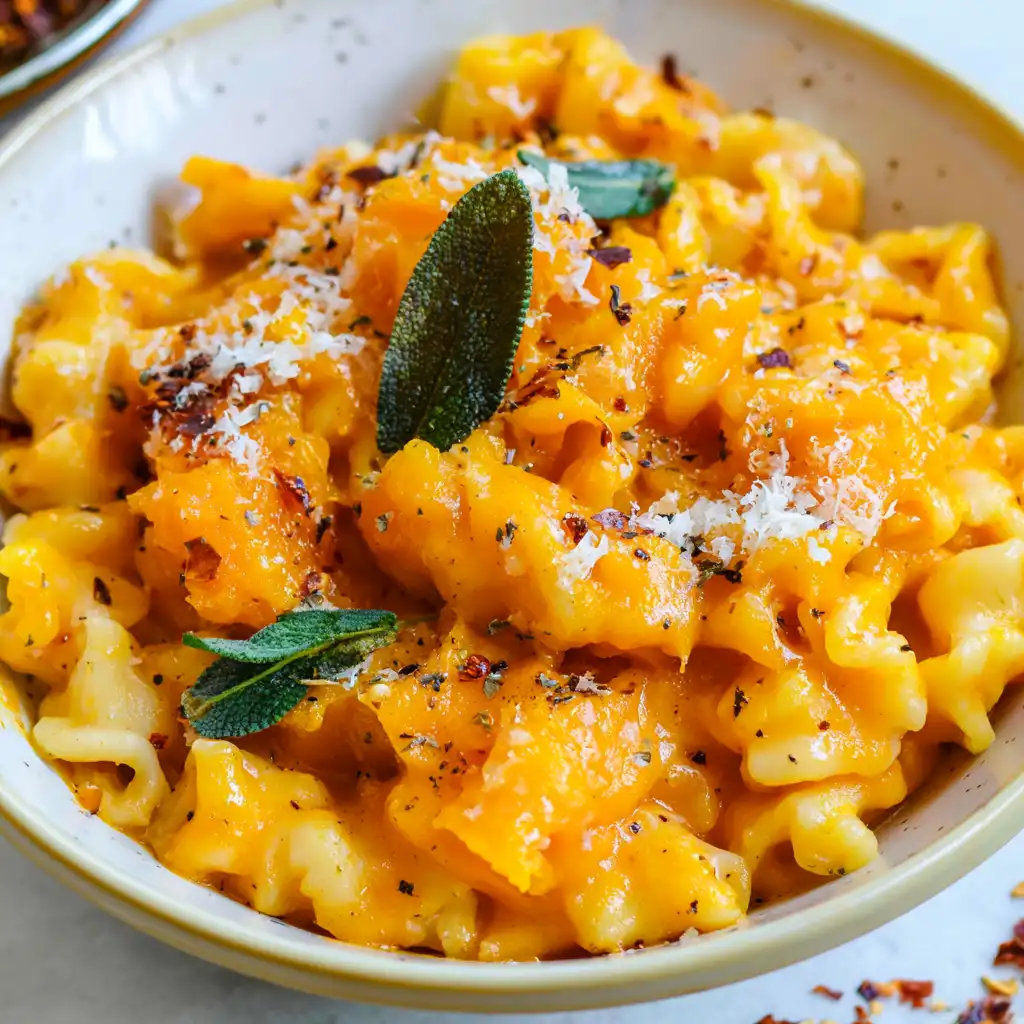

Healthy Pumpkin Pasta Sauce
Ingredients
Method
- Preheat the oven to 400°F / 200°C
- Chop pumpkin into pieces, cut the skin off and place in a baking dish. Chop the top off the garlic heads and place into the same dish
- Drizzle 2 tablespoons of olive oil over the pumpkin and garlic and season with salt. Massage the oil into the vegetables so they are all nicely coated and bake in the oven for 45 minutes. Check with a fork or toothpick that the pumpkin has softened
- Allow to cool slightly then squeeze the garlic bulbs so that the flesh pops out and into the pumpkin dish. Using an immersion blender or blender, blend the pumpkin and garlic until smooth and there are no chunks
- Boil pasta in heavily salted water. At the same time, saute the sage leaves in a skillet over medium heat with a spoon of olive oil for a few minutes
- Remove the sage leaves once crisp and add the red pepper flakes. After a minute add the pumpkin puree with a ladle of pasta water
- When the pasta is almost cooked and al dente, add pasta straight to the pan. Add grated parmesan cheese along with a ladle of reserved pasta water. Gently mix until well combined, adding more pasta water if needed or if too thick
- Top with the crispy sage leaves, freshly grated parmesan cheese and ground black pepper and enjoy your delicious pumpkin pasta !
Notes
Calories: 547kcal | Carbohydrates: 85g | Protein: 22g | Fat: 14g | Saturated Fat: 5g | Polyunsaturated Fat: 1g | Monounsaturated Fat: 7g | Cholesterol: 14mg | Sodium: 337mg | Potassium: 1096mg | Fiber: 5g | Sugar: 10g | Vitamin A: 21587IU | Vitamin C: 23mg | Calcium: 329mg | Iron: 4mg