A pan of butternut squash lasagna brings a welcome change from the usual tomato-based version. I make this one when I want something hearty and comforting but still packed with vegetables. The creamy squash filling has a mild sweetness, the spinach layer adds body, and the zucchini keeps every slice from feeling too heavy.
Why This Lasagna Works
Butternut squash and ricotta make a rich, smooth filling without needing a heavy sauce. Garlic, nutmeg, salt, and pepper keep that sweetness balanced, so the squash tastes savory rather than dessert-like.
I use frozen spinach here because it saves a lot of prep work. The important part is squeezing it very dry. Wet spinach can make the layers loose and watery, especially since zucchini releases moisture as it bakes.
No-boil noodles keep the assembly moving, while thin zucchini strips add another vegetable layer between the cheese and squash. The result is soft and sliceable after it rests, with browned cheese across the top and a creamy center.
Ingredients
Butternut Squash Filling
- 1 large butternut squash, peeled, seeded and cubed
- 1 tablespoon olive oil
- 1.5 cups ricotta cheese
- 5 cloves garlic, minced
- ½ cups milk, plus more if needed
- ½ teaspoon salt, plus more to taste
- ¼ teaspoon nutmeg
- Pepper, to taste
Spinach Ricotta Filling
- 48 ounce frozen spinach, thawed and squeezed of all extra water
- 1.5 cups ricotta cheese
- 1 cup mozzarella cheese
- ¼ cup chopped basil
- ¼ teaspoon salt
- Pepper, to taste
For the Layers
- 3 zucchini, sliced into 1/8-inch thick noodles
- 10+ sheets no-boil lasagna noodles, or lasagna noodle of choice
- 2 cups shredded mozzarella cheese
- ½ cup grated Parmesan cheese, for the top
- Fresh basil or fresh sage leaves, for topping
Make the Squash Filling
Heat the oven to 375 degrees F. Line a large rimmed baking sheet with parchment paper. If you plan to use canned pureed butternut squash, skip the roasting step.
Cut the peeled and seeded butternut squash into small cubes, about 1 inch each. Spread the cubes across the prepared pan, drizzle with 1 tablespoon olive oil, and toss until coated. Roast until the squash gives easily when pierced with a fork. Let it cool fully before blending. Warm squash can make the filling thinner than you want and may leave it harder to spread neatly.
Add the cooked squash to a large food processor along with 1.5 cups ricotta cheese, minced garlic, ½ cups milk, ½ teaspoon salt, pepper, and ¼ teaspoon nutmeg. Process until the mixture looks completely smooth.
Check the texture before adding more milk. I want it thick enough to stay in place when spread over the zucchini, but creamy enough that it does not pull at the noodles. Add milk a little at a time only if the mixture feels too dense. Taste and adjust with more salt, pepper, or nutmeg if needed.
Mix the Spinach Ricotta
Thaw the frozen spinach completely, then remove as much liquid as possible. A mesh wire strainer works well, but cheesecloth or a clean tea cloth also works. Press and squeeze until the spinach looks dry and clumped rather than wet.
Move the spinach to a medium bowl. Add 1.5 cups ricotta cheese, 1 cup mozzarella cheese, ¼ cup chopped basil, ¼ teaspoon salt, and pepper. Stir until everything is evenly mixed.
Do not rush the squeezing step. Even a good lasagna filling can turn soupy if excess spinach water gets trapped between the noodles and cheese.
Build the Lasagna
Use a large, deep casserole dish. A 12.38-inch long by 9.25-inch wide by 2-inch deep baking dish works well, though a slightly larger dish is also fine. Coat the dish with non-stick cooking spray.
Spread one-third of the butternut squash puree across the bottom of the dish. Keep this first layer fairly even because it helps prevent the noodles from sticking to the pan.
Sprinkle on a thin layer of mozzarella. Arrange a single layer of no-boil lasagna noodles over the cheese, keeping the sheets from overlapping. You will need approximately 5 sheets.
Spread half of the spinach ricotta mixture over the noodles. Add another sprinkle of mozzarella, then cover with a layer of sliced zucchini. Slice the zucchini about 1/8 inch thick so it becomes tender during baking without disappearing into the filling.
For the second layer, spread another one-third of the squash mixture over the zucchini. Add a light layer of mozzarella, then arrange another single, non-overlapping layer of no-boil noodles. Use approximately 5 more lasagna sheets.
Spread the remaining spinach ricotta mixture over the noodles. Sprinkle with mozzarella, then add the second layer of sliced zucchini.
Finish with the remaining one-third of the butternut squash filling. Spread it gently over the zucchini, then scatter ½ cup grated Parmesan and the remaining mozzarella over the top. Add fresh basil leaves before baking.
Bake Until Bubbling
Cover the dish with a large tent of foil. Keep the foil raised above the cheese instead of pressing it directly onto the top. This gives the lasagna room to heat through without pulling off the topping when you uncover it.
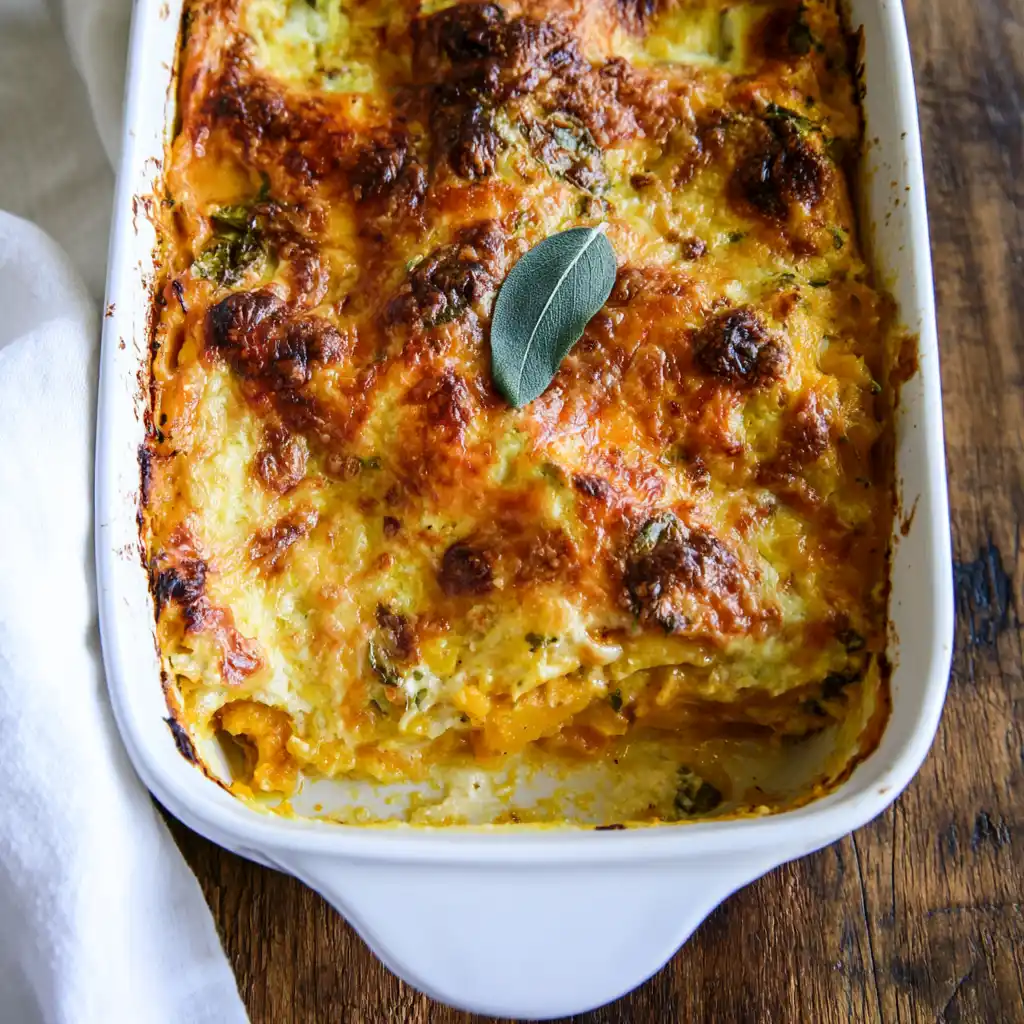
Bake until the layers are hot and the noodles have softened. Then remove the foil and continue baking until the cheese bubbles and turns golden in spots.
Let the lasagna stand for at least 15 minutes before cutting. The filling needs that time to settle. If you slice it immediately, the warm squash and cheese layers will spread instead of holding their shape.
Finish with more fresh basil or fresh sage leaves if you like.
Useful Swaps and Adjustments
If you do not want to roast a fresh squash, use cooked butternut squash from an Instant Pot or purchase canned pureed butternut squash. You need three 15-ounce cans of pureed butternut squash for one large lasagna. Choose plain, unsweetened puree.
Pumpkin or unsweetened pumpkin puree also works when butternut squash is not available. The flavor will be slightly more earthy, but it still pairs well with garlic, ricotta, spinach, and nutmeg.
If your zucchini slices are very thin, make each zucchini layer two to three slices thick. You can also replace some or all of the lasagna noodles with additional zucchini noodles, or use more lasagna noodles in place of zucchini.
Whole milk ricotta gives the filling a richer texture, but fat-free ricotta works too. You can also use half fat-free and half whole milk ricotta. Cottage cheese can replace some or all of the ricotta if that is what you have, though the final filling may have a slightly less smooth texture.
Common Problems
If the lasagna seems watery, the spinach or zucchini likely held too much moisture. Squeeze the spinach firmly before mixing it with the cheese, and keep the zucchini slices thin rather than thick and bulky.
If the squash filling feels runny, do not keep adding milk. Blend it first, then add only enough milk to help the food processor move smoothly. A thick filling gives the finished lasagna more structure.
If the cheese browns before the center is fully hot, return the foil tent to the dish and keep baking until the noodles soften. The foil protects the top while the heat finishes moving through the center.
Questions Home Cooks Ask
Can I make this with canned squash?
Yes. Use three 15-ounce cans of plain, unsweetened pureed butternut squash in place of one large roasted squash.
Can I use regular lasagna noodles?
Yes. Use the lasagna noodles you prefer. If they are not no-boil noodles, cook them according to the package directions before layering.
Can I prepare it ahead?
You can assemble the lasagna ahead, cover it, and refrigerate it until you are ready to bake. Let it sit at room temperature briefly while the oven heats so the cold dish does not go straight into high heat.
How should I store leftovers?
Keep leftovers covered in the refrigerator. Reheat individual portions until hot throughout. The layers often set even more firmly after chilling, which makes leftovers especially easy to cut and warm.

Butternut Squash Lasagna
Ingredients
Method
- For the Butternut Squash Filling
- Preheat oven to 375 degrees F. and line a large rimmed baking sheet with parchment paper (skip this step if you’re using canned pureed butternut squash).
- Cut, peel, and chop your butternut squash into small, 1-inch cubes. Transfer to your prepared baking sheet and toss with 1 tablespoon of olive oil. Roast in the oven for approximately 25-35 minutes, or until fork-tender. Remove from the oven and set aside to cool completely.
- Place the cooked (or canned) butternut squash, ricotta cheese, garlic, milk, salt + pepper, and nutmeg in the bowl of a large food processor. Puree until completely smooth. Add more milk if needed- you want the butternut squash filling to be thick and creamy, but too liquidy or runny. Season with salt, pepper, and additional nutmeg, to taste.
- For the Spinach Ricotta Mix
- Remove excess water from the thawed spinach; you can do this using a mesh wire strainer, cheesecloth, or tea cloth. Transfer the spinach to a medium bowl with the ricotta cheese, mozzarella, fresh chopped basil, salt and pepper. Mix until fully combined.
- Build your Lasagna
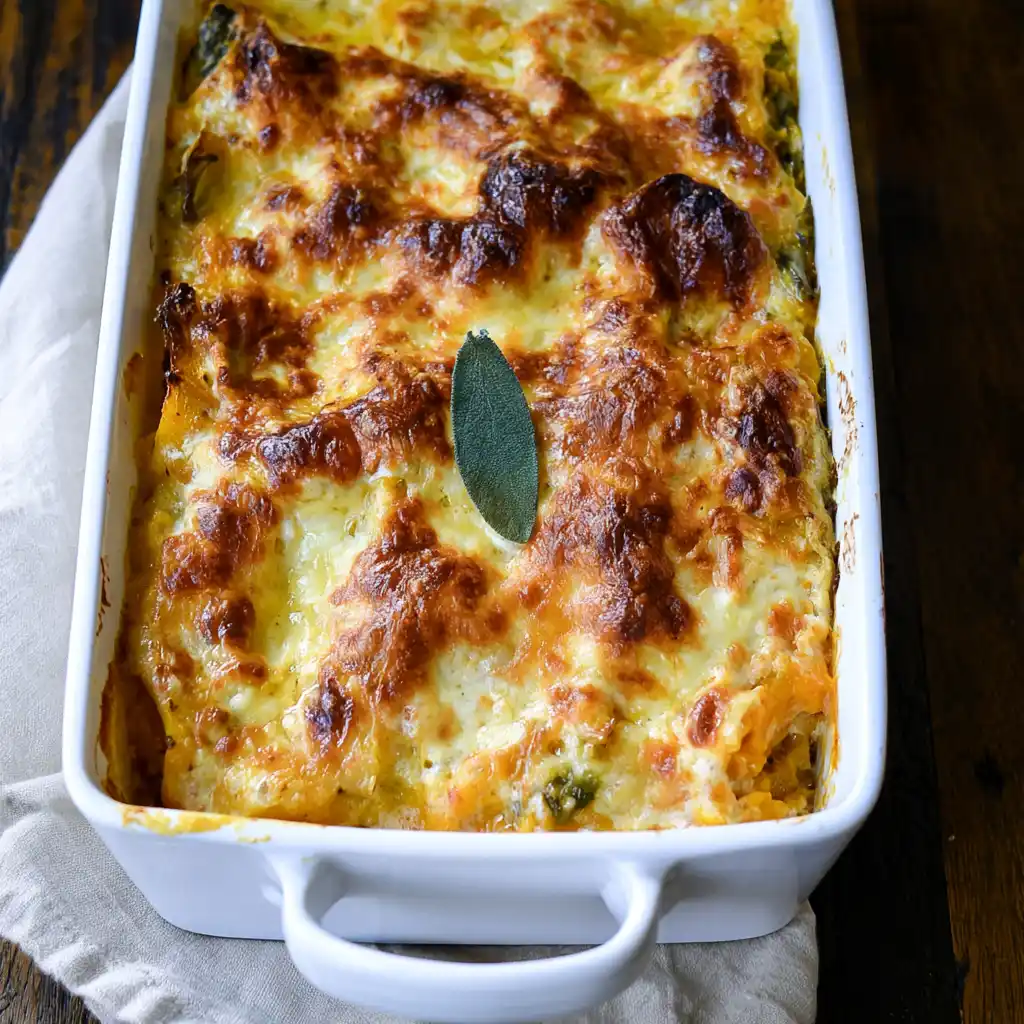
- Prepare your baking dish (I usually use a large, deep casserole dish, 12.38″L x 9.25″W x 2″H, but the one shown in the images is slightly larger). Spray dish with non-stick cooking spray of choice.
- First layer – Spread 1/3 of the butternut squash puree on the bottom of the dish. Sprinkle with a thin layer of mozzarella cheese and cover with a single, non-overlapping layer of no-boil lasagna noodles (approximately 5 lasagna sheets). Gently spread half the spinach ricotta mixture over the noodles and sprinkle with mozzarella cheese. Top with a layer of sliced zucchini (see notes).
- Repeat layering (second layer) – Spread 1/3 of the butternut squash mixture over the sliced zucchini layer. Sprinkle with a light layer of mozzarella cheese and top with a single, non-overlapping layer of no-boil lasagna noodles (approximately 5 lasagna sheets). Spread the second half of the spinach ricotta mixture on top of the lasagna noodles. Top with mozzarella cheese and top with a layer of sliced zucchini.
- Final layer – Spread the remaining 1/3 of the butternut squash filling over the zucchini and sprinkle with grated Parmesan and mozzarella cheese. Sprinkle fresh basil leaves on top of the cheese.
- Cover the baking dish with a large foil “tent” and bake for approximately 20-30 minutes. Remove foil and continue to cook for an additional 15-20 minutes, or until the cheese is bubbly and golden.
- Top with additional fresh basil or sage leaves, if desired.
Notes
- If you prefer not to roast your butternut squash in the oven, you may also cook it using your Instant Pot or purchase it pre-cooked, pureed, and canned from the market. You will need three cans (15-ounces each) of pureed butternut squash per large lasagna.
- If butternut squash isn’t available, pumpkin or pumpkin puree (unsweetened) will work just as well.
- If your zucchini noodles are super thin, you can make a layer 2-3 noodles thick.
- Feel free to substitute the lasagna noodles for more zucchini noodles and vice versa.
- I used whole milk ricotta, but fat-free ricotta or half fat-free and half whole milk ricotta will both work. Some readers have also mentioned substituting some or all of the ricotta for cottage cheese.
Calories: 414kcal | Carbohydrates: 32g | Protein: 27g | Fat: 20g | Saturated Fat: 11g | Cholesterol: 69mg | Sodium: 578mg | Potassium: 818mg | Fiber: 5g | Sugar: 4g | Vitamin A: 16725IU | Vitamin C: 18.6mg | Calcium: 586mg | Iron: 3.7mg