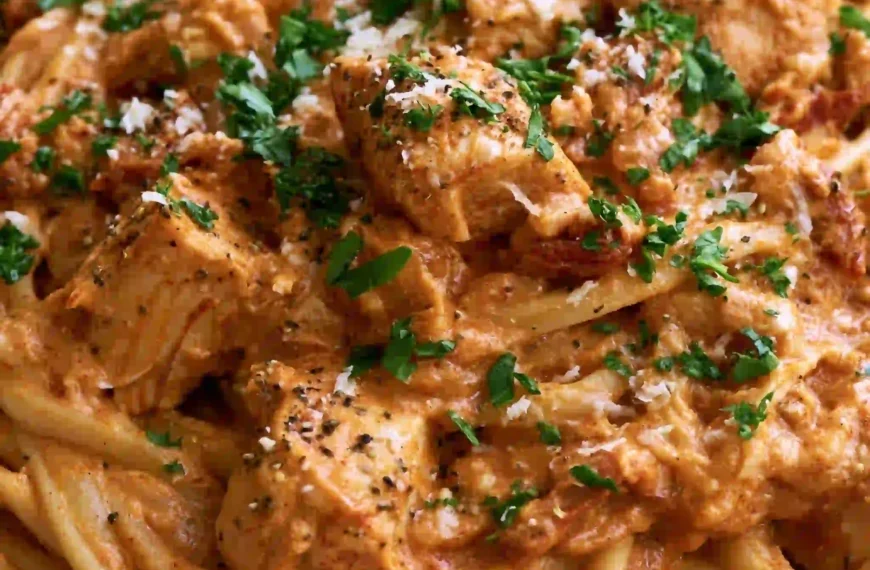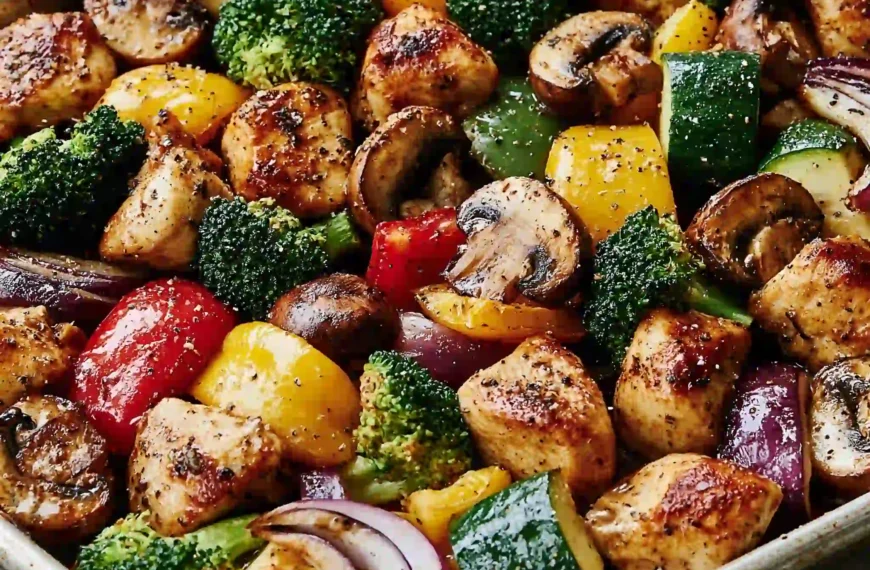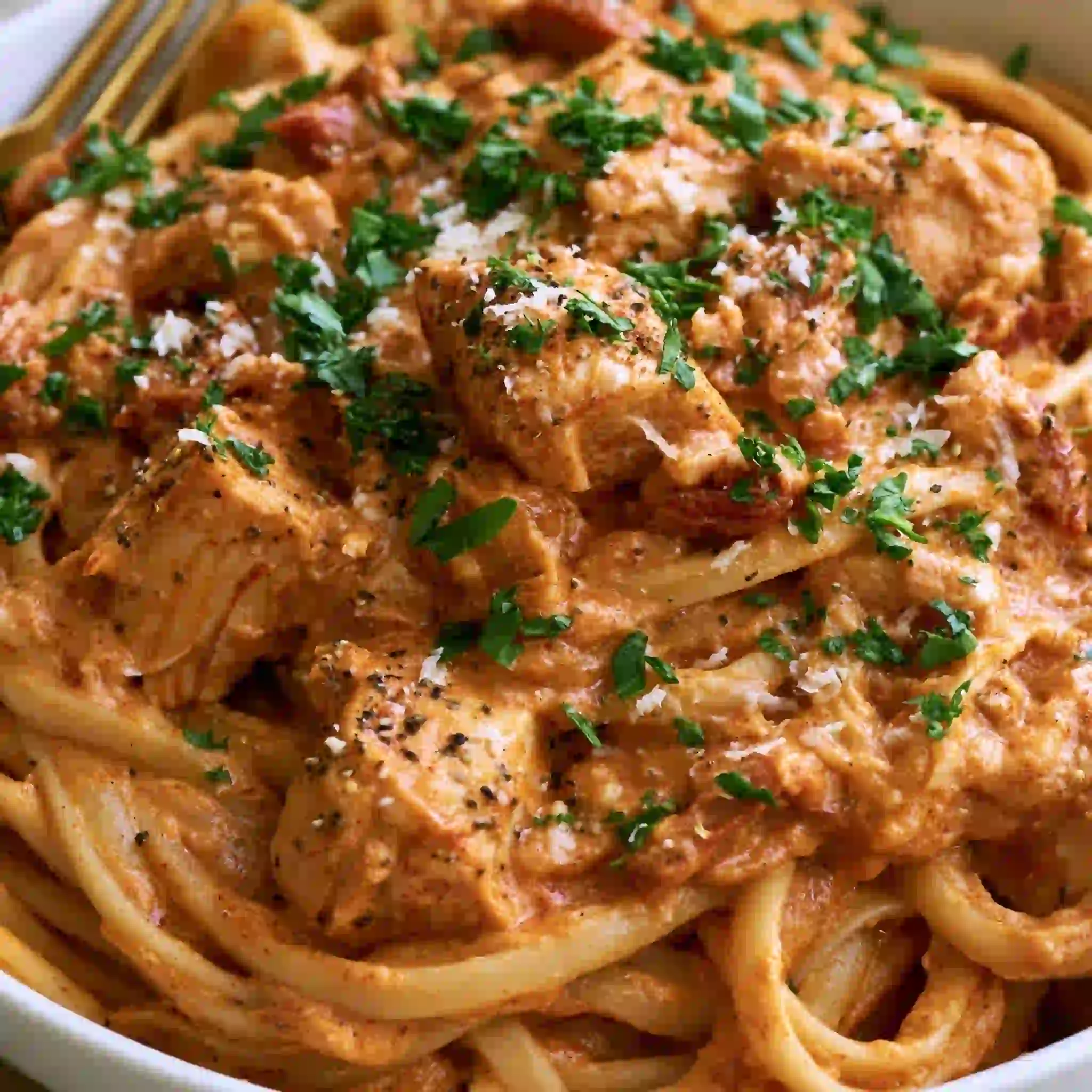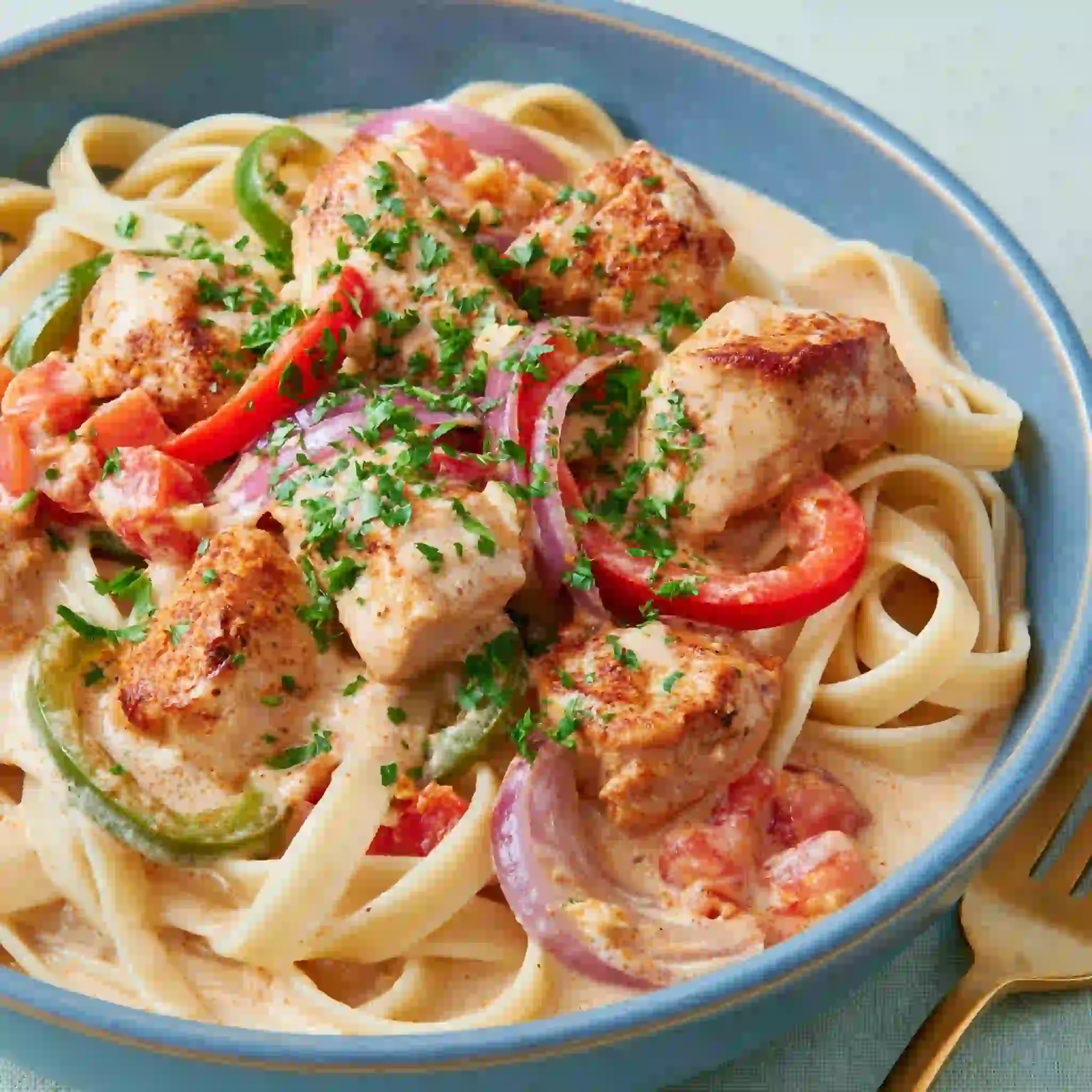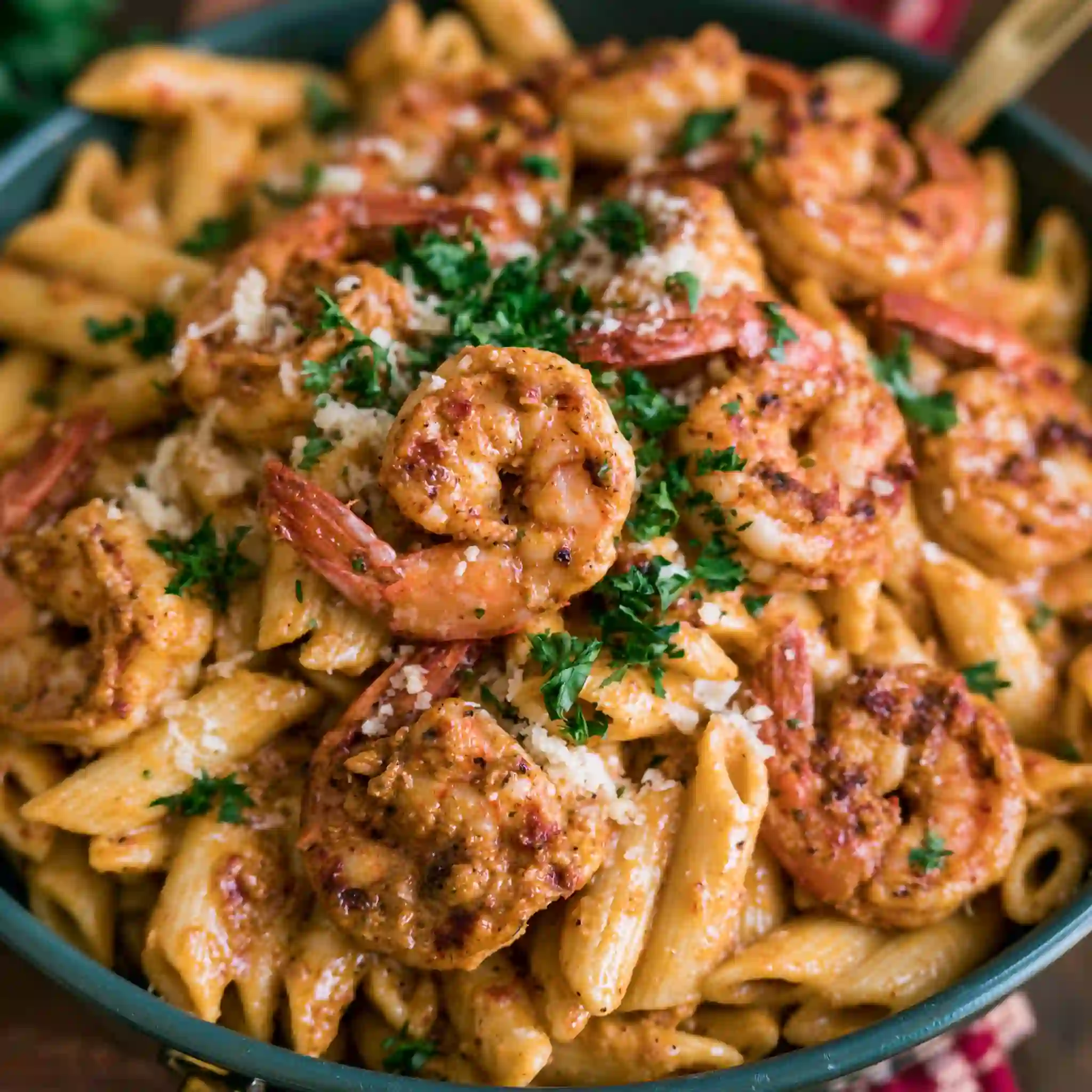
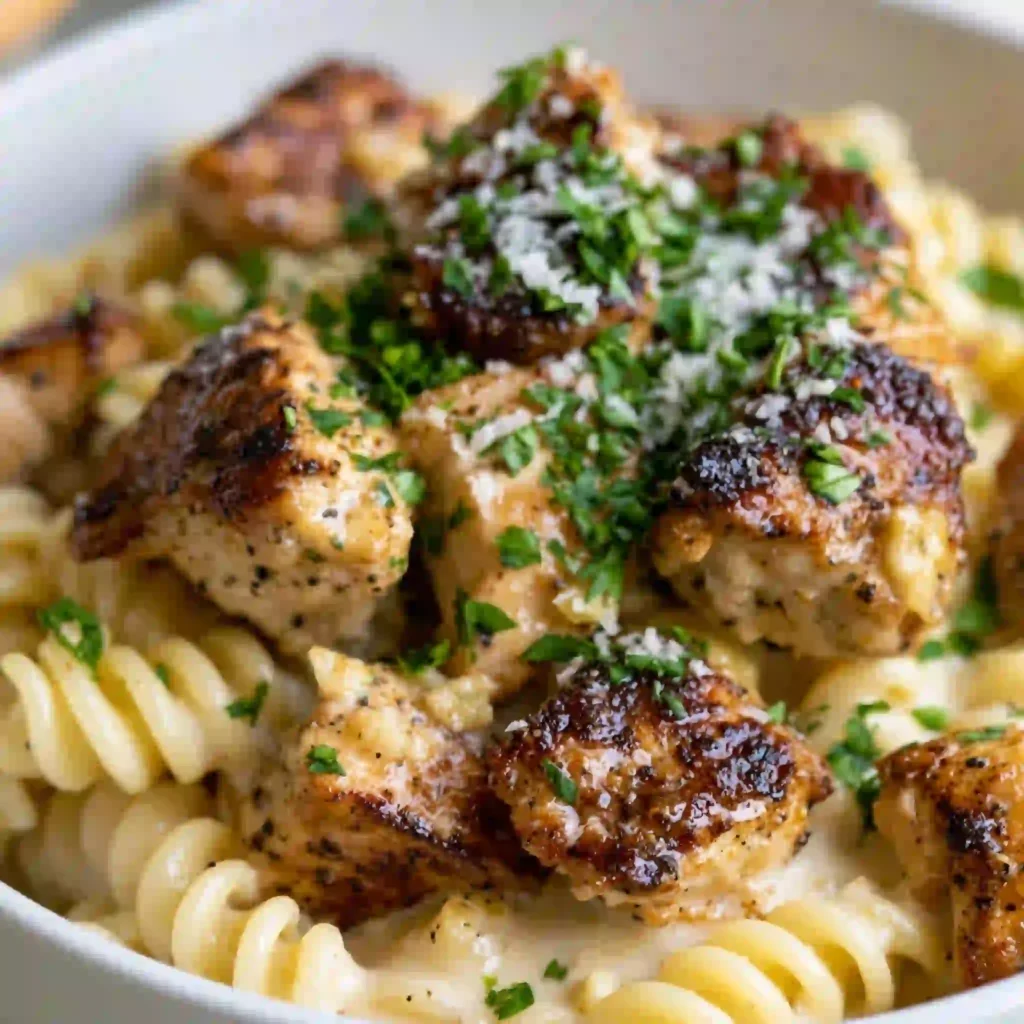
Weeknight dinners have a way of sneaking up on you. It’s 6 PM, everyone’s hungry, and you need something real on the table fast. This garlic butter chicken bites with pasta is the answer you’ll keep coming back to — golden, juicy chicken pieces tossed through a creamy Parmesan sauce with pasta that soaks up every bit of flavor in the pan.
It’s the kind of meal that looks like you put in real effort, even though the whole thing comes together in about twenty minutes.
Why This Dish Feels So Satisfying
There’s something about the combination of garlic, butter, and Parmesan that just works every single time. Each one is good on its own. Together, they make a sauce that’s rich without being heavy, savory without being salty, and creamy without tasting like you poured a can of soup over your pasta.
The chicken bites add another dimension too. Because they’re cut small, they cook quickly, and every piece gets coated in that garlic butter before the sauce even comes together. By the time everything meets in the pan, the flavors have already been building for several minutes, and it shows in every bite.
What Makes It Work
The key to this recipe is using one skillet for almost everything. You cook the chicken, build the garlic butter, and make the cream sauce all in the same pan. That means every layer picks up flavor from the one before it.
Paprika on the chicken does more than add color. It gives the bites a gentle warmth that plays well against the richness of the cream and Parmesan. It’s subtle, but without it, the dish tastes a little flat.
Fresh Parmesan also matters here more than you might think. The pre-shredded kind has a coating on it that keeps it from melting cleanly into a sauce. Freshly grated Parmesan melts smooth and creamy, no clumps, no graininess. It takes an extra minute but makes a real difference.
And then there’s pasta water — the quiet hero of any pasta dish. A splash of that starchy water at the end loosens a sauce that’s gone too thick and helps it cling to the pasta instead of pooling at the bottom of the bowl.
Making It at Home
Start the pasta water first. Salted, boiling water is what you want, and it takes a few minutes to get there. Cook your pasta until it’s just al dente — it should still have a little bite because it’s going back into a warm pan with the sauce. Before you drain it, scoop out a small cup of that starchy water and keep it nearby.
While the pasta cooks, pat your chicken dry and cut it into even, bite-sized cubes. Drying the chicken is worth doing — moisture on the surface steams the meat instead of searing it, and you want those golden edges. Season generously with paprika, salt, and black pepper.
Heat olive oil in a large skillet over medium heat and add the chicken in a single layer. Let it cook for six to eight minutes, turning occasionally, until each piece is golden on the outside and cooked through. Don’t crowd the pan or they’ll steam instead of sear.
Once the chicken is done, turn the heat down slightly and add two tablespoons of butter and all the minced garlic. Stir for a minute or two — the garlic should turn fragrant and just barely begin to color. Then remove the chicken and set it aside while you build the sauce.
In the same pan, add the last tablespoon of butter, the heavy cream, and the grated Parmesan. Stir steadily as everything melts together and let it simmer for three to four minutes until the sauce has thickened slightly. Toss in the drained pasta, coating it well, and add a splash of pasta water if the sauce feels too tight. Then bring the chicken back in, toss everything together gently, and you’re done.
Parsley over the top adds a fresh note that cuts through the richness just enough.
Common Mistakes to Avoid
The biggest one is adding the cream before lowering the heat. High heat can cause cream to separate or reduce too fast, leaving you with a greasy, broken sauce. Medium-low is the right place to build it.
Another thing people skip is seasoning the pasta water. Under-seasoned pasta will dull the whole dish, no matter how good your sauce is. The water should taste noticeably salty before the pasta goes in.
And don’t walk away during the garlic butter step. Garlic goes from fragrant to burnt in less than a minute. Keep the heat moderate and stay close.
Adapting the Recipe
This dish is flexible in a good way. Almost any pasta shape works — penne, rigatoni, linguine, rotini. Shorter shapes like penne tend to hold the sauce well, but use whatever you have or prefer.
If you want to add vegetables, fresh spinach is an easy addition. Stir a handful in right before you add the pasta back — it wilts quickly and adds color and a slight earthiness that pairs well with the garlic and cream.
For a lighter version, you can cut the heavy cream with a little chicken stock. The sauce will be thinner, but still flavorful. You’ll want to let it reduce a bit longer to get any thickness at all.
Chicken thighs also work beautifully here if you prefer them. They stay juicy even if you accidentally cook them a minute or two longer, which makes them a forgiving choice for this kind of recipe.
Serving This Well
Serve this straight from the pan while it’s hot. The sauce tightens up as it cools, and reheating it takes a little effort to bring it back to that smooth, creamy consistency.
A simple green salad alongside keeps the meal from feeling too heavy. Crusty bread is also a genuinely good idea here — the sauce left in the bowl is worth chasing.
This recipe makes four servings, which means it works just as well for a family dinner as it does for two people who want leftovers the next day.
Storing and Reheating
Keep leftovers in an airtight container in the fridge for up to three days. When you reheat, use a pan over low heat and add a splash of cream or a little chicken stock to loosen the sauce back up. Stir gently as it warms. The microwave works if you’re in a hurry, but the sauce can separate — a low and slow reheat on the stove gives you better results.
The pasta will absorb more sauce overnight, so the leftovers will be a bit drier than the original. That extra liquid when reheating makes a real difference.
FAQ
Can I use milk instead of heavy cream?
You can, but the sauce will be much thinner and less rich. If you go that route, whole milk works better than low-fat, and you may need to let it reduce longer.
What pasta works best?
Honestly, most shapes work. Penne, fusilli, and rigatoni are great because the sauce gets inside the pasta. Linguine or spaghetti works too if that’s what you have.
Can I make this ahead of time?
The components can be prepped ahead — cooked chicken, cooked pasta — but the sauce is best made fresh. Cream sauces don’t hold especially well overnight.
How do I keep the chicken from drying out?
Don’t overcook it. Bite-sized pieces cook fast, and pulling them off the heat as soon as they’re cooked through keeps them juicy. They’ll warm back up when you return them to the sauce at the end.
A Recipe That Earns Its Place in Your Rotation
Some dishes are a one-time thing. This one isn’t. Garlic butter chicken bites with pasta is the kind of recipe that quietly becomes a household staple — the thing you make when you want dinner to actually taste good without spending the whole evening in the kitchen. Give it one try on a busy weeknight and see how quickly it becomes your default.
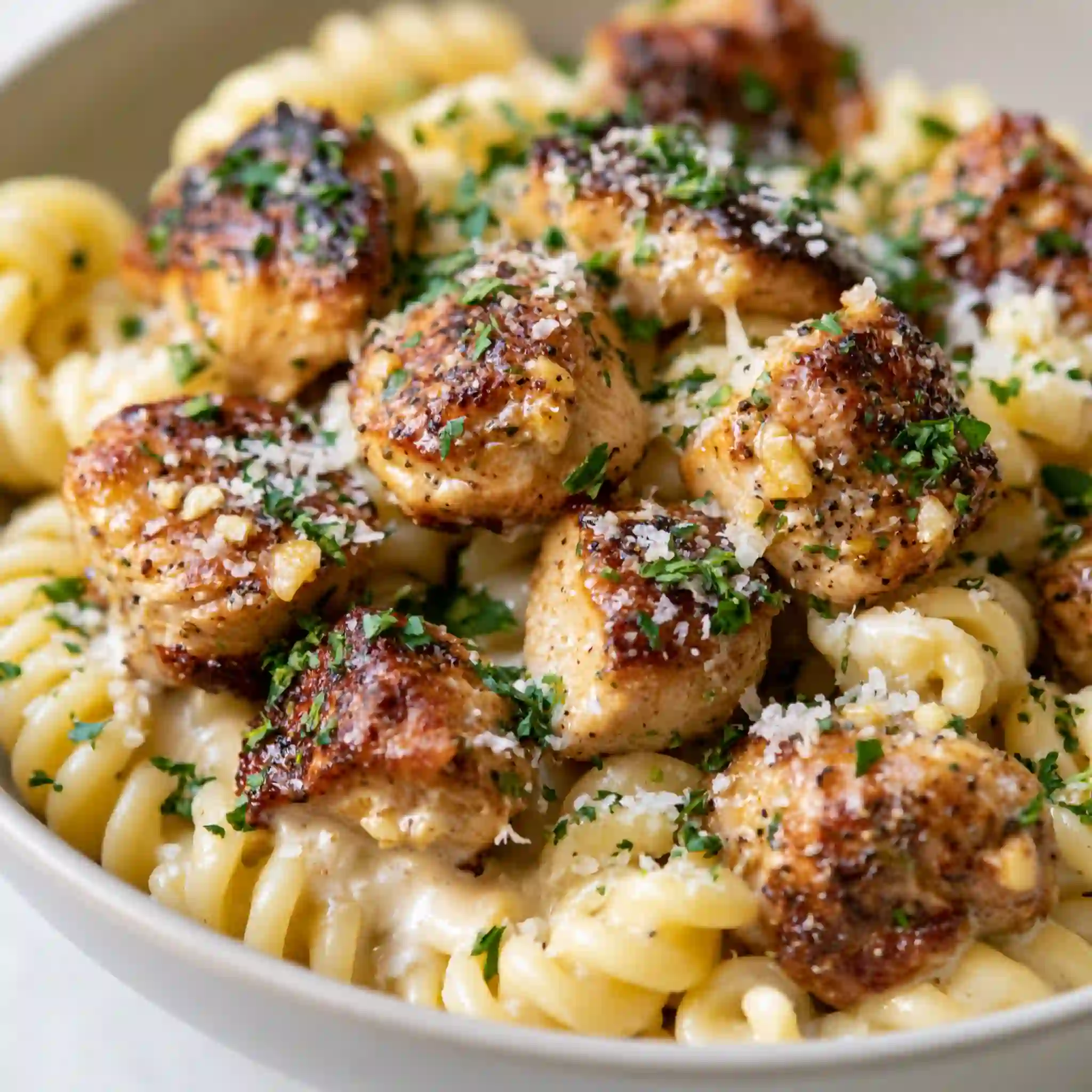

Garlic Butter Chicken Bites with Pasta
Ingredients
Method
- Cook Pasta: Bring a large pot of salted water to a boil. Cook the pasta according to package directions until al dente. Drain and set aside, reserving a splash of pasta water.
- Season Chicken: Pat the chicken dry and cut it into bite-sized cubes. Season with paprika, salt, and black pepper.
- Sear Chicken: Heat olive oil in a large skillet over medium heat. Add the chicken and cook for 6 to 8 minutes, turning occasionally, until golden and fully cooked.
- Make Garlic Butter: Reduce the heat slightly. Add 2 tablespoons of butter and the minced garlic to the skillet. Stir for 1 to 2 minutes until fragrant. Remove the chicken and set aside.
- Build Sauce: In the same skillet, add the remaining 1 tablespoon of butter, heavy cream, and grated Parmesan cheese. Stir until smooth and let it simmer for 3 to 4 minutes until slightly thickened.
- Add Pasta: Toss the cooked pasta into the creamy sauce until well coated. Add a splash of reserved pasta water if the sauce feels too thick.
- Return Chicken: Add the garlic butter chicken bites back to the skillet and toss gently to combine.
- Serve: Garnish with fresh parsley and serve hot.
- Notes
- Add a splash of pasta water if the sauce gets too thick.
- Freshly grated Parmesan melts more smoothly than pre-shredded cheese.
- For a spinach version, stir in a handful of fresh spinach just before serving.
Notes
Serving Size: 1 servingCalories: 620Sugar: 2gSodium: 540mgFat: 34gSaturated Fat: 18gUnsaturated Fat: 13gTrans Fat: 0gCarbohydrates: 39gFiber: 2gProtein: 39gCholesterol: 145mg