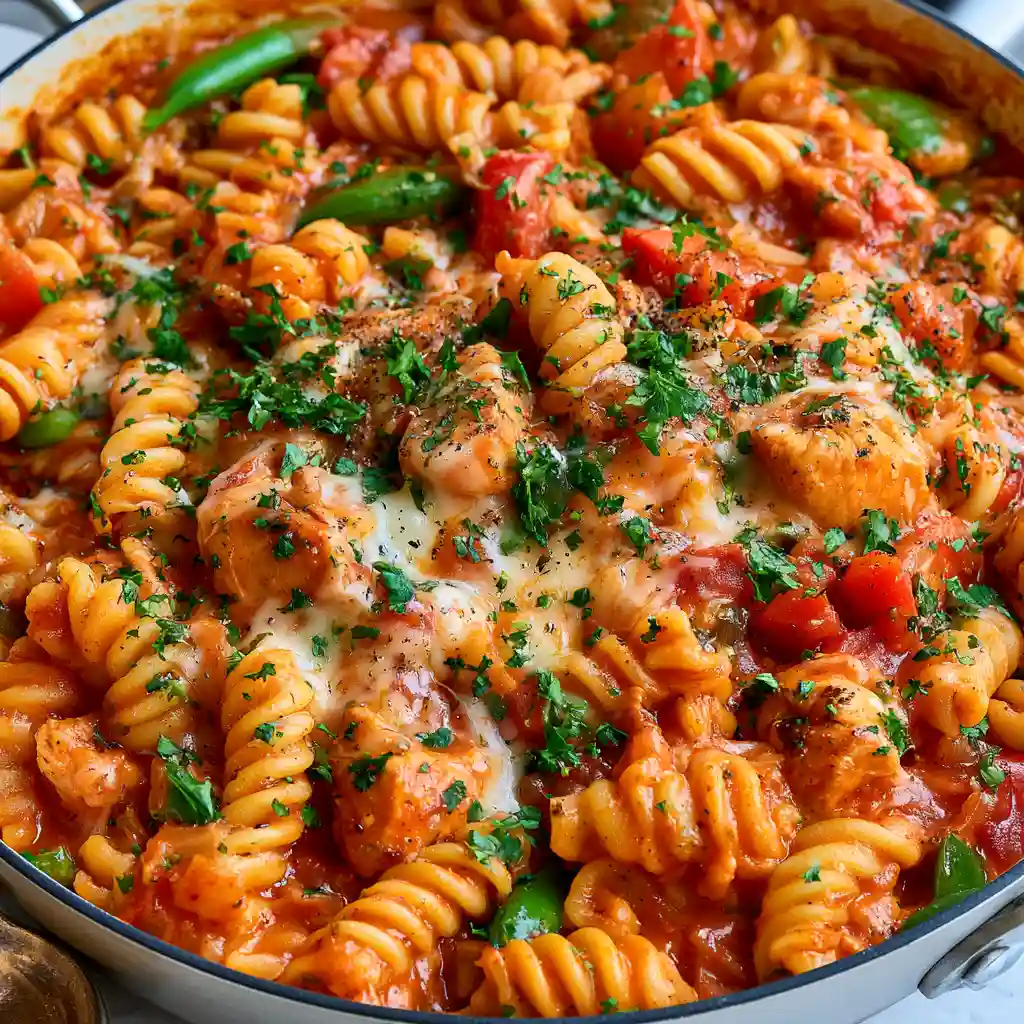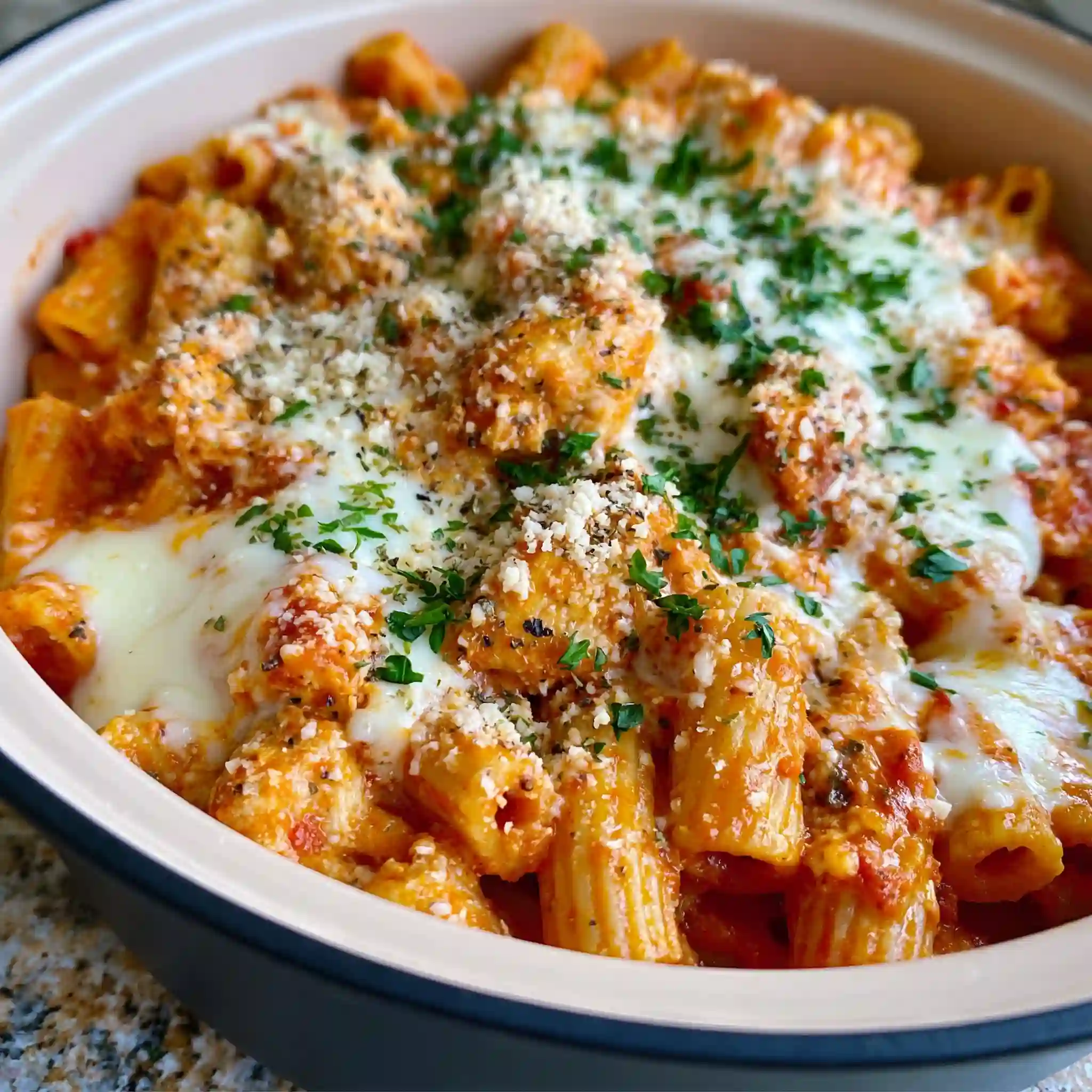
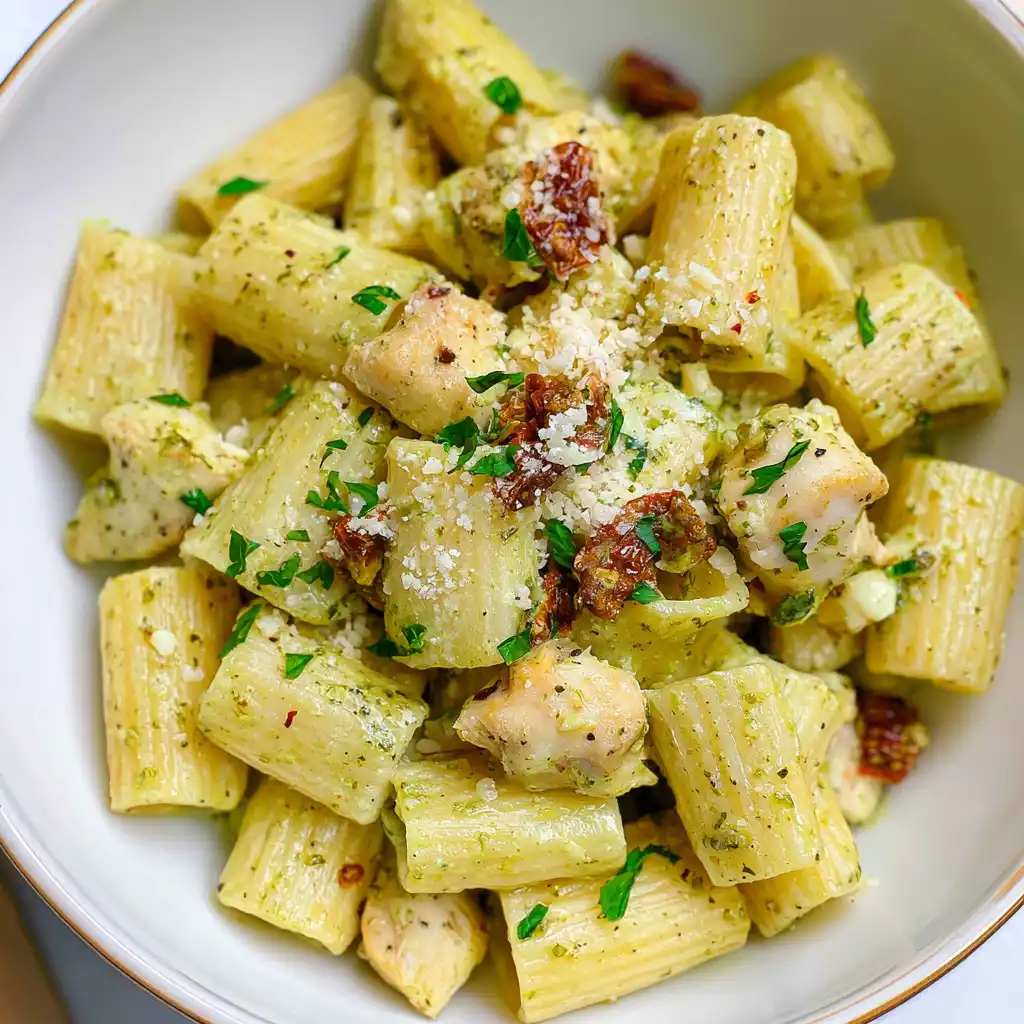
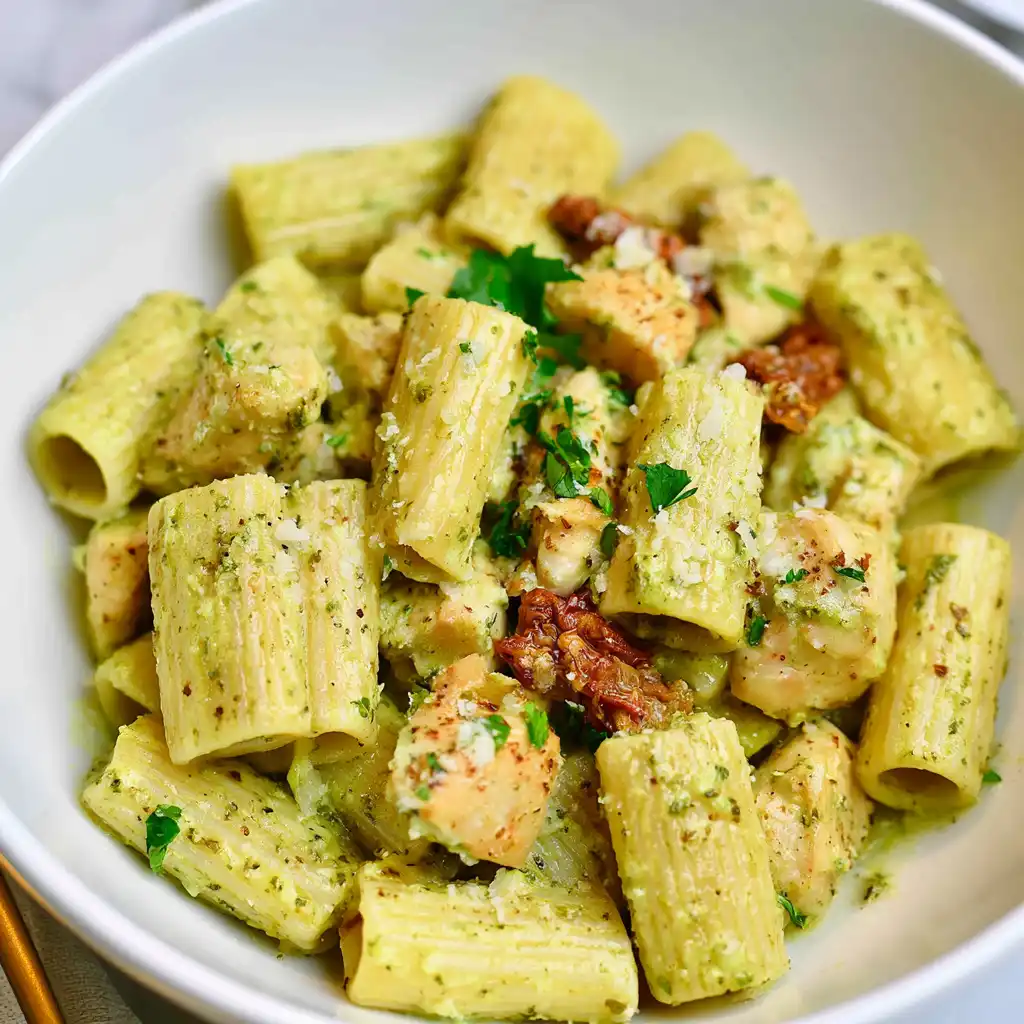
Chicken Pesto Rigatoni is a creamy skillet pasta with tender chicken, basil pesto, and rigatoni that holds onto the sauce well. I make it as a weeknight dinner when I want a pasta dish that feels filling without requiring several pans or complicated steps. The main points to watch are cooking the chicken without browning it and melting the cream cheese slowly so the sauce stays smooth.
This makes about 4 servings. The sun-dried tomatoes are optional, but I like the contrast they add to the rich pesto sauce. Freshly grated parmesan and parsley finish the pasta without taking over the basil flavor.
Ingredients
For cooking pasta
- 8 ounces (227 g) rigatoni pasta – uncooked
- 1 teaspoon olive oil – or any cooking oil, to prevent drained pasta from clumping
For Pesto Chicken Sauce
- 2 tablespoon olive oil
- 2 chicken breasts – cut into bite-size pieces, boneless, skinless, around 250g/9oz each
- 3 cloves garlic – large cloves, finely minced or grated
- 1 teaspoon salt
- 1 teaspoon ground black pepper
- ½ teaspoon crushed red pepper flakes
- ½ cup (118 ml) chicken or vegetable broth/stock – low sodium
- 4 ounces (113 g) cream cheese – cut into small cubes
- ¾ cup (177 ml) basil pesto – store-bought
Optional ingredients
- ½ cup (55 g) sun-dried tomatoes – sliced or chopped, drained
- ¼ cup (25 g) grated parmesan – freshly grated, for garnishing
- Some finely chopped parsley – for garnishing
Why This Method Works
Rigatoni is a good fit here because its ridges and wide tubes catch the creamy pesto sauce. I keep the pasta al dente before it goes into the skillet, since it absorbs some sauce during the final minute of cooking. Pasta that is already very soft can lose its shape once folded with the sauce.
The sauce begins with broth and cream cheese rather than heavy cream. That combination gives it body while still letting the basil pesto remain the main flavor. Cutting the cream cheese into small cubes matters more than it might seem: it melts steadily into the warm broth instead of sitting in large lumps.
Chicken needs a little attention in this recipe. I cook the bite-size pieces with garlic, salt, black pepper, and red pepper flakes until no pink remains, but I do not let them brown. Browning changes the flavor of the skillet and can make the chicken less tender by the time the pasta is added.
Cook the Pasta
Bring salted water to a boil in a large pot. Add the rigatoni and cook until al dente, following the package directions. For 8 ounces of rigatoni, I use 8 cups of water and 2 teaspoons salt, then boil the pasta for 9 minutes, though the package directions should be your guide.
Drain the pasta in a colander once it is cooked. Drizzle it with 1 teaspoon olive oil and mix gently. This keeps the rigatoni from sticking together while you make the chicken pesto sauce.
I do not rinse the pasta. The light coating of starch left on it helps the sauce cling later, while the small amount of oil stops the drained pieces from forming one solid clump.
Make the Chicken Sauce
Heat 2 tablespoons olive oil in a large skillet over medium-high heat. When the oil is hot, add the minced or grated garlic, bite-size chicken pieces, salt, ground black pepper, and crushed red pepper flakes.
Cook for 4 to 6 minutes, stirring constantly. Continue until the chicken is cooked through and no longer looks pink. Keep the heat active enough to cook the chicken, but avoid leaving it untouched long enough to brown.
Pour in the low-sodium chicken or vegetable broth/stock and stir it through the chicken. Let the broth come to a simmer. If only regular broth is available, reduce the added salt at this stage and taste the finished pasta before deciding whether it needs more.
Turn the heat down to medium-low. Add the small cubes of cream cheese, then stir or whisk continuously as they melt. Keep working the sauce until it looks smooth, then simmer for 2 minutes, or until it thickens slightly.
Add the store-bought basil pesto and cook for another 2 minutes, stirring often. A medium-low heat works well here because pesto can lose some of its fresh basil character if it is cooked too aggressively.
Finish the Rigatoni
Add the cooked rigatoni to the skillet. Add the drained, sliced or chopped sun-dried tomatoes if you are using them. Use a spoon or tongs to fold everything together gently, coating the pasta without breaking it up.
Let the pasta cook in the sauce for one final minute. This gives the rigatoni time to take on some flavor while bringing the whole skillet to an even temperature. If the sauce has become thicker than you want, stir in a small splash of broth or water until it loosens.
Transfer the Chicken Pesto Rigatoni to serving plates once everything is hot. Finish each portion with freshly grated parmesan and finely chopped parsley. The parmesan adds a salty finish, so I prefer to add it at the table rather than mixing all of it into the skillet.
Ingredient Notes and Swaps
Jarred sun-dried tomatoes packed in oil work best for this pasta. Drain them before slicing or chopping. The dry sun-dried tomatoes sold in bags do not bring the same soft texture and can remain chewy unless they are rehydrated first.
Store-bought basil pesto keeps the recipe manageable and gives consistent results. If you have homemade pesto on hand, it can be used in the same amount. Since pesto brands vary in saltiness and thickness, taste the finished sauce before adding more salt.
Chicken broth gives the sauce a savory base, while vegetable broth is a suitable option if that is what you have. Water can work in a pinch, especially when thinning the sauce at the end, but broth gives the cream cheese and pesto a fuller base.
If you do not have rigatoni, another sturdy short pasta with ridges or curves can stand in. I would avoid delicate shapes that soften too much in a creamy skillet sauce. The goal is pasta that can carry the chicken, pesto, and cream cheese sauce in each bite.
Serving and Storage
I usually serve this pasta with a crisp green salad, roasted broccoli, or warm garlic bread. A lemony salad is especially useful beside the creamy pesto sauce, since it adds a fresh contrast without competing with the dish.
Store leftovers in a covered container in the refrigerator. Reheat them in a skillet over low heat with a splash of broth or water, stirring until the sauce loosens and the chicken and pasta are heated through. The pasta absorbs sauce as it sits, so that extra splash makes a noticeable difference.
This dish is best freshly made, but leftovers still work well for lunch the next day. I do not recommend freezing it, because the cream cheese sauce and cooked pasta can change texture after thawing.
Questions Home Cooks Ask
Can I leave out the sun-dried tomatoes?
Yes. The Chicken Pesto Rigatoni still has plenty of flavor without them. Add them only if you want their tangy, concentrated tomato flavor in the finished dish.
Why did my sauce become too thick?
The pasta continues to absorb liquid after it enters the skillet. Stir in a small splash of broth or water during the final minute until the sauce coats the rigatoni the way you like.
Can I use a different pasta shape?
Yes, as long as it is a sturdy short pasta. Penne or another ridged shape works well because it holds the creamy pesto sauce.
Can I make this without chicken?
Yes. Leave out the chicken and make the pesto cream sauce with the broth, cream cheese, and pesto. For another pesto-based pasta without chicken, a truffle pesto pasta is also worth making.
Chicken Pesto Rigatoni is one of those meals I return to when I need a dependable pasta dinner with familiar ingredients. Keep the heat moderate once the cream cheese and pesto go in, and the sauce comes together smoothly.

Ingredients
Method
- Bring salted water to a boil in a large pot. Cook rigatoni pasta in it until al dente. Follow the package instructions (see Note D). Once cooked, drain in a colander then drizzle olive oil on it and gently mix. This will prevent pasta from clumping together.
- In a large skillet, heat the olive oil on medium-high heat. Once hot, add minced garlic, chicken pieces, salt, ground black pepper and red pepper flakes. Cook 4 to 6 minutes, stirring constantly or until the chicken no longer looks pink but is cooked through. Don’t let it brown.
- Pour the broth/stock into the skillet and stir. Let it come to a simmer.
- Then turn the heat down to medium-low and add cream cheese cubes. Stir/whisk continuously until it melts and the sauce looks smooth. Simmer 2 minutes or until the sauce thickens a little.
- Mix in the basil pesto and cook an additional 2 minutes. Stir frequently.
- Now add the cooked pasta and sun-dried tomatoes (optional) and gently fold to combine. Let it cook one last minute. If the sauce looks too thick, add a splash of broth/water.
- Once everything is heated through, transfer to serving plates. Garnish with grated parmesan and chopped parsley. Enjoy!
Notes
- Step-by-step photo instructions
- Recipe troubleshooting
- Substitutions and variations
- Serving ideas
- Storage